
 By Lina carolina
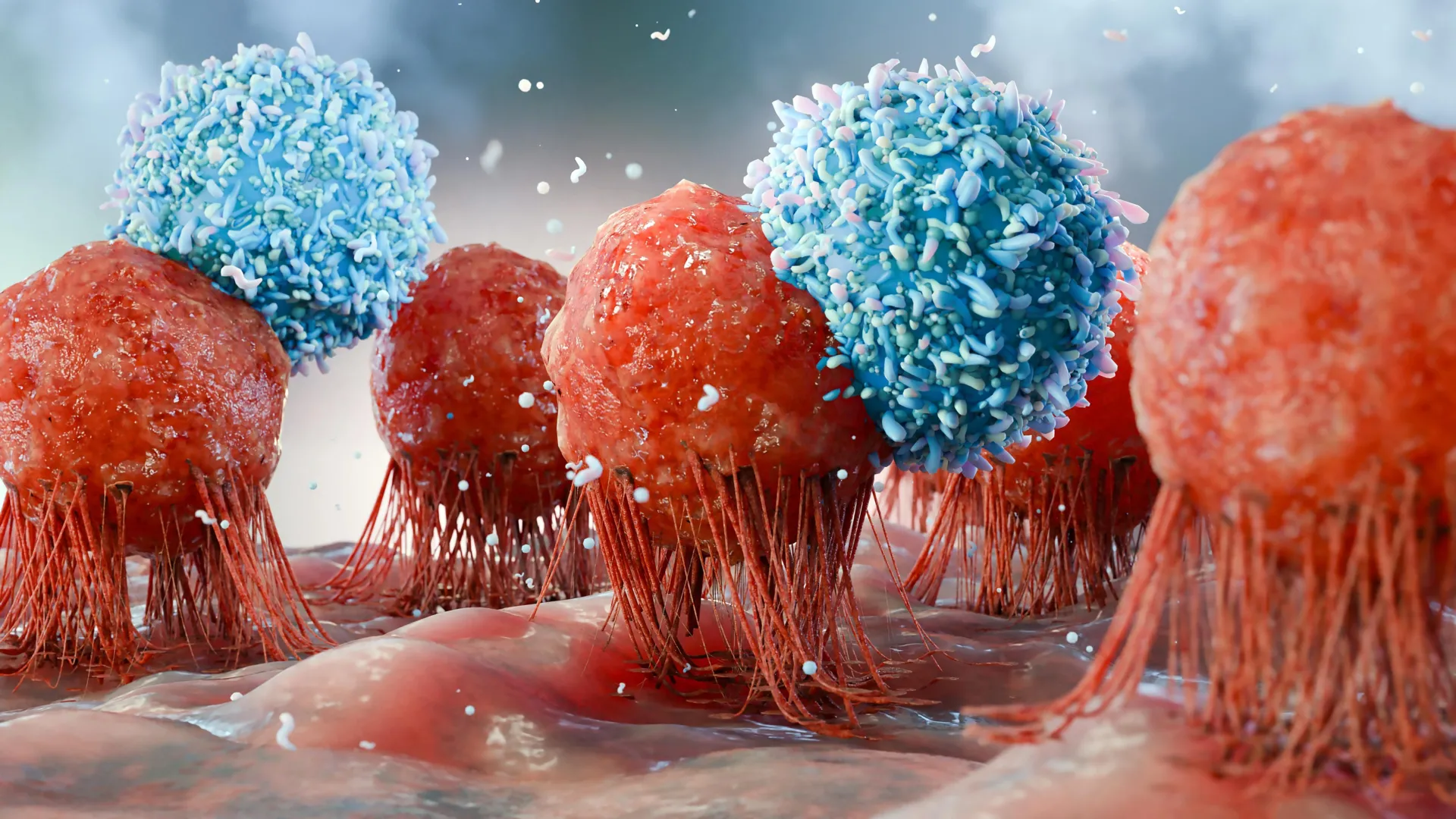
Cancer immunotherapy has revolutionized the fight against many cancers, offering a powerful strategy to harness the body’s own immune system to target and destroy malignant cells. At the forefront of this approach are T cells, the specialized "killer" cells of the immune system, capable of recognizing and eliminating tumor cells. However, a significant hurdle has emerged: T cell exhaustion. This debilitating condition occurs when T cells, despite initial activation, become functionally impaired, unable to sustain their anti-tumor attack and ultimately lose control over tumor growth. This critical limitation has often led to the frustrating scenario where promising immunotherapy treatments, particularly checkpoint inhibitors, appear to work initially before waning, leaving patients with a fleeting sense of hope.
This challenge is particularly pronounced with checkpoint inhibitors, a class of drugs designed to dismantle the biological brakes that normally restrain T cell activity. These inhibitors aim to unleash T cells against cancer, but without addressing the underlying exhaustion that can cripple these potent effectors, their long-term efficacy is compromised. "A tragic part of T cell exhaustion is that the immunotherapy seems to be working for patients, and then it fades," states Dr. Santosha Vardhana, MD, PhD, a physician-scientist at Memorial Sloan Kettering Cancer Center (MSK) who specializes in treating lymphoma. "Many of them experience a brief wisp of promise only to have it taken away."
Now, groundbreaking research emanating from Dr. Vardhana’s laboratory has pinpointed a crucial signaling molecule, MEK, as a significant driver of this T cell exhaustion process. Findings from animal studies, published in the esteemed journal Immunity, suggest that strategically blocking MEK could significantly decelerate T cell exhaustion and, consequently, enhance the effectiveness of various immunotherapeutic strategies. "We’re excited about applying this finding to enhance multiple forms of immunotherapy," Dr. Vardhana expressed. "FDA-approved MEK inhibitors are already available, so this approach could be tested in humans without much delay."
Unraveling the Mechanism: How MEK Drives T Cell Exhaustion
The scientific community has only recently begun to unravel the intricate mechanisms underpinning T cell exhaustion. A pivotal discovery in 2020 from Dr. Vardhana’s lab shed light on the crucial role of cellular metabolism – the complex biochemical processes cells employ to convert nutrients into energy.
When T cells are persistently exposed to tumor antigens, the proteins that cancer cells present as foreign to the immune system, the mitochondria within these T cells can become overburdened. Mitochondria, often referred to as the "powerhouses" of the cell, are responsible for generating adenosine triphosphate (ATP), the primary energy currency for cellular activities. "There is a large metabolic demand being imposed as T cells encounter cancer cells and try to produce cancer-killing, or cytotoxic, proteins," Dr. Vardhana explained. "It turns out that the decision to make high levels of these proteins is regulated by MEK."
Excessive activation of MEK signaling can ultimately propel T cells into a state of terminal exhaustion, a profound depletion where immunotherapy can no longer effectively re-stimulate them. This revelation shifted the scientific understanding of exhaustion. "We realized T cell exhaustion isn’t simply a loss of function — it reflects an imbalance between what these cells are being asked to do and the energy they have available," commented Tanmana Mitra, PhD, a student in the Vardhana lab and the study’s first author.
Intriguingly, the research team made a surprising discovery: exhausted T cells were not metabolically sluggish. In fact, they were highly active. When researchers treated these cells with MEK inhibitors, a remarkable transformation occurred: the T cells proliferated more robustly while simultaneously consuming less energy. "That paradox made us ask where all that energy was going, and we discovered that these cells were investing enormous resources into making proteins," Dr. Mitra elaborated. "It changed how we think about T cell exhaustion — from a problem of too little energy to one of excessive energy demand."
Strategic Pacing: Helping T Cells Maintain Their Stamina
These findings strongly suggest that dampening MEK signaling could alleviate the immense pressure on T cells to continuously churn out cytotoxic proteins. This, in turn, would allow a subset of these cells to remain active and possess the capacity for self-renewal for extended periods, thereby prolonging the effectiveness of immunotherapy.
The analogy often used is that of pacing oneself during a marathon rather than sprinting from the start. By moderating the intensity of their effort, individuals can conserve energy and sustain their performance over a longer duration. Similarly, reducing the relentless demand on T cells could enable them to maintain their anti-tumor activity for a longer period. In laboratory models, inhibiting MEK signaling facilitated the persistence of T cells even within the hostile microenvironment of a tumor.
However, the researchers emphasize a crucial caveat: suppressing MEK is unlikely to be a universally beneficial strategy for all cancer patients. The complex nature of T cell exhaustion necessitates a nuanced approach.
The Dual Role of T Cell Exhaustion: A Protective Mechanism
The understanding of T cell exhaustion has evolved beyond a simple narrative of immune cell debilitation. Previous work by MSK immunologist Andrea Schietinger, PhD, demonstrated that T cells can enter an exhausted state as a survival mechanism. By down-regulating their activity, these cells avoid overstimulation, which could otherwise lead to cell death.
"As we’ve learned more about T cell exhaustion," Dr. Vardhana remarked, "we’ve increasingly understood that it’s not the case that exhausted T cells are bad, so let’s try to reverse the process with a drug. Instead, exhaustion is more of an equilibrium state that lets the cells survive and keep going — almost like a ‘safe mode’ for T cells."
When a T cell is actively engaged in combating cancer and producing cytotoxic proteins, its mitochondria are tasked with converting nutrients into ATP. Dr. Vardhana likens ATP to a financial resource: "Think of ATP as the currency in a fund that the cell spends down. If you spend ATP on one thing, you don’t have enough to do something else. The exhaustion program is a sign that the cell’s bank account is getting close to zero. MEK tells exhausted cells whether to conserve fuel or go for broke. What we found is that inhibiting MEK makes the cells more conservative — helping them live longer while reducing the rate at which they produce the proteins that actually kill cancer cells."
This dual functionality of MEK presents a critical therapeutic dilemma. High MEK activity empowers T cells to mount an intense attack but also hastens their depletion. Consequently, inhibiting MEK involves a trade-off: the immune response might be less aggressive, but the cancer-fighting cells could survive for a significantly longer duration. The optimal strategy – a rapid, potent immune assault versus a slower, sustained campaign – may vary depending on the specific characteristics of an individual patient’s cancer.
Strategic Application: When T Cells Need to Go Full Speed
Dr. Vardhana proposes that MEK inhibitors would need to be deployed judiciously, considering specific patient profiles. Two key indicators suggest that a patient might benefit most from a robust, immediate immune response facilitated by traditional immunotherapy:
- Low Tumor Burden and High T Cell Infiltration: In patients with a minimal amount of cancer and a significant presence of tumor-infiltrating T cells, the immune system is already primed for a strong attack. In such scenarios, conserving T cell energy might be less critical. "It’s like being in a car with 1/8 of a tank left, but you can see the finish line," Dr. Vardhana illustrated. "In these patients, you would just let the car keep burning the gas — in other words, take the traditional immunotherapy approach. These are the patients in whom MEK inhibition is probably not needed."
Conversely, the situation may differ for patients with extensive tumors or a paucity of tumor-fighting immune cells. Their immune response might lack the initial vigor to swiftly eliminate the cancer. In these instances, employing a MEK inhibitor to foster a slower, more sustained immune response could be advantageous. This persistence could allow T cells to remain active for longer, even if they are partially exhausted. Such sustained presence is particularly crucial when confronting a large tumor or when the available workforce of T cells is limited.
Broadening the Horizon: Potential Applications Across Immunotherapy Modalities
Dr. Vardhana posits that carefully administered MEK inhibition holds promise for enhancing several distinct types of cancer immunotherapy:
- Checkpoint Inhibitors: Early research has already demonstrated the efficacy of combining MEK inhibition with checkpoint inhibitors and BRAF inhibitors in melanoma, suggesting a synergistic effect.
- Chimeric Antigen Receptor (CAR) T Cell Therapy: "We think this approach could dramatically boost T cell persistence, which has been a big problem with CAR T cell therapy," Dr. Vardhana stated. CAR T-cell therapy, a highly personalized treatment, involves engineering a patient’s own T cells to target cancer. Enhancing their longevity is a critical goal.
- Tumor Infiltrating Lymphocyte (TIL) Therapy: This approach leverages immune cells that have already infiltrated a patient’s tumor and expands their numbers. Incorporating MEK inhibition before or after TIL therapy could potentially extend the survival of the most effective tumor-fighting TILs.
- Bispecific Antibodies: These engineered proteins bind to two different targets simultaneously, potentionaly activating T cells with great force. However, this intense stimulation can also contribute to exhaustion. MEK inhibition could help mitigate this effect.
"This study shows the importance of understanding core principles of T cell biology — what sets the balance between conservation of energy and strong, cancer-fighting activity," Dr. Vardhana concluded. "Once we know the answer to that, the therapeutic possibilities really start to fan out."
Key Takeaways:
- T cell exhaustion is a major limitation in cancer immunotherapy, leading to diminished anti-tumor activity.
- Researchers have identified the signaling molecule MEK as a key driver of T cell exhaustion.
- Inhibiting MEK may slow exhaustion, potentially making immunotherapies more effective and durable.
- Exhausted T cells are not necessarily inert but may be conserving energy due to high demands, a process regulated by MEK.
- MEK inhibition offers a trade-off: potentially less intense initial attack but longer T cell survival.
- The strategic use of MEK inhibitors may be beneficial for specific patient populations and immunotherapy types, including checkpoint inhibitors, CAR T-cell therapy, TIL therapy, and bispecific antibodies.
Additional authors on the study include Jahan Rahman, Madeline Hwee, Yan-Ting Chen, Ruben Jose Jesus Faustino Ramos, Hui Liu, Travis Hartman, Justin Cross, Miguel de Jesus, Morgan Huse, Valerie Longo, and Pat Zanzonico.
