
 By George Ongkojoyo
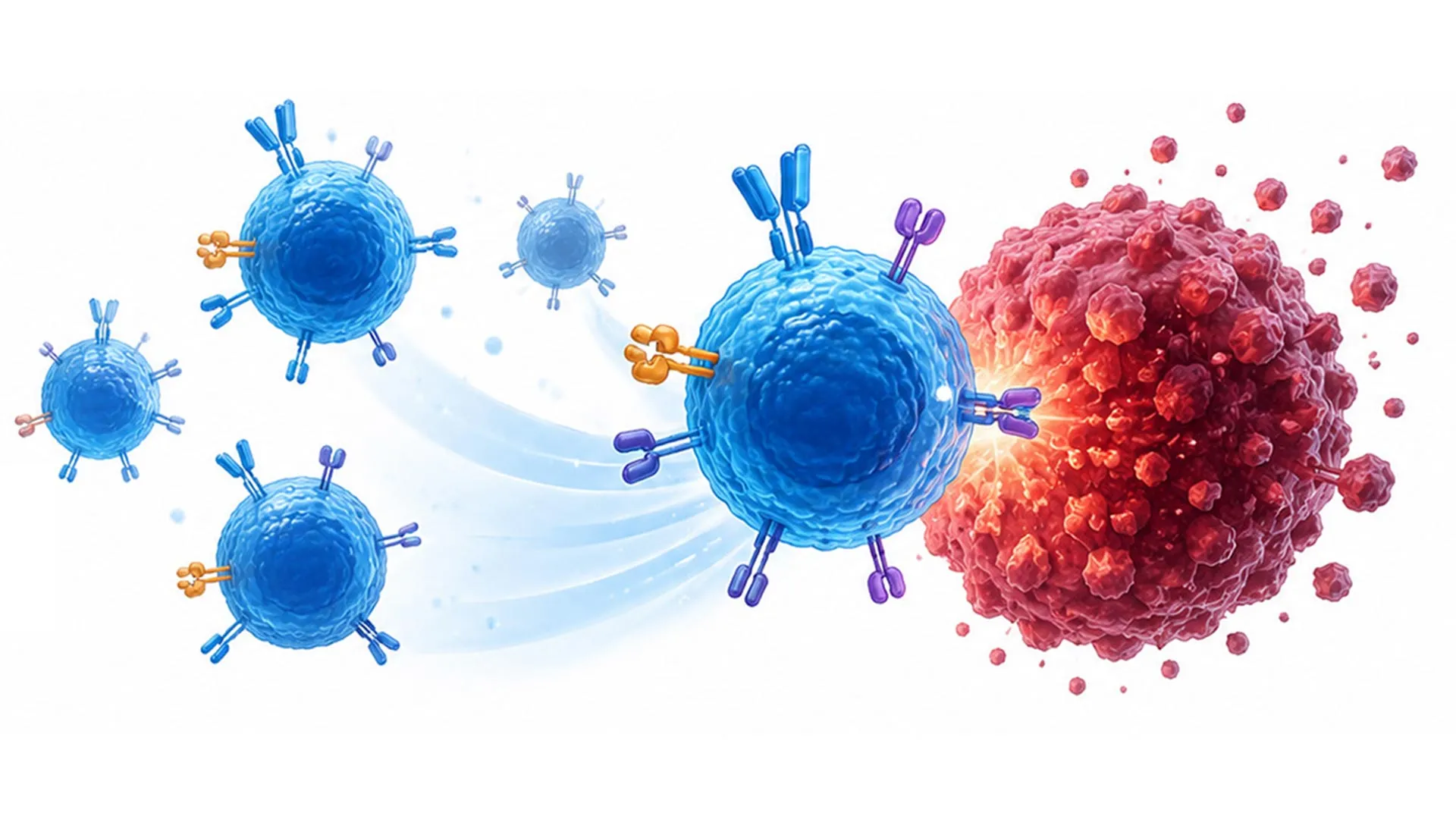
Researchers at the University of California, Los Angeles (UCLA) have announced a significant advancement in the field of cancer immunotherapy, developing a scalable method to produce "off-the-shelf" T cell receptor (TCR) therapy. The study, published recently in the journal Cell Reports Medicine, details a process that utilizes blood stem cells from donated umbilical cord blood to create consistent, high-potency batches of cancer-attacking immune cells. This development addresses two of the most persistent hurdles in modern oncology: the astronomical cost of personalized cell therapies and the logistical delays that often prevent critically ill patients from receiving timely treatment.
By engineering these cells to target a specific protein common in solid tumors and equipping them with a secondary "backup" detection system, the UCLA team has demonstrated a way to potentially treat a wide array of cancers, including melanoma and ovarian cancer, with greater precision and safety than current methods allow.
The Evolution of Immunotherapy: From CAR T to TCR
To understand the significance of the UCLA discovery, it is necessary to distinguish between existing T cell therapies. For the past decade, Chimeric Antigen Receptor (CAR) T-cell therapy has revolutionized the treatment of "liquid" cancers, such as leukemia and lymphoma. CAR T-cells are engineered to recognize specific proteins, like CD19, that sit on the exterior surface of a cell. However, CAR T-cell therapy has historically struggled against solid tumors, which constitute approximately 90% of adult human cancers.
The primary limitation of CAR T-cells is that many of the molecular signatures that identify a cell as cancerous remain hidden inside the cell. This is where T cell receptor (TCR) therapy offers a distinct advantage. TCRs are designed to detect small fragments of internal proteins—peptides—that are processed within the cell and then shuttled to the surface by the Major Histocompatibility Complex (MHC). Because TCR therapy can "see" these internal markers, it can target a much broader range of cancer-specific mutations that are invisible to CAR T-cells.
The UCLA study focused on a protein known as NY-ESO-1. This is a "cancer-testis antigen" that is typically only expressed in germ cells but becomes highly active in various solid tumors, including synovial sarcoma, melanoma, and ovarian cancer. By targeting NY-ESO-1, the researchers aimed to hit a vulnerability common to many of the most aggressive and difficult-to-treat malignancies.
Addressing the Personalized Medicine Bottleneck
While TCR therapy holds immense promise, its practical application has been hampered by a grueling manufacturing process. Currently, most T cell therapies are "autologous," meaning they are made using a patient’s own immune cells. This process involves extracting a patient’s blood, transporting it to a specialized lab, genetically modifying the T cells, expanding them into the millions, and shipping them back for infusion.
This cycle typically takes three to four weeks—a period during which many late-stage cancer patients may experience significant disease progression. Furthermore, the personalized nature of the treatment drives costs into the hundreds of thousands of dollars per dose, creating a massive barrier to widespread clinical adoption.
The alternative is "allogeneic" or "off-the-shelf" therapy, which uses cells from healthy donors. However, donor-derived T cells carry a significant risk of graft-versus-host disease (GvHD). In GvHD, the donor’s immune cells recognize the patient’s healthy tissues as "foreign" and launch an attack, which can be fatal. To prevent this, scientists usually have to perform complex gene editing to "knock out" the donor’s original T cell receptors, a process that can weaken the final product or lead to unintended genetic mutations.
A "Clean Slate" Approach Using Cord Blood Stem Cells
The UCLA team, led by co-senior authors Lili Yang and Yanruide (Charlie) Li, sought to bypass these issues by starting at an earlier stage of cellular development. Instead of using mature T cells from a donor, they utilized hematopoietic (blood-forming) stem cells harvested from donated umbilical cord blood.
"Stem cells are undifferentiated—they’re not yet mature T cells with a fixed receptor already in place," explained co-first author Yichen (John) Zhu, a graduate student at the UCLA Broad Stem Cell Research Center.
By inserting the gene for the NY-ESO-1-targeting receptor into these immature stem cells, the researchers ensured that as the cells matured into T cells in the laboratory, they would only express the engineered receptor. This "clean slate" approach effectively eliminates the risk of the cells having random, natural receptors that could trigger GvHD. This eliminates the need for the additional, risky gene-editing steps required when using mature donor T cells.
The resulting cells, dubbed AlloESO-T cells, are uniform in their targeting. Every cell in a batch is programmed to seek out the same tumor marker, creating a consistent and predictable therapeutic product.
Overcoming Antigen Escape with Dual-Detection Systems
One of the most frustrating aspects of treating solid tumors is their heterogeneity. Even within a single tumor, cancer cells can vary. Some cells may stop producing the target protein (NY-ESO-1) to "hide" from the immune system, a phenomenon known as antigen escape. When this happens, a therapy designed for a single target becomes ineffective.
To counter this, the UCLA researchers engineered the AlloESO-T cells with a secondary detection mechanism: Natural Killer (NK) cell receptors. These receptors do not look for specific cancer proteins but rather for "stress signals" that most cancer cells emit when they are rapidly dividing or under metabolic strain.
"When a therapy built around a single target loses its grip due to antigen escape, our stem cell-derived cells still have a second mechanism to kill those tumor cells," said Zhu.
In laboratory experiments using human melanoma, prostate, and ovarian cancer cells, this dual-system proved highly effective. The AlloESO-T cells were able to destroy cancer cells that had successfully hidden their NY-ESO-1 markers, closing a major loophole that often leads to cancer relapse.
Preclinical Success: Mouse Models and Longevity
The effectiveness of the AlloESO-T platform was put to the test in mouse models of aggressive ovarian cancer and melanoma. The results, according to the published data, were striking.
Mice treated with a single dose of AlloESO-T cells showed sustained tumor suppression and significantly longer survival rates compared to control groups. In contrast, mice treated with conventional TCR therapies made from mature donor cells only experienced temporary tumor control and frequently developed signs of GvHD, such as weight loss and organ inflammation.
Crucially, the study tracked the behavior of the AlloESO-T cells post-infusion. The researchers found that the cells expanded by approximately 100-fold within the body, specifically migrating to the site of the tumors. They remained active for several weeks, providing a "living medicine" effect, yet they did not accumulate in healthy organs like the liver or lungs, suggesting a high safety profile.
Economic Implications: From $500,000 to $5,000
Perhaps the most disruptive aspect of the UCLA research is the potential for mass production. Because cord blood stem cells have a high capacity for self-renewal and differentiation, a single donation could theoretically produce enough cells for thousands of patients.
"From a small number of cord blood stem cells, we can generate trillions of therapeutic cells—enough for thousands of doses—within about six weeks," said Yanruide Li.
The team estimates that this scalable manufacturing process could bring the cost per dose down to approximately $5,000. For context, current FDA-approved CAR T-cell therapies often carry a list price between $375,000 and $475,000, not including the costs of hospitalization and specialized care. A $5,000 price point would represent a nearly 99% reduction in cost, potentially moving TCR therapy from a "last resort" treatment to a frontline option accessible to a much larger segment of the global population.
Timeline and Path to Clinical Trials
The research has transitioned from basic laboratory discovery into a phase of translational preparation. The UCLA team is currently collaborating with the UCLA Health Center for Advanced Biotherapies to establish clinical-grade manufacturing protocols. This is a critical step, as the transition from "bench to bedside" requires rigorous adherence to Good Manufacturing Practice (GMP) standards.
While the results in mice are promising, the researchers emphasized that human clinical trials are the next essential hurdle. The safety and efficacy observed in animal models do not always translate directly to humans, particularly regarding how long the "off-the-shelf" cells will persist in a human patient’s body before being cleared by the host’s immune system.
However, the UCLA team is optimistic. They noted that the AlloESO-T system leverages manufacturing infrastructure already developed for another of their programs, the CAR-NKT platform. This shared infrastructure could significantly shorten the timeline for regulatory approval and the start of Phase I clinical trials.
Broader Impact on the Oncology Landscape
The implications of this platform extend far beyond the NY-ESO-1 protein. The researchers describe AlloESO-T not just as a single drug, but as a modular platform.
"As long as a receptor for a given cancer antigen has been validated, we can build it into this system and generate T cells specific to that target," Li said. This means that in the future, hospitals could maintain a "library" of frozen, off-the-shelf T cells targeting various mutations—KRAS, p53, or MAGE-A3—allowing doctors to select a treatment based on a quick genetic biopsy of a patient’s tumor.
The oncology community has reacted with cautious optimism. Independent experts note that if the UCLA team can replicate these results in humans, it would represent a paradigm shift in how we view "living drugs." The move toward standardized, mass-produced immunotherapy could finally deliver on the promise of the "biotech revolution" by making the most advanced treatments available to everyone, regardless of their proximity to a major metropolitan research hospital or their ability to pay half a million dollars for a single infusion.
The research was supported by several major institutions, including the California Institute for Regenerative Medicine (CIRM) and the UCLA Broad Stem Cell Research Center. As the team moves toward the first human trials, the medical community will be watching closely to see if this cord-blood-derived strategy can finally break the "solid tumor barrier" that has limited immunotherapy for so long.
