
 By admin
The journey of Jaylen and Ayla, two siblings who have successfully navigated the complexities of hereditary bilateral retinoblastoma, serves as a poignant case study in the intersection of pediatric oncology, genetic predisposition, and the critical necessity for healthcare accessibility. Jaylen, now 10, and Ayla, 8, represent the resilience of childhood cancer survivors, yet their path to remission was marked by significant systemic hurdles, including a high-stakes struggle for medical communication rights. Their story highlights not only the medical realities of rare pediatric eye cancers but also the vital role of parental advocacy in ensuring equitable treatment for families navigating the healthcare system with disabilities.
The Genesis of Diagnosis: Recognizing the Retinoblastoma Glow
The clinical narrative began when Jaylen was just two months old. His mother, Denice, observed a subtle but concerning physical indicator: his left eye began to veer outward, a condition known medically as strabismus. While strabismus can be a benign developmental issue, in the context of retinoblastoma, it is often a secondary symptom of a tumor affecting the macula or central vision. Furthermore, the family later realized that early photographs of Jaylen displayed "leukocoria," or a white pupillary reflex. Commonly referred to as the "glow," this phenomenon occurs when light reflects off the white surface of a tumor within the eye, rather than the red vascular tissue of the retina.
In many cases of pediatric retinoblastoma, parents initially dismiss the glow as a photographic artifact or a trick of the light. For Denice’s family, the realization that these visual cues were symptoms of a life-threatening malignancy came only after a series of fraught medical encounters. The delay in diagnosis is a common challenge in rare diseases, where the rarity of the condition often leads to a lack of immediate clinical suspicion among primary care providers.
Systemic Barriers and the Fight for Communication Access
The pursuit of a definitive diagnosis for Jaylen was complicated by a significant breach in healthcare equity. Denice, who is deaf, sought a four-month check-up for Jaylen, a critical window for identifying developmental and physiological abnormalities. However, the medical facility refused to provide services, citing the lack of an American Sign Language (ASL) interpreter. Under the Americans with Disabilities Act (ADA), healthcare providers are legally mandated to provide "effective communication" to patients and their companions with disabilities, which frequently necessitates the provision of a qualified interpreter.
The refusal of care forced Denice to navigate a fragmented medical landscape independently. This period of forced self-advocacy highlights a broader issue within the American healthcare system: the "triple burden" faced by parents of children with rare diseases who also belong to marginalized or disabled communities. Denice eventually secured a provider capable of facilitating communication, leading to the diagnosis of bilateral retinoblastoma—cancer in both eyes.
The Genetic Component: Hereditary vs. Non-Hereditary Retinoblastoma
Retinoblastoma is a rare form of cancer that rapidly develops from the immature cells of a retina. It is the most common primary intraocular malignancy of childhood, typically occurring before the age of five. There are two distinct forms of the disease: sporadic (non-hereditary) and hereditary.
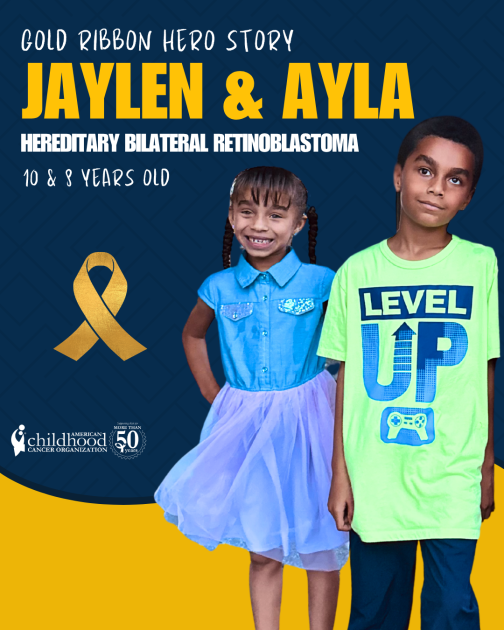
In Jaylen’s case, the diagnosis was hereditary bilateral retinoblastoma. This form of the disease is caused by a germline mutation in the RB1 gene. Approximately 40% of retinoblastoma cases are hereditary. Unlike sporadic cases, which usually affect only one eye (unilateral), the hereditary form typically presents in both eyes (bilateral) and carries a significantly higher risk of secondary cancers later in life.
Because Jaylen’s condition was confirmed as hereditary, the medical team knew there was a 50% chance that any future siblings would also inherit the RB1 mutation. When Denice became pregnant with Ayla, the clinical approach shifted from reactive to proactive. Ayla was monitored from birth, allowing doctors to identify the same cancerous growths when she was just four weeks old. This early detection is a hallmark of modern genetic screening, often resulting in more conservative treatment options and better visual outcomes than cases diagnosed later in the disease progression.
A Comprehensive Treatment Timeline
The clinical management of bilateral retinoblastoma is a multi-year process involving various modalities designed to eradicate the tumor while preserving as much vision and ocular structure as possible. Both Jaylen and Ayla underwent intensive treatment regimens that reflect the standard of care for advanced pediatric ocular oncology.
- Systemic and Local Chemotherapy: Chemotherapy is often the first line of defense to shrink tumors (chemoreduction). For Jaylen and Ayla, this involved systemic treatments to address the bilateral nature of the disease.
- Cryotherapy and Laser Therapy: These "focal" treatments are used to treat smaller tumors or remaining "seeds" after chemotherapy. Cryotherapy uses extreme cold to freeze and destroy cancer cells, while laser therapy (photocoagulation) uses heat to cut off the blood supply to the tumors.
- Surgical Intervention: Jaylen required strabismus surgery to correct the misalignment of his eyes caused by the initial tumor growth.
- Enucleation: For Ayla, the progression of the disease in one eye necessitated enucleation—the surgical removal of the eye. While a difficult decision for any parent, enucleation is often a life-saving measure when a tumor is non-responsive to conservative treatments or poses a high risk of spreading to the optic nerve and brain.
Today, both children utilize prosthetic eyes. Modern ocular prosthetics are custom-made to match the patient’s remaining eye, and for Ayla, the process has become a form of self-expression. She maintains a collection of custom-colored irises, allowing her to exercise autonomy and style in her journey as a survivor.
Statistical Context and Survival Outcomes
The prognosis for retinoblastoma in developed nations like the United States is generally excellent, with a survival rate exceeding 95%. However, this high survival rate is contingent upon early diagnosis and access to specialized ocular oncology centers.
According to data from the American Cancer Society, approximately 200 to 300 children are diagnosed with retinoblastoma in the U.S. each year. While the survival rate is high, the morbidity associated with the disease—including vision loss and the psychological impact of disfigurement or chronic illness—remains a significant concern for survivors. Furthermore, individuals with the hereditary form of the disease require lifelong monitoring, as they are predisposed to developing "second primary" cancers, such as osteosarcoma (bone cancer) or soft tissue sarcomas, particularly if they received radiation therapy as part of their initial treatment.
The Psychological Impact and the Role of Social Support
Beyond the clinical data, the story of Jaylen and Ayla underscores the social and psychological dimensions of pediatric cancer. Denice has been vocal about the challenges of parenting in the public eye, noting that sharing their story online has occasionally invited criticism regarding her "indulgent" parenting style. In response, Denice has championed the concept of the "beautifully spoiled" survivor—a philosophy that prioritizes joy, presence, and emotional fulfillment in the wake of life-threatening illness.
The family’s advocacy also focuses on the "Know the Glow" campaign, a global awareness effort to educate parents on recognizing leukocoria in childhood photographs. Because a simple smartphone camera flash can often reveal the white reflection indicative of a tumor, parental awareness is frequently the most effective tool for early detection.
Analysis of Healthcare Policy and Future Implications
The case of Jaylen and Ayla serves as a reminder of the critical need for enforcement of the ADA in medical settings. The initial refusal of care for Jaylen due to a lack of ASL interpretation was not merely an administrative oversight; it was a barrier to life-saving treatment. As medical technology advances, the healthcare system must equally advance its commitment to accessibility to ensure that no child’s diagnosis is delayed by preventable communication barriers.
Furthermore, the success of Ayla’s early diagnosis highlights the importance of genetic counseling for families with a history of RB1 mutations. The shift toward precision medicine and proactive screening has fundamentally changed the trajectory of hereditary cancers, turning what was once a terminal diagnosis into a manageable, albeit complex, chronic condition.
Conclusion: A Legacy of Joy and Advocacy
Jaylen and Ayla are now thriving, having transitioned from patients to advocates. Their journey from the initial discovery of the "glow" to their current status as cancer-free survivors is a testament to the power of maternal intuition and the efficacy of modern oncology. By sharing their experiences, the family contributes to a growing body of awareness that empowers other parents to seek early intervention and demand equitable treatment within the medical system.
Organizations like the American Childhood Cancer Organization (ACCO) continue to provide resources for families facing similar diagnoses, emphasizing that while the fight against childhood cancer is grueling, no family should have to navigate it alone. Jaylen and Ayla’s story remains a beacon of hope, proving that with early detection, fierce advocacy, and a commitment to joy, there is a vibrant and triumphant life to be lived after a cancer diagnosis.
