
 By admin
Rob Malone, a contributing author and close friend, is channeling the indomitable spirit and profound generosity of Victoria Ann “Vicky” Michelis through a dedicated charitable fund, ensuring her legacy transcends her personal battle with ovarian cancer. Vicky, who passed away in 2020, steadfastly refused to be defined by her illness, choosing instead to be remembered for her unwavering commitment to the underdog, her deep compassion for those around her, and her fearless candor. The Victoria Ann Michelis Fund, established in her honor, now actively supports critical causes Vicky held dear, prominently featuring pioneering research aimed at expanding treatment options for individuals confronting aggressive cancers, mirroring the challenges she faced.
The Enduring Spirit of Victoria Ann Michelis: A Champion for the Vulnerable
Vicky Michelis was a woman of remarkable tenacity and conviction. Her life was characterized by a potent combination of fiercely held opinions and an innate instinct to champion those most in need. Throughout her diverse professional career, which consistently involved direct interaction with people, a singular characteristic defined her approach: an immediate disregard for pomposity and an overwhelming empathy for the struggling individual. As Rob Malone vividly recounts, "If you were a bigwig and too impressed with yourself, she had very little regard for you. If you were a small person who was struggling, she was all about you." This deep-seated impulse to empathize with and advocate for the vulnerable was not merely an occasional act of kindness but a defining thread woven throughout the tapestry of Vicky’s life. This foundational principle now underpins the philanthropic endeavors of the fund bearing her name, extending her reach to countless individuals and animals she never had the opportunity to meet.
Understanding Ovarian Cancer: A Global Health Challenge

Ovarian cancer, the focus of a significant portion of the Victoria Ann Michelis Fund’s support, remains a formidable global health challenge. The ovaries are two small, almond-shaped female reproductive organs crucial for producing eggs and hormones. Ovarian cancer typically arises when cells within an ovary begin to grow uncontrollably. Recent research suggests that a substantial number of ovarian cancers may actually originate in the fallopian tubes, the delicate conduits that transport eggs from the ovaries to the uterus. A closely related malignancy can also manifest in the peritoneum, the specialized tissue that lines the inside of the abdomen and covers internal organs.
The statistics underscore the severity of this disease. Globally, ovarian cancer is a leading cause of cancer-related mortality among women. In 2024, an estimated 331,000 women worldwide received an ovarian cancer diagnosis, with over 200,000 succumbing to the disease. Projections for the United States in 2026 anticipate approximately 21,010 new cases and 12,450 deaths. A critical factor contributing to these grim figures is the difficulty of early detection. Ovarian cancer symptoms are often subtle and non-specific, frequently mimicking less serious conditions such as irritable bowel syndrome, indigestion, or premenstrual syndrome. These vague symptoms—including bloating, pelvic or abdominal pain, difficulty eating, or frequent urination—often lead to a delayed diagnosis, by which time the cancer has typically advanced to later, less treatable stages. While localized ovarian cancer (Stage I) boasts a five-year survival rate exceeding 90%, this figure plummets to less than 20% for distant, metastatic disease (Stage IV). This stark disparity highlights the urgent need for improved diagnostic tools and more effective treatment modalities, particularly for advanced or aggressive forms.
Vicky’s specific diagnosis further illuminates the challenges inherent in ovarian cancer. She was diagnosed with small cell carcinoma of the ovary, hypercalcemic type (SCCOHT), a particularly rare and aggressive subtype. SCCOHT accounts for less than 1% of all ovarian cancers, primarily affecting younger women, with a median age of diagnosis typically in the mid-20s. Its rarity makes research challenging, often leading to limited treatment options beyond standard chemotherapy and surgery. The hypercalcemia, or elevated calcium levels in the blood, that Vicky experienced is a common paraneoplastic syndrome associated with this specific cancer type, often serving as an early indicator, albeit an alarming one, of the underlying malignancy.
Vicky’s Battle and Unyielding Advocacy: A Chronology of Resilience
Vicky approached her daunting diagnosis of SCCOHT with remarkable objectivity and resolve. Rob Malone recalls her immediate shift into an investigative mode, describing her as becoming "the researcher." She meticulously explored available options, sought out expert medical opinions, and transformed into a determined advocate for herself throughout her treatment journey. Yet, her composure did not mask the profound emotional impact of the diagnosis. Rob vividly remembers a poignant phone call where the gravity of her situation became acutely real. "They said the word ‘cancer,’ and they were talking about me," Vicky confided, revealing the personal weight of facing a life-threatening illness.

Following several years of arduous surgery and intensive chemotherapy, Vicky received what seemed to be a miraculous "thumbs up" from her medical team. Against considerable odds, she and Rob genuinely believed she had conquered the disease. This profound experience, however, brought into sharp focus the critical difficulties associated with recognizing ovarian cancer. The insidious nature of its symptoms often leads to delayed diagnoses, frequently not until the disease has progressed to an advanced stage.
Motivated by her own harrowing journey and a profound desire to prevent others from enduring similar struggles, Vicky became a passionate advocate for ovarian cancer awareness. She established a small nonprofit organization dedicated to educating the public about ovarian cancer and its subtle symptoms. Rob describes this initiative simply as "her way of giving back," a testament to her inherent generosity and commitment to helping others navigate a disease that often goes unnoticed until it’s too late. Her efforts aimed to empower women with knowledge, encouraging earlier detection and potentially improving outcomes.
Tragically, in 2017, Vicky’s cancer recurred. Despite her relentless spirit and determination, the second battle proved even more challenging. "She tried everything she could try," Rob recounts. "She looked for trials, and she went so aggressive with the treatments that it just weakened and harmed her." This aggressive pursuit of every possible avenue, including experimental trials, underscored her fierce will to live and her hope for innovative solutions. Ultimately, Vicky passed away in 2020. However, the values that had illuminated her life—generosity, deep compassion, and an unshakeable commitment to helping others—did not dissipate with her passing. They continued to resonate, finding a new, powerful channel for expression.
The Genesis of the Victoria Ann Michelis Fund: A Legacy Forged in Trust
Upon her death, Vicky entrusted her estate to Rob Malone, with the explicit intention that the majority of her assets would be allocated to a charitable fund, following specific personal gifts to her closest loved ones. Rob embraced this responsibility with profound dedication, recognizing the weight of her trust and the opportunity to perpetuate her benevolent spirit.

The result was the establishment of the Victoria Ann Michelis Fund. Named in her enduring honor, the fund is meticulously designed to support smaller, U.S.-based nonprofit organizations operating in areas that were deeply meaningful to Vicky. These encompass a broad spectrum of vital causes: providing for underserved children, advancing cancer research and patient care, assisting individuals experiencing hunger, homelessness, or other significant vulnerabilities, and promoting animal welfare. This multi-faceted philanthropic approach reflects the breadth of Vicky’s compassion and her desire to make a tangible difference across various sectors of need.
Through the Victoria Ann Michelis Fund, Rob Malone has become a generous benefactor to the Cancer Research Institute (CRI), an organization renowned for its relentless pursuit of bold, innovative ideas that hold the promise of creating new possibilities for cancer patients. Rob’s decision to support CRI was deeply informed by Vicky’s personal frustrations with her treatment journey. "Vicky was frustrated that she kept being put down the same old chemotherapy paths for treatment, that there wasn’t something innovative or different that could have been done," Rob explains. "And that’s why I think CRI would appeal to her, because you’re pursuing the other options." This direct alignment with Vicky’s desire for pioneering treatments underscores the fund’s strategic focus on transformative research.
Targeting Innovation: The Fund’s Impact on Cancer Research
The Victoria Ann Michelis Fund’s contributions to the Cancer Research Institute are directly fueling cutting-edge immunotherapy research, particularly in areas challenging for traditional treatments. One notable recipient of the fund’s support is CRI Irvington Postdoctoral Fellow Dr. Hyung Jun Kim. Dr. Kim’s research endeavors are centered on a groundbreaking approach: reengineering macrophages, a crucial type of immune cell, to enhance their effectiveness against solid tumors.
Solid tumors, which include ovarian tumors, have historically presented significant hurdles for immunotherapy. Unlike some blood cancers that have responded dramatically to immune-based therapies, the microenvironment surrounding solid tumors is often highly immunosuppressive. This hostile environment can actively suppress immune responses, making it exceedingly difficult for immune cells to infiltrate, recognize, and effectively attack cancer cells. Dr. Kim’s work seeks to overcome these formidable defenses by manipulating macrophages, which are highly versatile immune cells that can either promote or inhibit tumor growth depending on their activation state. By re-educating these macrophages, Dr. Kim aims to shift them from a pro-tumorigenic role to a potent anti-tumorigenic force. His investigations hold immense potential to deepen researchers’ understanding of how to dismantle these protective tumor barriers, thereby opening novel avenues for treating ovarian cancer and a wide array of other solid tumors that currently resist conventional immunotherapeutic approaches.
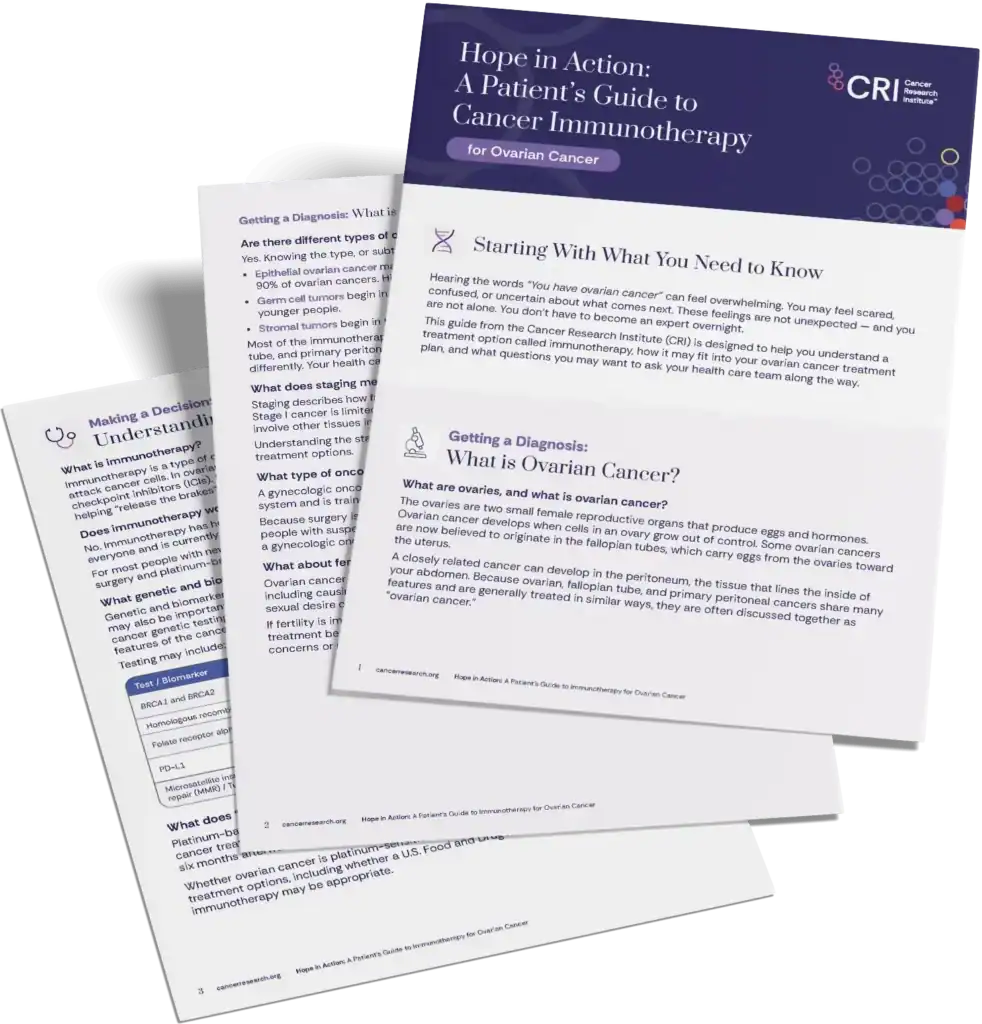
Beyond individual fellowships, Rob Malone has also demonstrated a significant, multi-year commitment through the Victoria Ann Michelis Fund to the CRI Discovery Engine. This ambitious initiative represents a pioneering effort to generate standardized, high-quality, and AI-ready data. The objective is to create a universally accessible and comparable data repository that researchers can utilize across diverse institutions and studies, thereby accelerating the pace of scientific discovery.
Ovarian cancer is slated to be one of the critical areas of focus for the Discovery Engine. The ability to easily compare research findings, identify subtle patterns across vast datasets, and collaboratively build upon one another’s work is paramount in complex fields like immunotherapy. By facilitating this unprecedented level of data sharing and analysis, the initiative aims to dramatically accelerate immunotherapy research for difficult-to-treat tumors. This collaborative, data-driven approach is expected to unlock new insights, identify novel therapeutic targets, and ultimately lead to the development of more effective treatment options for patients, offering them increased hope and precious time. The integration of artificial intelligence will allow for the analysis of correlations and predictive models that would be impossible for human researchers alone, transforming raw data into actionable insights for clinical translation.
A Legacy Beyond Life: Broader Philanthropic Reach and Future Outlook
Vicky Michelis emphatically refused to let cancer define her life, and similarly, it does not define her expansive legacy. Her profound impact continues to resonate through the lives of those she loved, the causes she passionately championed, and the far-reaching generosity now extended in her name through the Victoria Ann Michelis Fund. The fundamental instinct that guided Vicky throughout her life—to stand as a staunch ally for those in need—persists through the fund’s support for underserved children, individuals facing homelessness or hunger, and initiatives promoting animal welfare. These diverse charitable endeavors reflect the multifaceted nature of Vicky’s compassion, ensuring her benevolent spirit touches a wide spectrum of vulnerable beings.
Moreover, her legacy is powerfully embodied in the groundbreaking research being funded, which strives to realize a future Vicky yearned for but did not personally experience. This future envisions a world where individuals diagnosed with ovarian cancer possess a significantly broader array of treatment options, more substantive reasons for hope, and, critically, more opportunities for extended time with their loved ones. The Victoria Ann Michelis Fund stands as a testament to the enduring power of one individual’s compassion, amplified through strategic philanthropy to create a lasting impact that transcends personal loss and fosters collective hope for a healthier future. The commitment to innovative, high-risk, high-reward research through organizations like the Cancer Research Institute demonstrates a proactive approach to addressing some of medicine’s most intractable challenges, ensuring that Vicky’s legacy is one of forward-looking progress and profound human connection.
