
 By Nana O
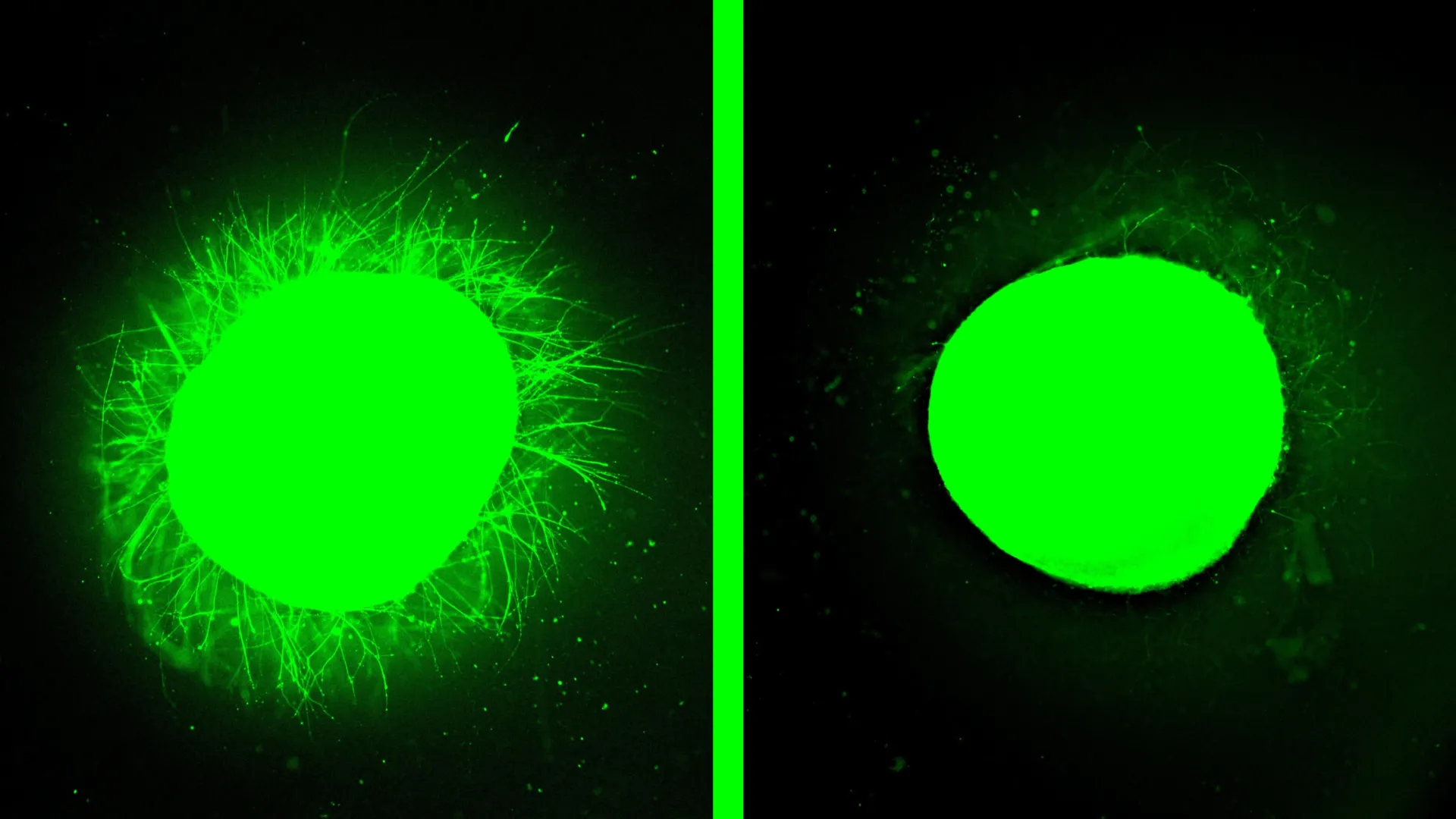
Northwestern University scientists have achieved a significant breakthrough in the quest to understand and treat human spinal cord injuries (SCIs) by developing the most advanced laboratory-grown model of the human spinal cord to date. This novel organoid system, meticulously crafted from human stem cells, not only replicates the complex biological cascade of SCI but also demonstrates remarkable efficacy when tested with a promising regenerative treatment known as "dancing molecules." This development marks a pivotal moment in preclinical research, offering a more accurate and predictive platform for evaluating potential therapies before human clinical trials.
The groundbreaking research, published on February 11 in the prestigious journal Nature Biomedical Engineering, details how the Northwestern team engineered human spinal cord organoids capable of faithfully reproducing the devastating consequences of SCI. These miniature, three-dimensional tissue constructs, derived from induced pluripotent stem cells, exhibit key pathological features observed in human patients, including widespread cell death, robust inflammatory responses, and the formation of glial scars. This scar tissue, a dense accumulation of reactive astrocytes and other cells, acts as a formidable physical and chemical barrier, critically hindering the natural regeneration of severed nerve fibers.
A Landmark Advance in Spinal Cord Organoid Technology
For years, researchers have utilized organoid technology to study various human organs and diseases. However, creating functional spinal cord organoids that accurately mimic the complexities of injury has remained a significant challenge. Previous attempts often lacked the necessary cellular diversity and structural maturity to effectively model traumatic damage. The Northwestern team’s innovation lies in their ability to guide stem cells over several months to form intricate spinal cord tissue that closely resembles the developing human spinal cord. This mature tissue, measuring several millimeters across, proved capable of sustaining and modeling the severe impacts of traumatic injury.
A key differentiator of this new model is the successful incorporation of microglia, the resident immune cells of the central nervous system. "It’s kind of a pseudo-organ," explained Samuel I. Stupp, the study’s senior author and a renowned leader in regenerative materials science at Northwestern. "We were the first to introduce microglia into a human spinal cord organoid, so that was a huge accomplishment. It means that our organoid has all the chemicals that the resident immune system produces in response to an injury. That makes it a more realistic, accurate model of spinal cord injury." The inclusion of microglia allows the organoid to replicate the critical inflammatory processes that are a hallmark of SCI, providing a more comprehensive representation of the in vivo response.
Replicating the Devastation of Spinal Cord Injury
To rigorously test the capabilities of their organoid model, the researchers simulated two common types of spinal cord trauma. In one experimental setup, the organoids were precisely cut with a scalpel, mimicking the laceration injuries that can occur during surgery or severe accidents. In another, the organoids were subjected to a compressive contusion injury, a model designed to replicate the blunt force trauma experienced in incidents like car crashes or falls.
The results were stark and scientifically significant. Both injury models induced widespread neuronal cell death and triggered the formation of glial scars. The researchers observed a distinct transformation in astrocytes, a type of glial cell, which proliferated and became densely packed, forming the characteristic scar tissue. Furthermore, they detected the production of chondroitin sulfate proteoglycans (CSPGs), molecules known to inhibit nerve regeneration and play a crucial role in the formation of glial scars following injury.
"We could distinguish between the astrocytes that are a part of normal tissue and the astrocytes in the glial scar, which are large and very densely packed," Stupp elaborated. "We also detected the production of chondroitin sulfate proteoglycans, which are molecules in the nervous system that respond to injury and disease." This precise recapitulation of key SCI pathologies validates the organoid system as a powerful tool for studying the disease process.
"Dancing Molecules" Show Remarkable Regenerative Potential
The true promise of this research emerged when the injured organoids were treated with a novel therapeutic approach developed by Stupp and his team: "dancing molecules." This innovative therapy, which first showed remarkable success in animal models, utilizes specially designed supramolecular therapeutic peptides (STPs) that exhibit dynamic molecular motion. These molecules, delivered as a liquid injection, self-assemble into a nanofiber scaffold that mimics the extracellular matrix of the spinal cord.
The critical innovation of dancing molecules lies in their controlled, rapid movement within this scaffold. This dynamic motion allows them to efficiently interact with cell receptors, which are also in constant flux. "Given that cells themselves and their receptors are in constant motion, you can imagine that molecules moving more rapidly would encounter these receptors more often," Stupp had previously explained. "If the molecules are sluggish and not as ‘social,’ they may never come into contact with the cells."
The results of the treatment on the human spinal cord organoids were nothing short of dramatic. Following the administration of dancing molecules, the injured tissue displayed substantial neurite outgrowth. Neurites are the branching extensions of neurons, including axons, which are vital for transmitting electrical and chemical signals between nerve cells. The therapy significantly reduced the glial scar tissue, making it barely detectable. Crucially, the organoids showed signs of organized neuronal growth, mirroring the axon regeneration observed in previous animal studies.
"When our therapy was applied, the glial scar faded significantly to become barely detectable, and we saw neurites growing, resembling the axon regeneration we saw in animals," Stupp stated. "This is validation that our therapy has a good chance of working in humans."
The potential of this therapy is further underscored by its recent Orphan Drug Designation from the U.S. Food and Drug Administration (FDA). This designation is granted to drugs intended to treat rare diseases or conditions, and it can expedite the development and review process for promising treatments. The successful demonstration of efficacy in this sophisticated human organoid model provides robust preclinical evidence supporting the advancement of dancing molecules toward clinical trials.
The Science Behind the "Dancing Molecules"
The concept of supramolecular therapies, which Stupp’s lab has been pioneering for over a decade, leverages the power of self-assembling molecular structures to achieve therapeutic effects. Dancing molecules belong to a broader class of STPs, which rely on the collective action of tens of thousands of molecules to activate cellular pathways. Interestingly, Stupp’s earlier investigations into supramolecular therapies nearly 15 years ago laid the groundwork for current drug classes, such as GLP-1 agonists used for weight loss and diabetes management, highlighting the long-term impact of fundamental research.
The effectiveness of the dancing molecules is intrinsically linked to their dynamic behavior. The nanofiber network they form provides a supportive structure, but it is the rapid, almost playful, movement of the individual molecules within this network that drives cellular repair. This motion allows the STPs to repeatedly engage with cellular receptors, effectively signaling the body’s innate repair mechanisms to activate and overcome the inhibitory signals present in the injured spinal cord.
In prior animal experiments conducted by Stupp’s lab, a single injection of dancing molecules administered 24 hours after a severe spinal cord injury enabled mice to regain mobility within four weeks. These studies also revealed that formulations with faster molecular motion outperformed those with slower movement, reinforcing the hypothesis that increased molecular dynamism enhances bioactivity and cellular signaling.
Implications for the Future of Spinal Cord Injury Treatment
The development of this sophisticated human spinal cord organoid model and the compelling results achieved with dancing molecules have profound implications for the future of SCI research and treatment.
Enhanced Preclinical Testing: The organoid model offers a more accurate and predictive platform for testing new therapies compared to traditional animal models. By using human cells, researchers can gain insights into how potential treatments will behave in the human body, potentially reducing the failure rate in clinical trials. This can accelerate the drug development process and lower costs.
Accelerated Drug Discovery: The ability to rapidly screen multiple compounds and therapeutic strategies on these organoids could significantly speed up the discovery of new treatments for SCI. Researchers can now efficiently evaluate the efficacy of different molecular designs and delivery methods.
Personalized Medicine Potential: Looking ahead, Stupp envisions further advancements in organoid technology that could lead to personalized medicine approaches. By generating organoids from a patient’s own stem cells, researchers could create bespoke spinal cord tissues to test therapies tailored to an individual’s genetic makeup and injury profile. This could minimize the risk of immune rejection if these engineered tissues were ever to be considered for implantation.
Understanding Chronic Injuries: The current organoid model primarily focuses on acute injuries. The Northwestern team plans to develop even more advanced organoids capable of replicating chronic, long-standing injuries. These injuries typically involve more fibrotic and persistent scar tissue, presenting a distinct therapeutic challenge. Engineering models that reflect these complexities will be crucial for developing treatments for individuals living with long-term SCI.
"One of the most exciting aspects of organoids is that we can use them to test new therapies in human tissue," Stupp emphasized. "Short of a clinical trial, it’s the only way you can achieve this objective." The successful validation of the dancing molecules therapy in this human model provides strong support for its potential to improve recovery outcomes for individuals with spinal cord injuries.
The research was supported by the Center for Regenerative Nanomedicine at Northwestern University and a generous gift from the John Potocsnak Family for spinal cord injury research, underscoring the collaborative and dedicated efforts driving this critical area of scientific endeavor. As this technology continues to evolve, the hope for restoring function and improving the lives of millions affected by spinal cord injuries moves closer to reality.
