
 By admin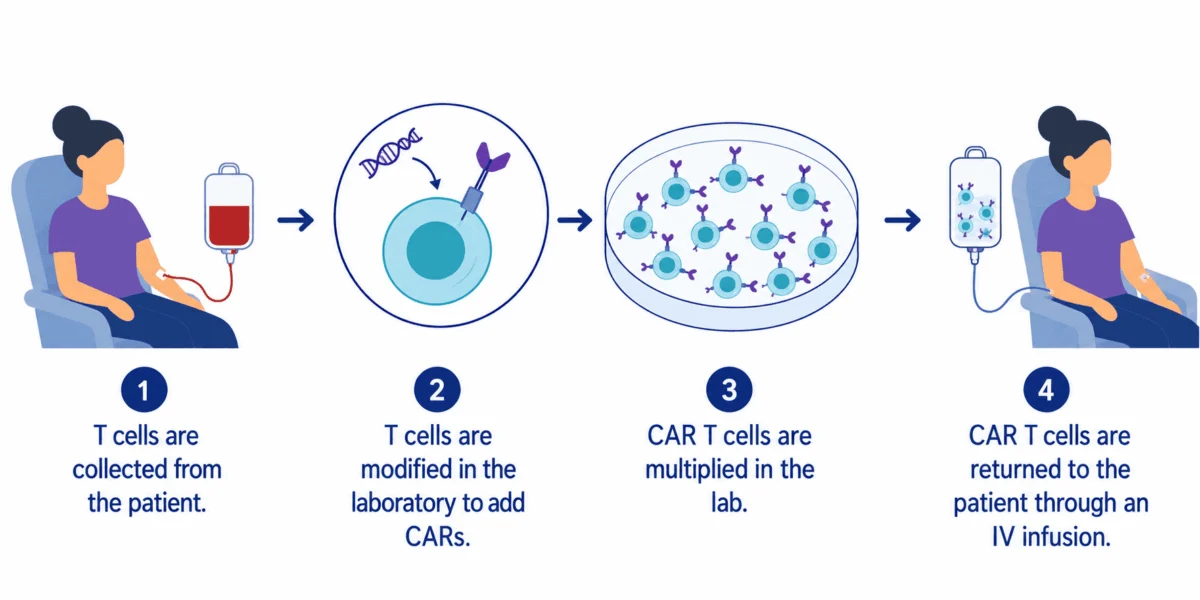
The landscape of cancer treatment is continually evolving, offering renewed hope for patients facing once-incurable diseases. Chimeric Antigen Receptor (CAR) T-cell therapy stands as a testament to this progress, transforming the outlook for many with aggressive blood cancers. However, as survival rates improve and patients live longer, questions extend beyond mere remission to encompass the quality of life after treatment, particularly for younger individuals. A critical area of inquiry now focuses on the potential impact of CAR T-cell therapy on fertility, an issue being directly addressed by a collaborative study involving researchers from Blood Cancer United, Moffitt Cancer Center, and University of Florida Health. This vital research, coming into focus during September’s Blood Cancer Awareness Month, seeks to gather comprehensive data from adult survivors to understand if, and for whom, this revolutionary treatment might affect the ability to have biological children.
The Rise of CAR T-Cell Therapy: A Paradigm Shift in Cancer Treatment
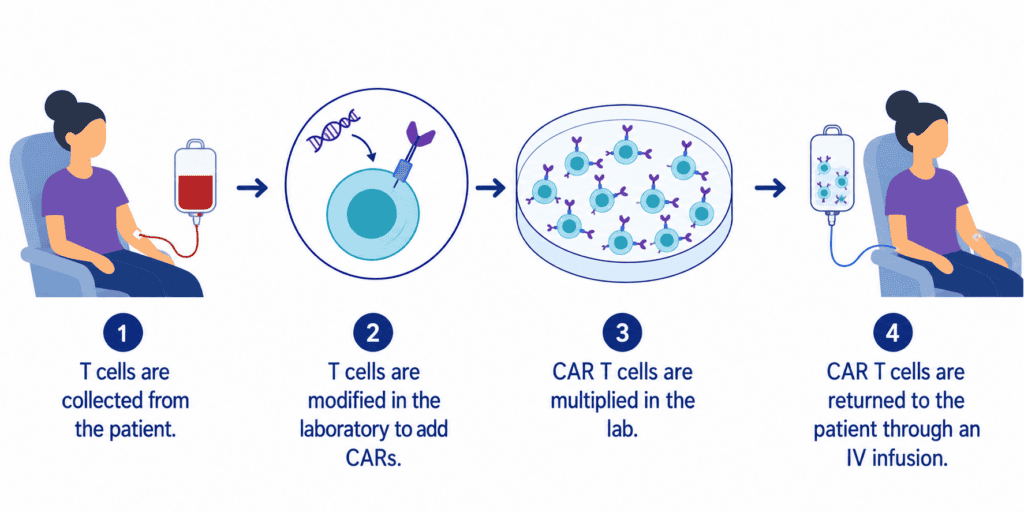
CAR T-cell therapy represents a groundbreaking frontier in immunotherapy, harnessing the body’s own immune system to combat cancer. At its core, the treatment involves collecting a patient’s T-cells, a type of white blood cell crucial for immune response, and genetically engineering them in a laboratory. A "chimeric antigen receptor" (CAR) is introduced into these cells, equipping them with the ability to precisely identify and target specific proteins found on cancer cells. Once modified, these supercharged T-cells are multiplied into millions and infused back into the patient, where they act as a "living drug," actively seeking out and destroying malignant cells. This personalized approach has revolutionized the treatment of several blood cancers, including certain types of leukemia, lymphoma, and multiple myeloma.
The journey to CAR T-cell therapy’s clinical success is rooted in decades of intensive scientific investigation. Early concepts of immunotherapy date back over a century, but the idea of genetically modifying T-cells to target cancer began gaining significant traction in the late 20th and early 21st centuries. A pivotal moment arrived in 2010 when research spearheaded by CRI Scientific Advisory Member Carl June, MD, demonstrated remarkable success, achieving durable remissions in patients with refractory chronic lymphocytic leukemia using CAR T-cells. This breakthrough paved the way for accelerated research and clinical trials, culminating in the historic approval by the U.S. Food and Drug Administration (FDA) of the first CAR T-cell therapy in 2017. Since then, multiple CAR T-cell products have received regulatory approval, expanding treatment options for an increasing number of patients and solidifying its place as a cornerstone in modern oncology. The rapid evolution and demonstrated efficacy of this therapy underscore its profound impact, offering a lifeline to patients who had exhausted conventional treatment avenues.
Unraveling the Fertility Puzzle: The Challenge of Confounding Factors
Despite the undeniable success of CAR T-cell therapy in treating advanced blood cancers, a comprehensive understanding of its long-term side effects, particularly concerning reproductive health, remains an evolving area. The initial patient cohorts treated with CAR T-cells typically presented with highly aggressive blood cancers that had either relapsed or proven resistant to multiple prior therapies. Consequently, early studies primarily focused on establishing the safety and efficacy of CAR T-cells in these critically ill individuals, who often had limited remaining treatment options.
This historical context inherently complicates the study of fertility outcomes. Many CAR T-cell recipients have a complex treatment history, having previously undergone therapies known to significantly impact reproductive function. These often include intensive chemotherapy regimens, radiation therapy, and stem cell transplantation, all of which carry well-documented risks to fertility. Furthermore, patients typically receive a brief but potent course of chemotherapy, known as lymphodepletion, immediately prior to CAR T-cell infusion. This pre-conditioning regimen is crucial for preparing the body to receive the engineered cells, clearing out existing immune cells to create space for the CAR T-cells to expand and function effectively. While essential for treatment success, lymphodepletion chemotherapy itself can contribute to fertility impairment.
The cumulative effect of these prior and concurrent treatments makes it exceedingly difficult to isolate the specific impact of CAR T-cell therapy on fertility. If a patient experiences fertility challenges post-CAR T, attributing these issues solely to the CAR T-cells, rather than to the compounding effects of earlier treatments, their underlying disease, age, or a combination of these factors, presents a significant scientific and clinical challenge. This intricate web of variables underscores the necessity for targeted research designed to disentangle these effects and provide clearer, evidence-based guidance to patients and their care teams.
The Collaborative Study: Pioneering Patient-Centric Data Collection
Recognizing this critical knowledge gap, researchers at Blood Cancer United, Moffitt Cancer Center, and University of Florida Health embarked on an innovative study to gather direct, real-world data on fertility experiences following CAR T-cell therapy. The cornerstone of their approach is a patient-facing survey, designed to collect firsthand accounts from adult survivors who have received CAR T-cell therapy for blood cancer. This methodology is particularly valuable as it captures a breadth of experiences that might not be evident in traditional clinical trial settings, where fertility outcomes are often secondary endpoints or not explicitly tracked.
Preliminary results from the first 106 respondents offer an important initial glimpse into this complex issue. Of those surveyed, 32 individuals reported desiring children after their CAR T-cell therapy, with 12 having actively attempted to conceive. The findings revealed that six pregnancies had occurred within this cohort – four reported by female respondents and two by partners of male respondents. Notably, at the time of the analysis, three of these pregnancies had resulted in healthy live births, while the other three were ongoing. A significant observation from these early results is that none of the six reported pregnancies involved the use of assisted reproductive technology (ART), suggesting natural conception occurred.
While these early findings are undeniably encouraging, they come with important caveats. The data does not yet provide definitive answers regarding whether CAR T-cell therapy definitively affects fertility, the precise incidence of fertility impairment, or which patient subgroups might be at higher risk. However, the occurrence of successful pregnancies and live births after CAR T-cell therapy is a powerful indication that parenthood remains a possibility for some survivors. Nina Logan, MD, Senior Director of Research & Clinical Programs at Blood Cancer United, emphasized the profound significance of this initial data: "These early findings are encouraging, but they also highlight how much we still need to learn. Our goal is to give patients and their care teams better information about fertility after CAR T-cell therapy so they can have informed conversations about treatment, survivorship, and their plans for the future." This statement encapsulates the patient-centered mission of the research: to empower individuals with knowledge to make informed life decisions post-treatment.
Expanding the Lens: Insights from Autoimmune Disease Applications
The exploration of CAR T-cell therapy’s impact on fertility is further enriched by observations from its emerging application in treating autoimmune diseases, such as lupus. Patients receiving CAR T-cell therapy for autoimmune conditions typically have different underlying diseases and often a less extensive history of conventional cytotoxic cancer treatments compared to those with advanced blood cancers. This distinct patient profile offers a unique opportunity to gain insights into the potential effects of CAR T-cell therapy itself, with fewer confounding variables from prior intensive therapies.
A compelling report from 2026 described 14 pregnancies among 13 patients who had previously undergone CAR T-cell therapy for autoimmune diseases. At the time of publication, eight healthy infants had been born from these pregnancies. While these numbers are still small and the patient population differs significantly from cancer patients, these findings contribute valuable data points to the broader understanding of reproductive health post-CAR T. They suggest that the therapy, at least in some contexts, may not inherently preclude future pregnancies. However, researchers are cautious to extrapolate these findings directly to cancer survivors, acknowledging the differences in disease pathology, overall health status, and prior treatment exposures. Nevertheless, these parallel investigations, combined with the emerging data from cancer survivors, collectively contribute to a growing body of evidence that will ultimately help piece together a more complete picture of CAR T-cell therapy’s reproductive implications.
The Broader Impact: Empowering Patients and Guiding Future Care
The significance of this research extends far beyond academic curiosity. For cancer survivors, especially younger individuals, the ability to have biological children is a deeply personal and often paramount concern. Clarifying whether CAR T-cell therapy affects fertility, and to what extent, will enable clinicians to provide more accurate and empathetic guidance to patients before, during, and after treatment. This includes robust counseling on potential risks, discussions about fertility preservation options (such as egg or sperm banking) prior to therapy, and information about various family-building pathways post-treatment.
From a clinical perspective, this research helps to refine the holistic care model for cancer survivors. As advanced therapies like CAR T-cells transform life-threatening diagnoses into manageable conditions, the focus of care increasingly shifts towards optimizing long-term health and quality of life. Understanding fertility outcomes is a crucial component of this comprehensive survivorship planning. It allows for a proactive approach, integrating reproductive health discussions into the standard treatment planning process, ensuring that patients are fully informed and supported in making decisions that align with their life goals.
The CAR T-Cell Therapy and Fertility Survey is an ongoing, vital part of this broader effort. Researchers plan to continue expanding their data collection, examining a wider array of patient experiences, delving into specific laboratory measures related to fertility (e.g., hormone levels, ovarian reserve assessments, sperm analyses), and analyzing fertility outcomes across additional patient groups receiving CAR T-cell therapy for various indications. The ultimate goal is to build a robust evidence base that can definitively answer these critical questions.
The call for participation remains open to adults aged 18 and older who have received CAR T-cell therapy for blood cancer. By generously sharing their personal experiences, patients are directly contributing to the advancement of medical knowledge, helping to shape future clinical guidelines, and ultimately empowering countless others to navigate the complexities of cancer treatment and life beyond it with greater certainty and hope. The collective insights gathered from these patient stories are indispensable in ensuring that groundbreaking therapies like CAR T-cells not only save lives but also preserve the fundamental aspects of human experience, including the profound possibility of parenthood.
Sources:
- "Pediatric cancer immunotherapy and potential for impact on fertility: A need for evidence-based guidance," Transplant Cell Ther, 2024.
- "Fertility outcomes following CAR T-cell therapy: Results from a patient-facing survey," Tandem Meetings | Transplantation & Cellular Therapy Meetings of ASTCT and CIBMTR, 2026.
- "Pregnancies in patients with autoimmune disease receiving CAR T-cell therapy," N Engl J Med, 2026.
- "Approved Cellular and Gene Therapy Products," U.S. Food and Drug Administration, 2026.
Disclaimer: This article provides information about a research opportunity for informational purposes only. The Cancer Research Institute (CRI) does not endorse or recommend the study, participation in the study, or the study sponsor. CRI is not involved in conducting the study or determining who is eligible to participate. Individuals interested in learning more should contact the study team directly using the information provided.
