
 By Suherman Candra Maholtra
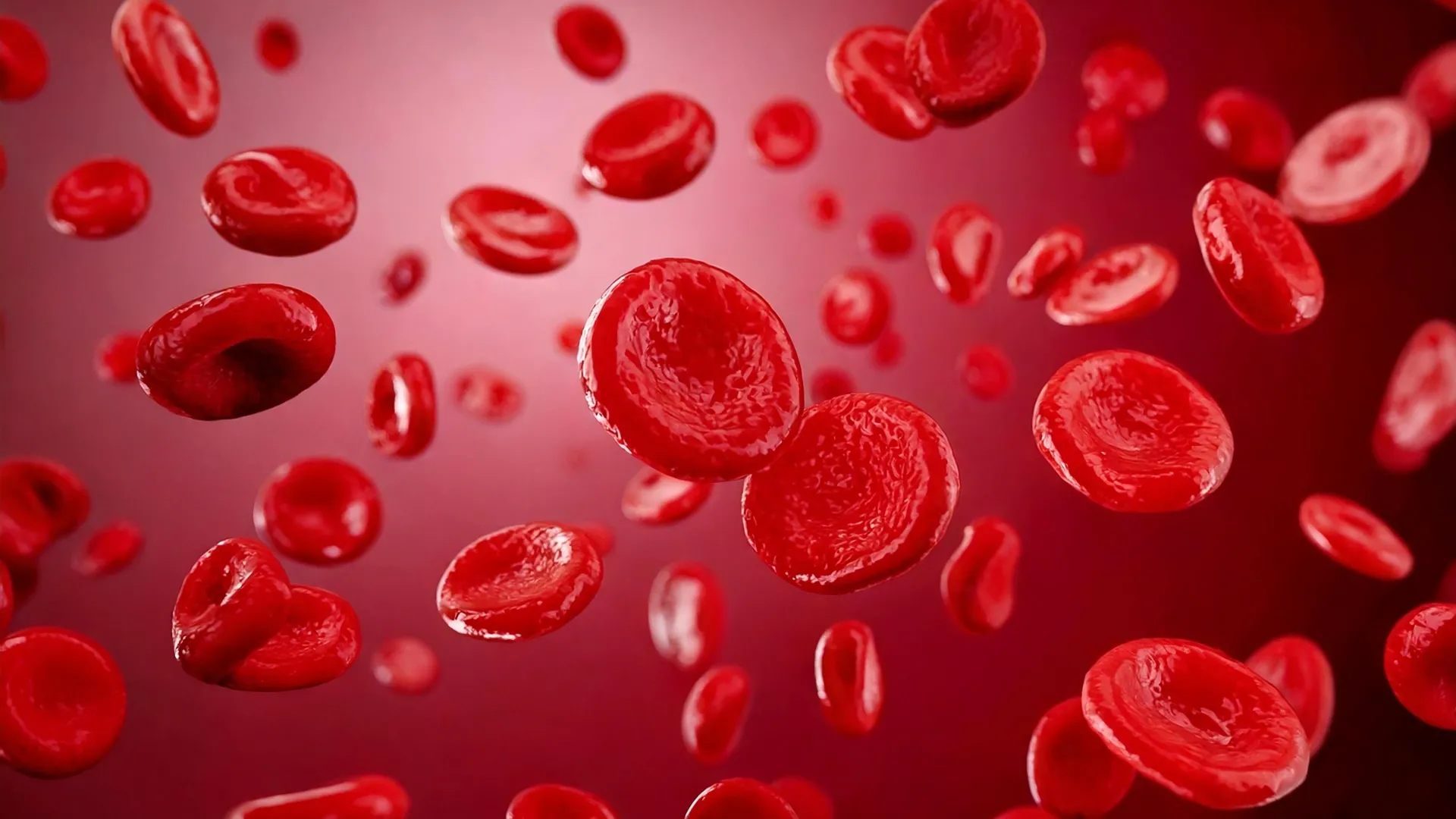
The landscape of transfusion medicine has been fundamentally altered following a breakthrough discovery by a collaborative team of scientists in the United Kingdom. After more than half a century of uncertainty, researchers have finally identified the genetic source of a mysterious marker on human red blood cells known as the AnWj antigen. This milestone has led to the official establishment of MAL as the 47th human blood group system, providing a definitive molecular explanation for a serological puzzle that has persisted since 1972. The discovery, spearheaded by scientists at NHS Blood and Transplant (NHSBT) in Bristol, the International Blood Group Reference Laboratory (IBGRL), and the University of Bristol, offers a new era of safety for patients with exceptionally rare blood profiles.
The Historical Context of the AnWj Antigen
The story of the AnWj antigen began in 1972 when clinicians first identified a patient whose blood reacted unexpectedly during cross-matching. While the presence of the antigen was clear—it is found in more than 99.9% of the global population—the biological mechanism responsible for its expression remained elusive. For decades, the protein carrying the antigen and the gene encoding it were unknown, leaving hematologists in a difficult position when treating the "AnWj-negative" minority.
Blood groups are defined by the presence or absence of specific inherited antigens on the surface of red blood cells. While the ABO and Rhesus (Rh) systems are the most widely recognized, the International Society of Blood Transfusion (ISBT) now recognizes dozens of distinct systems. Each system represents a unique set of antigens controlled by a specific gene or a cluster of closely linked genes. The inability to categorize AnWj within a known genetic framework meant that it remained a "floating" antigen, a serological curiosity with significant clinical risks but no genetic home.
The Science of the Breakthrough: Whole Exome Sequencing
The resolution of this fifty-year mystery was made possible by the advent of whole exome sequencing (WES), a powerful genomic tool that allows scientists to focus on the protein-coding regions of the genome. Because the inherited form of AnWj-negative status is vanishingly rare, traditional genetic mapping techniques were insufficient.
The research team analyzed the DNA of a small cohort of genetically AnWj-negative individuals. This group included members of an Arab Israeli family and, most notably, a blood sample donated in 2015 by the very woman who was the first person identified as AnWj-negative in the 1970s. By comparing the exomes of these individuals, the researchers identified a common thread: homozygous deletions in the MAL gene.
The MAL gene is responsible for producing the Mal protein (Myelin and Lymphocyte protein), a small, highly hydrophobic integral membrane protein. In the general population, this protein is expressed on the surface of red blood cells and carries the AnWj antigen. In individuals with the rare inherited phenotype, the lack of a functional MAL gene results in the total absence of the Mal protein, and consequently, the absence of the AnWj antigen.
To move from association to causation, the researchers employed advanced gene-editing and laboratory techniques. Using cell lines, they demonstrated that introducing a healthy MAL gene into cells would cause them to express the AnWj antigen. Conversely, cells without the gene or those with the specific deletions found in the patients remained AnWj-negative. This "necessary and sufficient" proof was the final requirement for the ISBT to formally recognize MAL as a new blood group system.
Clinical Implications and Patient Safety
The identification of the MAL gene is far more than a nomenclatural update; it is a critical tool for clinical safety. When an AnWj-negative individual is exposed to AnWj-positive blood—either through transfusion or during pregnancy—their immune system recognizes the antigen as a foreign invader and produces antibodies. If that individual receives a subsequent transfusion of positive blood, these antibodies can launch a devastating attack on the donor cells, leading to a hemolytic transfusion reaction.
Finding compatible blood for these patients is an immense challenge. Because 99.9% of the population is AnWj-positive, only one in a thousand donors—or fewer, depending on the specific genetic rarity—might be a match.
Differentiating Inherited vs. Acquired Deficiency
One of the most complex aspects of the AnWj antigen is that it can be "lost" during a person’s lifetime. The research clarified a vital distinction:
- Inherited AnWj-negative: A permanent condition caused by mutations in the MAL gene. These individuals are the most at risk for developing long-term antibodies.
- Acquired AnWj-negative: A transient or secondary condition often associated with hematological malignancies or certain cancers. In these cases, the body suppresses the expression of the antigen, but the underlying MAL gene is often normal.
With the new genetic test, doctors can now quickly determine whether a patient’s negative status is genetic or a symptom of another disease. This prevents unnecessary searches for rare donor blood when the cause is an underlying disorder that might be managed differently.
Recent Case Studies in Transfusion Medicine
The urgency of this discovery is highlighted by clinical cases reported as recently as 2026. These cases demonstrate the high-stakes environment in which blood group researchers operate.
In one instance, a 75-year-old man suffering from severe anemia was found to have an anti-AnWj autoantibody. Because compatible AnWj-negative blood was unavailable, his medical team was forced to proceed with an unmatched transfusion. Genomic testing using the newly discovered MAL markers confirmed that his gene was normal, suggesting his condition was acquired. Fortunately, he did not suffer a hemolytic reaction, but the case underscored the anxiety and risk involved when the genetic background is unknown.
In another 2026 case, a patient with high-grade B-cell lymphoma developed a complement-binding anti-AnWj autoantibody. Following signs of red blood cell destruction after transfusion, clinicians turned to sutimlimab, a monoclonal antibody typically used for cold agglutinin disease. This marked the first recorded use of sutimlimab to manage anti-AnWj-associated hemolysis. While the results were promising, the complexity of the case illustrated the need for the precise diagnostic capabilities that the MAL discovery now provides.
Official Responses and Expert Insights
The successful conclusion of the project has been met with acclaim from the international scientific community. Louise Tilley, a Senior Research Scientist at IBGRL who spent nearly two decades on this specific puzzle, noted the personal and professional significance of the find. She emphasized that the rarity of the genetic cases made the work exceptionally difficult, and that without modern exome sequencing, the MAL gene—which was not an obvious candidate—might have remained hidden for decades more.
Professor Ash Toye of the University of Bristol highlighted the role of gene manipulation in the validation process. By manipulating gene expression in developing blood cells, the team was able to bridge the gap between genetic observation and biological proof. This methodology is expected to serve as a blueprint for identifying other remaining "orphan" antigens in the human blood map.
Nicole Thornton, Head of IBGRL Red Cell Reference, pointed out that the development of genotyping tests is the immediate next step. By integrating MAL markers into existing high-throughput genotyping platforms, blood centers around the world can more efficiently screen donors and identify those rare individuals who can provide life-saving units for AnWj-negative patients.
The Expanding Map of Human Blood
The ratification of MAL as ISBT 047 is part of a rapid acceleration in blood group discovery. Between 2024 and 2026, several other systems were also formalized, including ER (associated with the Piezo1 protein), CD36, and ATP11C. By September 2026, the JAMA blood group system was announced as the 49th system.
This trend reflects the shift from serology (testing how blood reacts to antibodies) to genomics (testing the DNA itself). As the cost of sequencing drops and the precision of CRISPR-based validation grows, the "dark matter" of the human blood group system is being illuminated.
Broader Implications for Global Health
The discovery of the MAL blood group system has several long-term implications for global healthcare systems:
- International Rare Donor Registries: Rare blood types often require international cooperation. A patient in the UK might need a donation from a person in Israel or the United States. Having a standardized genetic test for MAL allows for a unified global database of AnWj-negative donors.
- Improved Diagnostic Accuracy: For patients with unexplained transfusion reactions, the ability to screen the MAL gene provides immediate answers, reducing diagnostic odysseys that can last years.
- Insights into the Mal Protein: Beyond blood typing, the discovery opens new avenues for research into what the Mal protein actually does in red blood cells. While known for its role in other tissues, its function in hematology is now a subject of renewed interest, potentially leading to a better understanding of cell membrane stability and transport.
- Personalized Transfusion Medicine: This discovery moves the medical field closer to a "vein-to-vein" personalized approach, where a patient’s entire minor antigen profile is matched with a donor, virtually eliminating the risk of alloimmunization.
The resolution of the AnWj mystery stands as a testament to scientific persistence and the power of collaborative research. It closes a chapter that began in a lab in 1972 and opens a new one where rare patients are no longer invisible to the systems meant to protect them. As MAL takes its place alongside ABO and Rh, the genetic map of human blood becomes more complete, ensuring that even the rarest individuals can receive the safest possible care.
