
 By Suherman Candra Maholtra
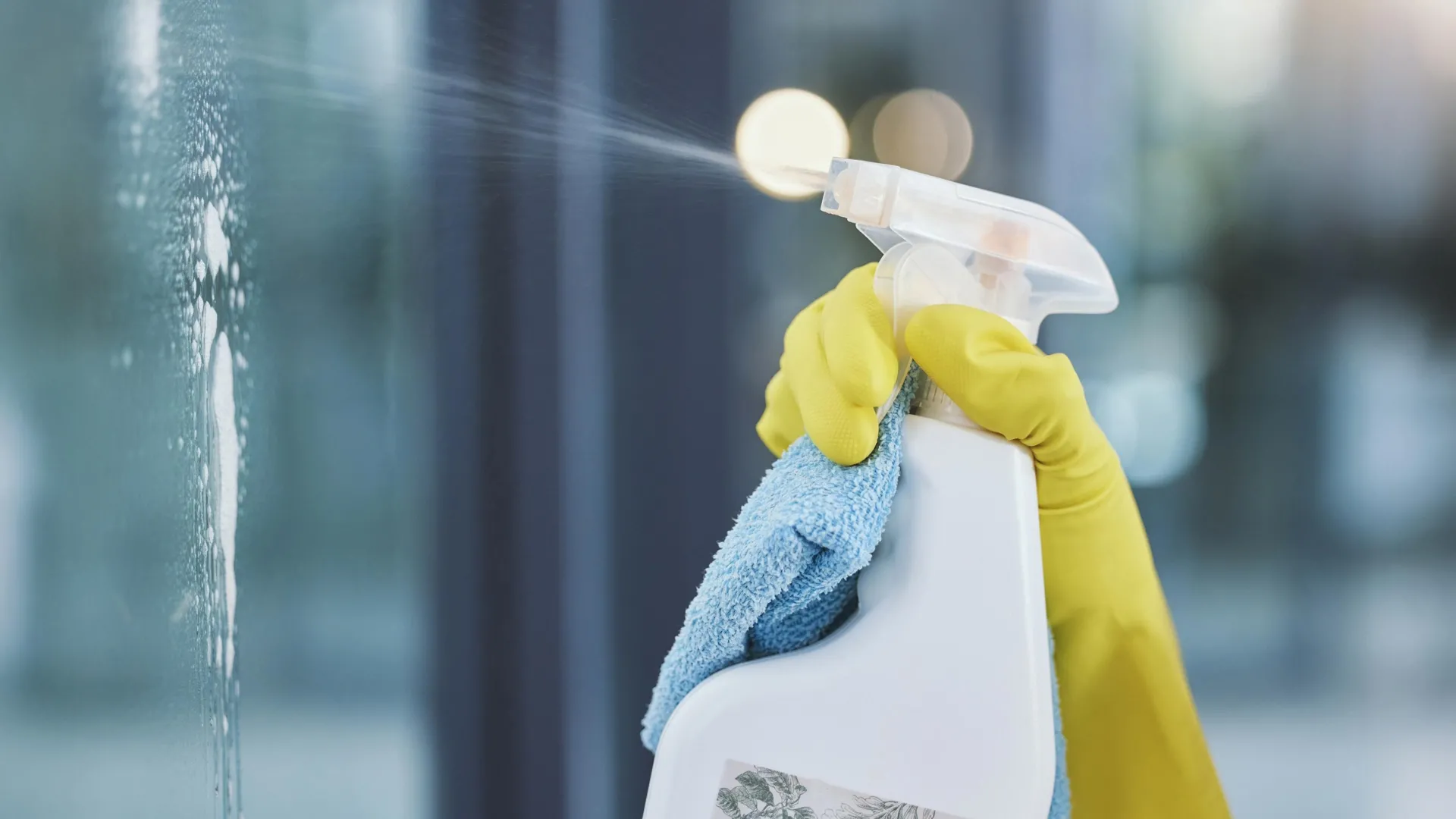
The pervasive association between a fresh, citrusy, or floral scent and a sterile environment is a cornerstone of the modern cleaning industry. However, groundbreaking research led by Brandon Boor at Purdue University suggests that these pleasant aromas are often the result of complex chemical reactions that produce invisible, potentially harmful air pollution. Presented at the American Chemical Society (ACS) fall meeting during the "Healthy Indoor Spaces: Bridging the Microbiome and Chemistry" symposium, the study reveals that fragrance compounds in both conventional and botanical cleaning products can rapidly generate nanoparticles. These ultrafine particles, once inhaled, are capable of penetrating deep into the human respiratory system, posing health risks comparable to those found in high-traffic urban environments.
The Chemistry of Scent and the Invisible Pollutant
The fundamental discovery of the Purdue research team is that the "smell of clean" is frequently a signature of secondary organic aerosol formation. When cleaning agents are applied to surfaces, they release volatile organic compounds (VOCs), specifically a class of chemicals known as terpenes. Common examples include pinene (pine), limonene (lemon), thymol (thyme), and linalool (lavender). While these compounds occur naturally in forests, their concentrations inside a home during a cleaning session can reach levels tens or even hundreds of times higher than those measured in a natural woodland environment.
When these concentrated terpenes encounter indoor oxidants—most notably ozone—a rapid chemical reaction ensues. This process, known as nucleation, leads to the formation of nanoparticles. Brandon Boor, an Assistant Professor of Civil and Construction Engineering at Purdue, emphasizes that while cleaning is essential for removing biological threats like viruses and bacteria, it simultaneously initiates an atmospheric process that creates "invisible air pollution." There is no visible smoke or haze, leading occupants to believe the air is pristine because it smells pleasant.
Methodology: The Purdue Tiny House Experiments
To quantify these reactions under realistic conditions, Boor and his colleagues, including Assistant Professor Nusrat Jung, utilized a specialized facility on the Purdue campus. This "model home" or "tiny house" is equipped with a functional kitchen, wood flooring, and a bathroom, allowing researchers to simulate everyday household chores such as mopping, wiping counters, and spraying disinfectants.
The team employed high-resolution instrumentation capable of measuring particles as small as one to three nanometers—a scale referred to as the nanocluster aerosol regime. By testing a variety of products, from conventional liquid cleaners to "natural" botanical sprays and wipes, the researchers tracked the lifecycle of VOCs from the moment of application.
The results were startling. Routine cleaning tasks were found to generate billions, and in some cases trillions, of nanoparticles. These particles formed and grew with remarkable speed, often within minutes of the cleaning activity beginning. Because most of these particles measure between 1 and 30 nanometers, they fall well below the detection threshold of standard consumer-grade air quality monitors, which typically only measure larger particles (PM2.5). This means that a homeowner’s air quality sensor might indicate "clean" air even as nanoparticle concentrations are skyrocketing.
Comparing Indoor Exposure to Urban Traffic
One of the most significant findings of the study is the intensity of the inhalation dose. Boor’s data indicates that the respiratory dose of nanoparticles experienced during a standard cleaning session can be equal to or greater than the dose received by someone standing next to a busy metropolitan roadway.
While the chemical composition of indoor nanoparticles differs from the soot and metal-based particles found in vehicle exhaust, the sheer volume and the efficiency with which they deposit in the lungs are comparable. "You’re not seeing smoke, dust, or haze in the air," Boor noted. "Instead, you think the air smells great, so it must be clean. But the total dose of particles can be higher than what you’d find outdoors along a busy road."
The health implications of this exposure are a primary concern for the research team. Due to their infinitesimal size, ultrafine particles do not simply get trapped in the upper respiratory tract. Instead, they can travel deep into the alveolar regions of the lungs. Once settled, they can trigger localized irritation and systemic inflammation. Furthermore, emerging toxicological research suggests that some nanoparticles may be small enough to cross the blood-air barrier, potentially entering the bloodstream and affecting other organ systems.
The Role of Ozone and Modern Disinfection Technologies
The research also delved into how modern air-cleaning technologies might exacerbate the formation of nanoparticles. In a secondary study, Boor collaborated with Professor Ernest Blatchley to examine the interaction between scented cleaners and germicidal far-UV (UV-C) lamps. These lamps, which gained popularity during the COVID-19 pandemic as a tool to neutralize airborne pathogens, interact with oxygen molecules in the air to produce ozone.
In experiments conducted in the Purdue tiny house, the introduction of UV-C lamps raised indoor ozone concentrations to approximately 20 to 40 parts per billion. While these levels are often lower than peak outdoor concentrations, they provided the perfect catalyst for terpene reactions. When scented surface cleaners were used in the presence of these elevated ozone levels, the production of nanoparticles became even more intense. This synergy creates a paradox where two different methods of "cleaning"—surface disinfection and air sterilization—combine to degrade the overall chemical air quality of the space.
Chronology of Research and Post-Pandemic Context
The impetus for this research can be traced back to the onset of the COVID-19 pandemic in 2020. As global health authorities emphasized the need for frequent disinfection of high-touch surfaces, the use of cleaning products spiked dramatically. Boor and Jung observed that the market was flooded not only with traditional bleach-based cleaners but also with an array of scented "botanical" products marketed as safer, greener alternatives.
By 2021 and 2022, the Purdue team began focused field and laboratory experiments to bridge the gap between outdoor atmospheric science and indoor environmental engineering. They recognized that while atmospheric scientists had long understood how pine forests contribute to cloud formation through terpene-ozone reactions, the indoor equivalent was a "poorly constrained" area of science. The presentation at the 2023 ACS fall meeting represents the culmination of several years of data collection aimed at identifying indoor surface cleaning as a primary driver of indoor atmospheric chemistry.
Implications for the Cleaning Industry and Public Health
The Purdue study challenges the "smell of clean" marketing paradigm that has dominated the consumer goods industry for decades. For manufacturers, the findings suggest a need for a shift toward "fragrance-free" or "unscented" formulations. While botanical products containing essential oils are often perceived by consumers as more "natural" and therefore safer, the chemistry proves they are equally reactive. A "natural" lemon-scented cleaner releases the same limonene that reacts with ozone to create nanoparticles as a synthetic lemon fragrance.
Public health advocates may see this data as a call for updated indoor air quality standards. Currently, most building codes focus on ventilation rates and the filtration of larger particulate matter. However, the Purdue research highlights a need for strategies that address the gaseous precursors of nanoparticles.
Recommendations for Safer Cleaning Practices
Despite the findings, Professor Boor is quick to clarify that the goal is not to discourage cleaning. The removal of pathogens remains a vital component of public health. Instead, the focus should be on informed mitigation. To reduce exposure to secondary air pollution, the researchers recommend the following:
- Selection of Products: Opt for unscented or fragrance-free cleaning agents whenever possible. This directly reduces the "fuel" (terpenes) available for nanoparticle formation.
- Enhanced Ventilation: Use exhaust fans in kitchens and bathrooms or open windows during and immediately after cleaning to dilute the concentration of VOCs and newly formed particles.
- Strategic Timing: Avoid using ozone-generating air purifiers or certain UV-C disinfection devices at the same time as scented cleaning products.
- Air Filtration: While standard filters may not catch all nanoparticles, high-efficiency particulate air (HEPA) filters can help reduce the overall load of airborne matter as particles grow and combine.
Analysis of Broader Environmental Impact
The study’s findings have implications that extend beyond individual homes. In large office buildings, schools, and hospitals, where professional cleaning crews often work on a massive scale, the cumulative production of nanoparticles could be significant. If professional cleaning products are highly scented, the indoor atmosphere of an entire office floor could reach "unhealthy" levels of secondary organic aerosols shortly after a cleaning shift.
Furthermore, this research contributes to the growing field of "indoor atmospheric chemistry." For a long time, the indoors was considered a shielded environment, but Boor’s work demonstrates that the home is a reactive chemical reactor. As buildings become more airtight to improve energy efficiency, the concentration of these indoor-generated pollutants is likely to increase unless managed through smarter product choices and advanced ventilation strategies.
The research was supported by a National Science Foundation Faculty Early Career Development Program (CAREER) grant and the Alfred P. Sloan Foundation. As the scientific community continues to explore the "microbiome of the built environment," the work of the Purdue team serves as a critical reminder that what we cannot see—and what we think smells good—may be the very thing we need to monitor most closely. In the quest for a healthy home, the most significant indicator of success may not be the scent of a lemon grove, but the absence of any smell at all.
