
 By Suherman Candra Maholtra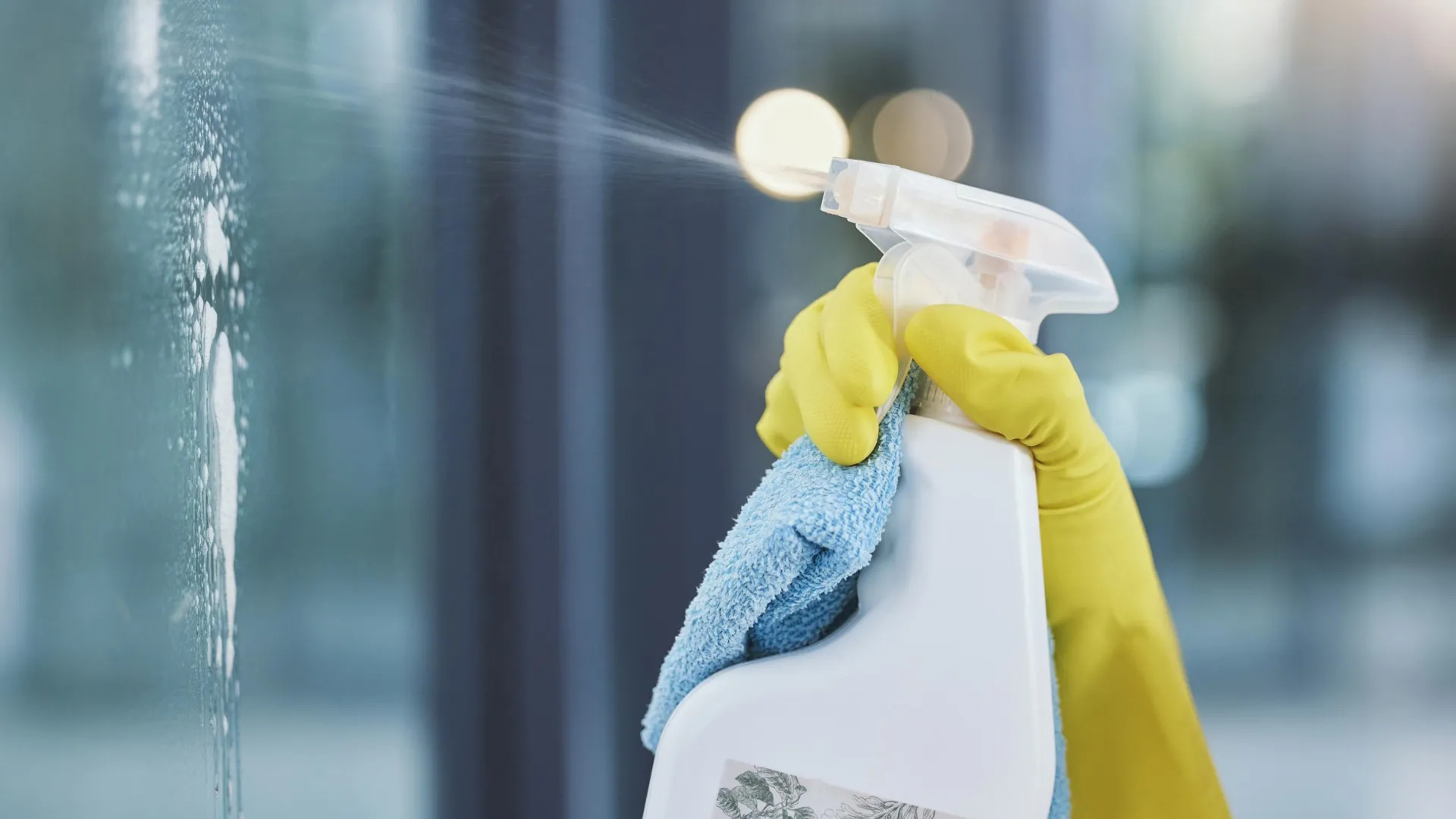
Research led by Brandon Boor, an Associate Professor of Civil and Construction Engineering at Purdue University, reveals that fragrance compounds emitted by both conventional and botanical cleaning products can react rapidly with indoor ozone to generate massive quantities of nanoparticles. These ultrafine particles, often invisible to the naked eye and undetectable by standard home air quality monitors, represent a significant respiratory hazard. When inhaled, these particles are small enough to penetrate the deepest regions of the human lungs, potentially entering the bloodstream and triggering inflammatory responses.
The findings, recently presented at the American Chemical Society (ACS) fall meeting during the "Healthy Indoor Spaces: Bridging the Microbiome and Chemistry" symposium, highlight a hidden dimension of indoor pollution. As Boor noted during the presentation, while cleaning is essential for removing biological threats like viruses and bacteria, the process itself can inadvertently transform the indoor atmosphere into a chemical reactor, producing a "respiratory dose" of pollutants comparable to standing next to a high-traffic highway.
The Chemistry of the "Clean" Scent
The primary drivers of this indoor air pollution are volatile organic compounds (VOCs) known as terpenes. These are naturally occurring compounds found in plants that provide the characteristic smells of essential oils. Common examples include limonene, which provides a citrus scent; pinene, responsible for the smell of pine; and linalool, which gives lavender its aroma. Because consumers have been conditioned to associate these scents with hygiene, manufacturers of cleaning agents, floor waxes, and disinfectants heavily incorporate them into their formulations.
In an outdoor environment, such as a pine forest, terpenes are released slowly by trees. They eventually react with atmospheric ozone, but the concentration of these compounds is typically low, and the reactions occur over a broad geographical area. However, the Purdue research team found that the situation is radically different within the confined spaces of a home or office. When a person sprays a countertop or mops a floor with a scented product, the concentration of terpenes can skyrocket to levels tens or even hundreds of times higher than those found in nature.
The "clean" smell is essentially a cloud of evaporating terpenes. When these concentrated gases encounter ozone—which enters homes from the outdoors or is generated by certain electronic devices—a rapid chemical reaction occurs. This process, known as nucleation, leads to the formation of new, solid, or liquid particles from the gas phase.
Experimental Methodology: The Purdue "Tiny House"
To observe these reactions under realistic conditions, Boor and his colleagues utilized a unique facility at Purdue University: a "model home" or "tiny house" laboratory. This structure is a fully functional living space equipped with a kitchen, wood flooring, and a bathroom, but it is also outfitted with sophisticated scientific instrumentation capable of measuring air particles down to the nanometer scale.
The researchers tested a wide array of products, ranging from conventional liquid cleaners to "green" or botanical-based disinfectant sprays and wipes. The inclusion of botanical products was particularly significant, as many consumers assume that "natural" or "essential oil-based" products are inherently safer for indoor air. The study found that these botanical products often contain high concentrations of terpenes, making them just as reactive as their synthetic counterparts.
During the experiments, the team simulated routine household tasks such as wiping down surfaces and mopping. They utilized high-resolution mass spectrometry and aerosol sizing equipment to track the chemical evolution of the air in real-time. The results were startling: within minutes of cleaning, the air inside the model home was filled with billions, and in some cases trillions, of nanoparticles.
Nanoparticles and the Invisible Health Risk
The particles generated during these cleaning events are classified as ultrafine particles (UFPs) or nanoparticles, typically measuring between 1 and 30 nanometers in diameter. For context, a human hair is approximately 70,000 nanometers wide. Because of their minute size, these particles do not settle quickly like dust; they remain suspended in the air, where they are easily inhaled.
Current consumer-grade air quality monitors usually measure PM2.5—particles that are 2.5 micrometers or smaller. However, the nanoparticles created by cleaning reactions are often too small to be detected by these devices. Consequently, a homeowner might see a "green" or "healthy" light on their air monitor while breathing in a massive concentration of secondary organic aerosols.
From a health perspective, the size of the particle dictates where it lands in the body. Larger particles are often trapped by the nose or throat, but nanoparticles can bypass these natural filters, reaching the alveolar region of the lungs where gas exchange occurs. Once there, they can cause localized inflammation or cross the thin membrane into the circulatory system. This is particularly concerning for vulnerable populations, including children, the elderly, and those with pre-existing respiratory conditions like asthma or chronic obstructive pulmonary disease (COPD).
The Synergy of UV-C Lights and Scented Cleaners
The research also delved into a modern trend in indoor disinfection: the use of germicidal far-UV (UV-C) lamps. These devices became popular during the COVID-19 pandemic as a means to neutralize airborne pathogens. However, when used in conjunction with scented cleaning products, they can exacerbate the air quality problem.
In a study conducted alongside Professor Ernest Blatchley, the Purdue team found that UV-C lamps interact with oxygen molecules in the air to produce ozone as a byproduct. In the controlled environment of the tiny house, ozone levels rose to 20 to 40 parts per billion when the lamps were active. While these levels are often within outdoor safety limits, they provided the necessary fuel for the terpene-rich air to undergo massive particle formation.
This finding suggests that the very tools used to make indoor spaces "safer" can, when combined, create a more toxic environment. The interaction between disinfectant technology and scented chemistry highlights a lack of holistic consideration in indoor environmental design.
Chronology and Context of the Study
The impetus for this research can be traced back to the onset of the COVID-19 pandemic in 2020. As global health organizations emphasized the importance of surface disinfection, the use of cleaning agents reached unprecedented levels. Nusrat Jung, a Purdue Assistant Professor and co-researcher on the project, noted that the frequency and intensity of cleaning in public and private spaces created a unique opportunity to study the long-term chemical shifts in indoor atmospheres.
By 2021, the team began seeing clear patterns in the data suggesting that the "clean air" people were striving for was actually becoming more chemically complex. The presentation at the 2023 ACS meeting served as a culmination of several years of field and laboratory work, providing a definitive link between common consumer habits and secondary pollutant formation.
Broader Implications and Industry Reactions
The implications of this research extend to the regulatory and manufacturing sectors. Currently, indoor air quality is largely unregulated compared to outdoor air, which is governed by standards like the Clean Air Act in the United States. There are few requirements for manufacturers to disclose the potential for secondary particle formation on product labels.
Industry experts suggest that this research may push manufacturers toward "fragrance-free" formulations or the development of "low-reactivity" scents. There is also a growing call for better building ventilation standards. Most modern homes are designed to be airtight for energy efficiency, which inadvertently traps chemical pollutants inside.
Mitigation Strategies for Consumers
Boor and his team are quick to clarify that the goal of the study is not to discourage cleaning. The removal of pathogens remains a vital public health necessity. Instead, the researchers advocate for informed consumer choices and improved mechanical interventions. To reduce exposure to indoor nanoparticles, they recommend several evidence-based steps:
- Selection of Unscented Products: Choosing "fragrance-free" or "unscented" versions of cleaners can drastically reduce the terpene load in the air.
- Enhanced Ventilation: Running kitchen or bathroom exhaust fans during and for at least 30 minutes after cleaning can help flush out reactive gases before they have time to form particles.
- Mechanical Filtration: High-efficiency particulate air (HEPA) filters can capture many of the larger particles as they grow, though they are less effective against the initial nanoclusters.
- Timing and Ozone Management: Avoiding the use of ozone-generating air purifiers or UV-C lamps while cleaning with scented products is crucial to preventing the "perfect storm" of particle formation.
- Passive Ventilation: Opening windows, when outdoor air quality permits, provides a natural dilution of indoor VOCs.
As the scientific community continues to bridge the gap between microbiology and indoor chemistry, the Purdue study serves as a critical reminder that "clean" is not a smell—it is the absence of pollutants. The transition toward a truly healthy indoor environment will require a shift in both consumer psychology and industrial design, prioritizing chemical transparency over the superficial appeal of a scented room.
