
 By admin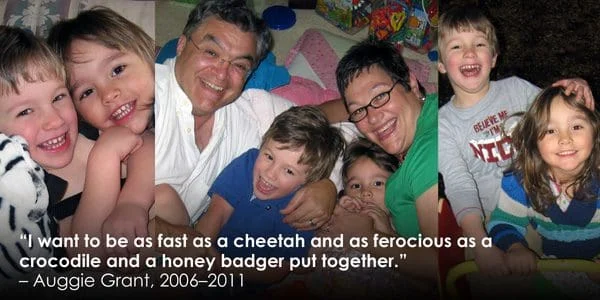
The story of Augusto “Auggie” Grant serves as both a poignant reminder of the fragility of life and a rallying cry for the urgent advancement of pediatric oncology research. In 2011, the Grant family’s world was irrevocably altered when their five-year-old son, a child characterized by his boundless energy and vivid imagination, was diagnosed with an aggressive form of leukemia. The transition from a seemingly healthy, active child to a terminal diagnosis occurred with a speed that highlights the devastating nature of pediatric blood cancers. Today, his parents, Jon and Cheryl Grant, have channeled their grief into a nationwide effort to fund clinical trials and safer treatments through their partnership with CureSearch for Children’s Cancer.
The Life and Spirit of Auggie Grant
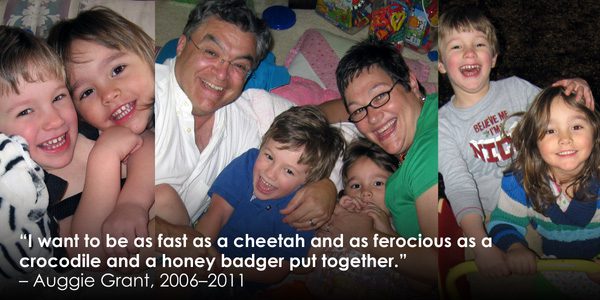
To understand the impact of Auggie Grant’s legacy, one must first understand the "force" that was the boy himself. Described by his father, Jon, as a child who "consumed the room," Auggie lived a life defined by kinetic energy and a rotating cast of personas. At age five, his ambitions were vast: he planned to be an astronaut, a superhero, and a ninja warrior he named Sherman. His fascination with the world was expressed through what he called "uniforms"—costumes that allowed him to step into the roles of the heroes he admired.
His mother, Cheryl, recalls a child who simply did not stop moving from the moment he woke up until he fell asleep. This vitality masked a brewing medical crisis that would soon reveal the limitations of modern pediatric screening. Even as an undiagnosed cancer began to compromise his hematopoietic system, Auggie remained undeterred, frequently telling his parents he wanted to be "as fast as a cheetah and as ferocious as a crocodile." This spirit of "jubilant ferocity" would later become the guiding principle for his family’s advocacy work.
A Rapid Medical Decline: The Chronology of Diagnosis
The timeline of Auggie Grant’s illness provides a sobering look at the aggression of certain pediatric cancers. In late 2011, there were few outward signs that Auggie was suffering from a life-threatening condition. He remained active and playful until a sudden decline led to a medical evaluation.
On approximately November 30, 2011, the family sought medical answers for what appeared to be a standard childhood ailment. However, a five-minute blood test revealed a catastrophic reality: Auggie was suffering from acute monoblastic leukemia (AML), a subtype of acute myeloid leukemia characterized by the rapid proliferation of immature white blood cells.
The diagnosis was made on a timeline that left the family with almost no room for intervention. Acute monoblastic leukemia is known for its rapid progression and its tendency to involve the central nervous system and other organs. For the Grants, the window for treatment was virtually non-existent. Just five days after the initial diagnosis, on December 5, 2011, Auggie Grant passed away. He was five years old.
The brevity of this battle underscores a critical gap in pediatric medicine: the need for earlier detection and more effective, rapid-response treatments for high-risk leukemias. Cheryl Grant later reflected on the shock of the timeline, noting that the five-minute test that confirmed his illness came far too late to change the outcome, despite the fact that the cancer had likely been spreading for some time.
Understanding Acute Monoblastic Leukemia (AML)
Auggie’s specific diagnosis, acute monoblastic leukemia, falls under the broader umbrella of Acute Myeloid Leukemia (AML). While leukemia is the most common type of cancer in children, AML is less common than Acute Lymphoblastic Leukemia (ALL) and generally carries a more guarded prognosis.
According to data from the National Cancer Institute (NCI) and the American Cancer Society, AML accounts for about 20% of childhood leukemias. The monoblastic subtype (classified as M5 in the French-American-British system) is particularly noted for its aggressive behavior. In pediatric cases, survival rates for AML have improved over the decades, rising to approximately 65-70%, but these figures remain significantly lower than the 90% survival rate seen in ALL. Furthermore, for children like Auggie, whose disease presents with such extreme rapidity, the current medical arsenal often proves insufficient.
The medical community recognizes that pediatric cancers are biologically distinct from adult cancers. They are not caused by lifestyle or environmental factors in the same way adult cancers are, but are often the result of DNA changes that occur early in life. This distinction is why specialized research, such as that funded by CureSearch, is vital for developing "smart" treatments that target the specific biology of a child’s developing body.
From Mourning to Mobilization: The Birth of Auggie’s Honey Badgers
In the wake of their son’s death, Jon and Cheryl Grant were faced with the daunting task of processing a monumental loss. Rather than retreating, they chose to utilize the outpouring of support from their community to address the systemic issues that led to Auggie’s death.
When drafting Auggie’s obituary, Cheryl made a strategic decision to request donations to cancer research in lieu of flowers. This decision led her to CureSearch for Children’s Cancer. She was drawn to the organization’s specific mission: funding research that is fast-tracked for clinical use. Unlike broader cancer charities that may focus on long-term laboratory studies, CureSearch prioritizes projects that can reach the hospital bedside quickly—a necessity for children who, like Auggie, do not have the luxury of time.
To facilitate ongoing fundraising, the family formed "Auggie’s Honey Badgers," a team named after Auggie’s favorite "ferocious" animal. The team became a cornerstone of the "Ultimate Hike" program, a CureSearch initiative that challenges participants to complete a 28.3-mile trek in a single day.
For Jon Grant, the physical and emotional challenge of the hike served a dual purpose. It provided a constructive outlet for his grief and created a sense of community among other families who had suffered similar losses. "The Ultimate Hike experience has been transformative," Jon stated. "Because of my involvement, my grief over Auggie has evolved. I feel much more part of a family than just a team."
The Broader Impact: Pediatric Cancer Funding Disparities
The story of the Grant family highlights a significant disparity in medical research funding in the United States. Despite childhood cancer being the leading cause of death by disease in children, it receives a disproportionately small amount of federal funding.
Data from the National Institute of Health (NIH) indicates that only about 4% of the federal budget for cancer research is allocated specifically to pediatric cancers. This "funding gap" means that many promising treatments for rare or aggressive childhood cancers never move past the initial laboratory phase. Organizations like CureSearch aim to fill this void by partnering with both academic researchers and pharmaceutical companies to ensure that pediatric-specific drugs are developed and tested.
The implications of this funding shortfall are profound. Many of the chemotherapy treatments currently used for children were developed in the 1960s and 1970s. While effective for some, these "legacy" treatments often cause long-term health complications, including secondary cancers, heart damage, and cognitive impairments, because they are designed for adult systems and are highly toxic to growing bodies.
Childhood Cancer Awareness Month and the Call to Action
The Grant family’s efforts are particularly emphasized every September, which is recognized globally as Childhood Cancer Awareness Month. The month is symbolized by the gold ribbon, representing the "gold standard" of the world’s most precious resource: its children.
During this month, advocacy groups work to educate the public on the realities of pediatric oncology. The Grants use this platform to remind the public that research is the only path toward changing the outcome for the 15,000+ children diagnosed with cancer each year in the United States.
Cheryl Grant has emphasized the simplicity of making an impact, noting that it only takes five minutes to set up a recurring donation—a stark contrast to the five minutes that changed her life when Auggie’s diagnosis was confirmed. "Those five minutes could mean a lifetime for another child," she remarked.
Conclusion: A Legacy of Hope and Ferocity
The legacy of Auggie Grant is not defined by the five days of his illness, but by the thirteen years of advocacy that have followed. Through "Auggie’s Honey Badgers" and their partnership with CureSearch, the Grant family has contributed significantly to the funding of safer, more effective treatments for childhood cancer.
The transition from personal tragedy to public service serves as a blueprint for how family-led foundations can influence the trajectory of medical research. By focusing on the "jubilant ferocity" that Auggie displayed in his short life, his parents have ensured that his name is synonymous not just with loss, but with the relentless pursuit of a cure.
As Childhood Cancer Awareness Month continues to draw attention to the needs of young patients, the story of the five-year-old who wanted to be a ninja warrior remains a powerful testament to why the fight against pediatric cancer cannot wait. The work of the Grants ensures that while Auggie’s life was cut short, his influence continues to expand, offering hope to future families that they might never have to face a five-day battle alone.
