
 By admin
The landscape of melanoma treatment and survivor advocacy has undergone a profound transformation over the last decade, driven by the persistent efforts of individuals like Jennifer Ruiz. As the Team Captain of "Life is Sweet," Ruiz has become a central figure in the Los Angeles Miles for Melanoma 5K, an annual event organized by the Melanoma Research Foundation (MRF). Her journey, which began with a harrowing diagnosis in 2012, serves as a testament to the advancements in oncological science and the power of grassroots fundraising. To date, Ruiz and her team have raised more than $60,000, contributing to a national movement aimed at turning one of the deadliest forms of cancer into a manageable, and ultimately curable, condition.
The 2012 Diagnosis and the Complexity of Desmoplastic Melanoma
In 2012, Jennifer Ruiz received a diagnosis that would fundamentally alter the course of her life: desmoplastic melanoma located on the mucosal membrane of a nerve in her left mandible. Desmoplastic melanoma is a rare and aggressive histological subtype of melanoma, frequently characterized by a dense fibrous stroma. Unlike more common cutaneous melanomas, which are often identified by changes in moles or skin pigmentation, desmoplastic melanoma can occur in deeper tissues or mucosal surfaces, making early detection significantly more challenging.
The location of the malignancy in the mandible necessitated an intensive surgical intervention. Ruiz underwent a complex 10-hour free-flap surgery, a procedure in which tissue, along with its blood supply, is disconnected from a donor site and moved to the recipient site for reconstruction. In this instance, surgeons removed her left mandible and reconstructed the jaw using bone and tissue from her left fibula. This highly specialized microsurgery was followed by a seven-day hospital stay and a grueling course of 30 radiation treatments designed to eliminate any residual malignant cells.
While the initial surgery was successful in achieving a status of No Evidence of Disease (NED), the long-term physical toll was extensive. Over the subsequent seven years, Ruiz underwent 15 additional reconstructive surgeries. These procedures were complicated by the prior radiation therapy, which can damage healthy tissue and limit its ability to heal, thereby necessitating a phased approach to reconstruction. Today, twelve years after her initial diagnosis, Ruiz continues to undergo annual scans, moving from the high-frequency monitoring required in the first five years of survivorship to long-term surveillance.
The Evolution of the Miles for Melanoma Initiative
The Miles for Melanoma 5K program is a cornerstone of the Melanoma Research Foundation’s community outreach. These events, held in cities across the United States, serve a dual purpose: raising critical funds for clinical research and providing a space for patients, survivors, and families to find community. The Los Angeles event, where Team Life is Sweet is a perennial participant, draws thousands of attendees each year.
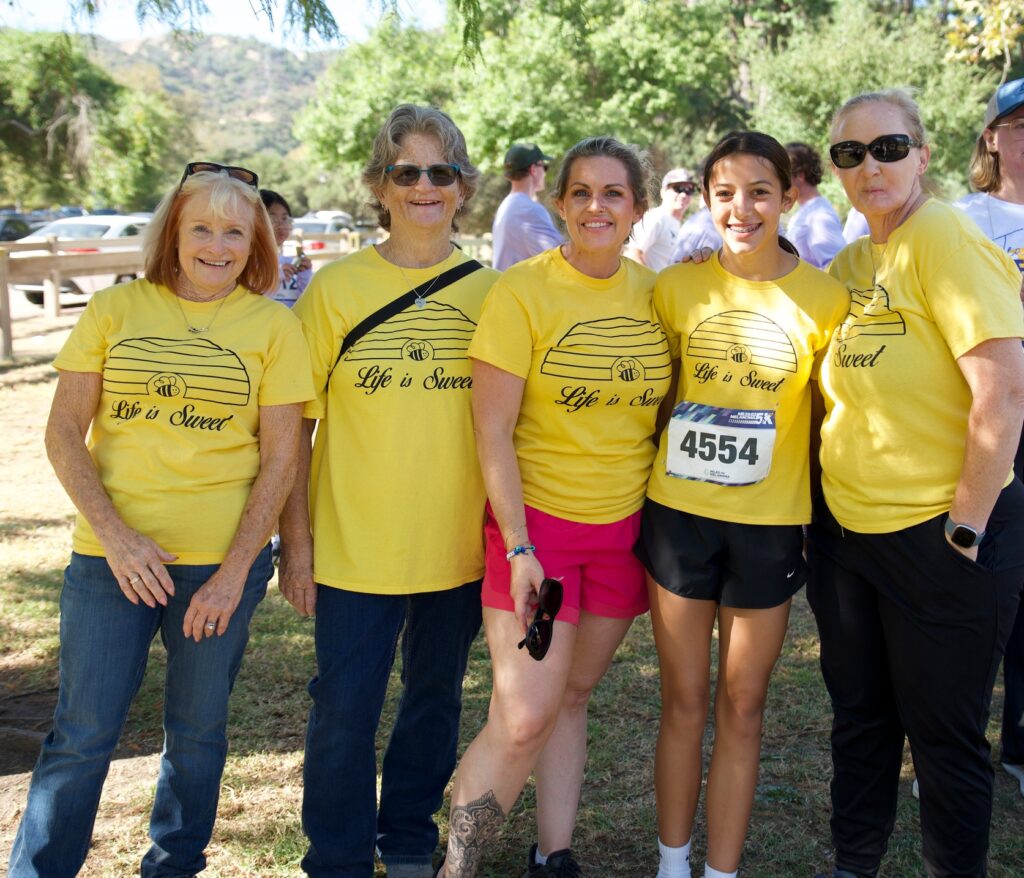
The funds raised through these events are directed toward the MRF’s mission of supporting medical research, providing education to patients and healthcare providers, and advocating for health policy changes. Since its inception, the MRF has funded millions of dollars in research grants, focusing on everything from basic biology to the development of novel therapeutics. For Ruiz, the transition from patient to advocate was a natural progression. Her team, Life is Sweet, operates as a year-round fundraising entity, utilizing local craft fairs and community events to spread awareness.
The team’s primary fundraising method involves the creation and sale of handmade fabric bags and specialized holders for markers and colored pencils. Each item is sold with a tag summarizing Ruiz’s medical journey, effectively turning a commercial transaction into an educational opportunity. This approach has proven highly effective; Ruiz reports that at nearly every event, community members stop to share their own experiences with melanoma, highlighting the pervasive nature of the disease and the ongoing need for public education.
Comparative Analysis of the Melanoma Treatment Landscape
The significance of Ruiz’s $60,000 contribution is best understood when viewed through the lens of the rapid advancements in melanoma treatment over the last twelve years. When Ruiz was first diagnosed in 2012, the therapeutic options for advanced melanoma were remarkably limited. At that time, the standard of care often relied on older chemotherapy agents or early-generation immunotherapies that had low response rates and significant toxicity.
However, the last decade has seen an explosion in "precision medicine" and advanced immunotherapy. Among the most significant developments is the emergence of Tumor-Infiltrating Lymphocyte (TIL) therapy. Ruiz notes that a close friend, also diagnosed with desmoplastic melanoma, is currently alive because of TIL therapy after other treatments failed.
TIL therapy involves harvesting a patient’s own immune cells from their tumor, expanding them to billions in a laboratory, and then reinfusing them into the patient to attack the cancer. This personalized approach represents a milestone in cellular therapy. Furthermore, the introduction of checkpoint inhibitors—drugs that help the immune system recognize and attack cancer cells—has revolutionized the prognosis for many patients. In 2012, the five-year survival rate for metastatic melanoma was approximately 15%; today, thanks to research funded by organizations like the MRF, that figure has improved dramatically for patients who respond to modern therapies.
The Critical Role of Early Detection and Public Education
A recurring theme in Ruiz’s advocacy is the importance of early detection. Through her role as a community leader, she is frequently contacted by individuals seeking guidance for newly diagnosed loved ones. Her observations reflect a sobering reality in oncology: while treatment has improved, the stage at which the cancer is caught remains the single most important factor in determining outcomes.

Melanoma is one of the few cancers that can often be seen with the naked eye, yet it remains a leading cause of cancer-related deaths due to late-stage diagnoses. The MRF emphasizes the "ABCDE" rule (Asymmetry, Border, Color, Diameter, and Evolving) as a tool for self-examination. However, for rarer forms like mucosal or desmoplastic melanoma, public awareness is even more critical, as these cases do not always follow standard patterns. Ruiz’s efforts to include her story on product tags at craft fairs serve to educate the public on these less-common manifestations of the disease.
Institutional Impact and the Role of the Melanoma Research Foundation
The Melanoma Research Foundation, a 501(c)(3) non-profit organization, acts as the administrative and strategic backbone for advocates like Ruiz. As the largest independent organization devoted to melanoma, the MRF plays a pivotal role in the "bench-to-bedside" pipeline. This process ensures that laboratory discoveries are efficiently translated into clinical trials and, eventually, FDA-approved treatments.
The MRF also engages in significant legislative advocacy, pushing for increased federal funding for cancer research through the National Cancer Institute (NCI) and the Department of Defense’s Peer Reviewed Cancer Research Program. By mobilizing team captains and survivors to share their stories, the MRF humanizes the data, making a compelling case for continued investment in dermatological and oncological health.
Conclusion: The Path Toward a Cure
The story of Jennifer Ruiz and Team Life is Sweet is a microcosm of the broader battle against melanoma. It is a narrative defined by initial trauma, followed by a decade of resilience and a commitment to ensuring that future patients have better options than those available in the past. The $60,000 raised by her team represents more than just a financial figure; it represents thousands of hours of community engagement, hundreds of educational conversations, and a direct investment in the science that keeps patients alive.
As research continues to move toward even more targeted therapies and potential vaccines, the role of the survivor-advocate remains indispensable. Ruiz’s mission—to provide a "fighting chance" for others until a definitive cure is found—underscores the ongoing necessity of the Miles for Melanoma program. In the professional view of the oncology community, it is this combination of high-level scientific research and dedicated grassroots advocacy that will ultimately redefine the future of melanoma care. Through the efforts of the MRF and individuals like Ruiz, the goal of transforming melanoma from a deadly threat into a curable condition moves closer to reality each year.
