
 By Nana O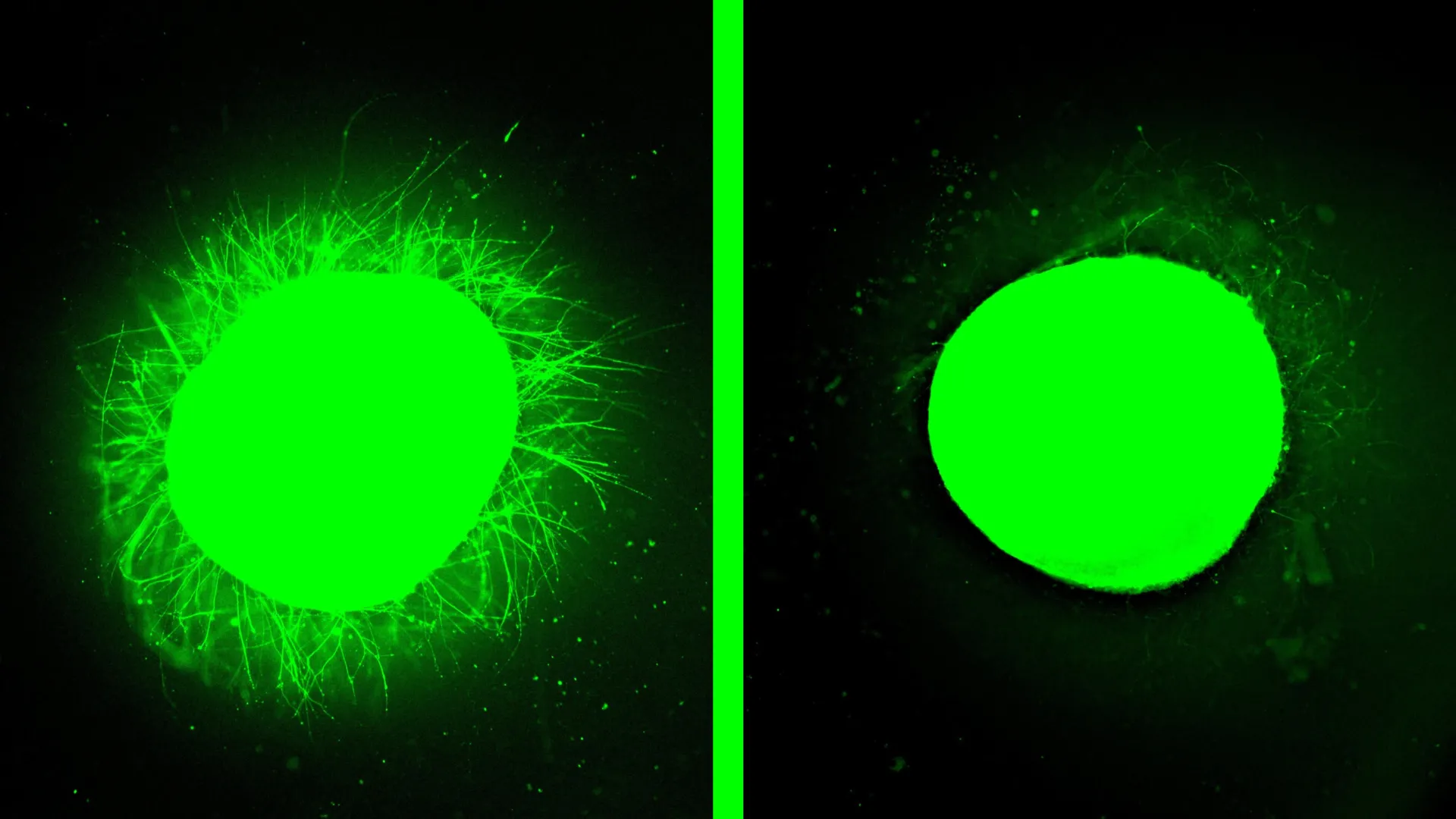
Northwestern University researchers have achieved a significant breakthrough in spinal cord injury (SCI) research with the development of the most sophisticated lab-grown model to date for studying human spinal cord trauma. This innovative model, utilizing human spinal cord organoids, has not only accurately replicated the complex biological consequences of SCI but also demonstrated the remarkable efficacy of a novel regenerative treatment known as "dancing molecules." The findings, published on February 11th in the prestigious journal Nature Biomedical Engineering, offer a powerful new platform for preclinical testing and bring renewed hope for effective human therapies.
The Genesis of a Sophisticated Model
For years, the scientific community has grappled with the limitations of existing models for studying spinal cord injuries. Animal models, while valuable, often fail to fully capture the intricate human response to trauma. Traditional cell cultures lack the complexity and three-dimensional structure of native spinal cord tissue. This gap has presented a significant hurdle in translating promising experimental treatments into clinical success for the millions worldwide affected by SCI.
The Northwestern team, led by Samuel I. Stupp, a distinguished Board of Trustees Professor at Northwestern University, and Nozomu Takata, a research assistant professor, embarked on a mission to bridge this gap. Their approach centered on the creation of human spinal cord organoids—miniature, self-organizing structures derived from induced pluripotent stem cells. These organoids, meticulously cultivated over several months, were designed to mimic key aspects of the human spinal cord’s architecture and cellular composition.
"One of the most exciting aspects of organoids is that we can use them to test new therapies in human tissue," stated Stupp, who is also the inventor of the dancing molecules therapy. "Short of a clinical trial, it’s the only way you can achieve this objective. We decided to develop two different injury models in a human spinal cord organoid and test our therapy to see if the results resembled what we previously saw in the animal model. After applying our therapy, the glial scar faded significantly to become barely detectable, and we saw neurites growing, resembling the axon regeneration we saw in animals. This is validation that our therapy has a good chance of working in humans."
Replicating the Devastation of Spinal Cord Injury
A cornerstone of this new research lies in the organoids’ ability to faithfully reproduce the major biological sequelae of spinal cord injury. When subjected to simulated trauma, these miniature spinal cords exhibited the hallmark pathological features observed in human patients. This included significant cell death, an acute inflammatory response, and, critically, the formation of glial scars.
Glial scarring, a dense accumulation of reactive astrocytes and other glial cells, poses one of the most formidable barriers to nerve regeneration. This scar tissue acts as both a physical impediment and a chemical deterrent, preventing severed axons from regrowing and reconnecting neural pathways. The Northwestern organoid model not only formed these scars but also allowed researchers to precisely characterize their composition, including the upregulation of chondroitin sulfate proteoglycans (CSPGs)—molecules known to inhibit axon growth.
"We could distinguish between the astrocytes that are a part of normal tissue and the astrocytes in the glial scar, which are large and very densely packed," Stupp elaborated. "We also detected the production of chondroitin sulfate proteoglycans, which are molecules in the nervous system that respond to injury and disease."
The research team employed two distinct injury paradigms to simulate common forms of spinal cord trauma. One involved a precise scalpel incision, mirroring lacerations that can occur during surgical procedures or penetrating injuries. The second simulated a compressive contusion injury, a more diffuse form of damage akin to that sustained in severe accidents such as car crashes or falls. Both methods successfully induced the characteristic pathological responses, underscoring the model’s robustness and relevance.
The "Dancing Molecules" Revolution
The therapeutic intervention tested in this groundbreaking study involves a class of compounds known as "dancing molecules." First introduced by Stupp’s lab in 2021, this innovative therapy leverages the principles of supramolecular chemistry to promote tissue repair. It belongs to a broader category of supramolecular therapeutic peptides (STPs) that utilize large assemblies of molecules—often exceeding 100,000 per assembly—to activate cellular receptors and trigger the body’s innate regenerative signaling pathways.
The mechanism of action is elegant and highly dynamic. The dancing molecules are delivered as a liquid injection that rapidly self-assembles into a three-dimensional nanofiber scaffold. This scaffold is designed to mimic the extracellular matrix of the spinal cord, providing a supportive environment for cellular regrowth. The key to the therapy’s effectiveness lies in the controlled, dynamic motion of these molecules within the scaffold.
"Given that cells themselves and their receptors are in constant motion, you can imagine that molecules moving more rapidly would encounter these receptors more often," Stupp explained in a previous context. "If the molecules are sluggish and not as ‘social,’ they may never come into contact with the cells."
This dynamic interaction is crucial. By adjusting the molecular motion, researchers can optimize how effectively the STPs engage with constantly shifting cell surface receptors. This enhanced engagement amplifies the natural repair signals, encouraging cells to initiate regenerative processes.
Dramatic Results in the Lab
The application of the dancing molecules therapy to the injured human spinal cord organoids yielded dramatic and highly encouraging results. Following treatment, the injured tissue displayed substantial neurite outgrowth. Neurites are the elongated projections of neurons, including axons and dendrites, which are essential for transmitting electrical and chemical signals. In the context of SCI, the severing of axons disrupts neural communication, leading to paralysis and sensory deficits. The observed regrowth of neurites in the organoids signifies a critical step towards restoring lost function.
Furthermore, the therapeutic intervention significantly reduced the formation of glial scar tissue. The dense, inhibitory scar that previously formed became markedly diminished, in some instances, barely detectable. This reduction in scarring is paramount, as it alleviates a major obstacle to nerve regeneration.
"The findings add support to the idea that this therapy, which recently received Orphan Drug Designation from the U.S. Food and Drug Administration (FDA), could improve recovery for people with spinal cord injuries," the article states. The FDA’s Orphan Drug Designation is a significant milestone, recognizing the potential of the therapy to treat a rare disease or condition and offering incentives for its further development.
The success of the dancing molecules in the human organoid model directly correlates with previous findings in animal studies. In those experiments, a single injection administered 24 hours post-injury in mice led to a remarkable recovery of motor function, with the animals regaining the ability to walk within four weeks. Formulations exhibiting faster molecular motion consistently outperformed slower variants, reinforcing the hypothesis that increased dynamism enhances bioactivity and cellular signaling.
Advancements in Organoid Technology
A key innovation in the Northwestern model is the incorporation of microglia, the resident immune cells of the central nervous system. While previous spinal cord organoid models have explored basic biology, this is the first to integrate microglia, thereby more accurately replicating the inflammatory response that is a critical component of SCI.
"It’s kind of a pseudo-organ," Stupp remarked. "We were the first to introduce microglia into a human spinal cord organoid, so that was a huge accomplishment. It means that our organoid has all the chemicals that the resident immune system produces in response to an injury. That makes it a more realistic, accurate model of spinal cord injury."
The organoids themselves are substantial, measuring several millimeters across, and possess a level of maturity sufficient to sustain and model traumatic damage. Over months of development, the researchers carefully guided stem cells to differentiate into complex spinal cord tissue, including neurons and astrocytes. The addition of microglia completed the cellular picture, creating a more comprehensive and predictive preclinical platform.
The Broader Implications for SCI Research and Treatment
The implications of this research extend far beyond the immediate validation of the dancing molecules therapy. The development of such a sophisticated human spinal cord organoid model represents a paradigm shift in SCI research. It provides an unprecedented opportunity to:
- Accelerate Drug Discovery: Researchers can now rapidly screen a multitude of potential therapeutic compounds and strategies in a human-relevant system, significantly reducing the time and cost associated with preclinical development.
- Understand Disease Mechanisms: The model allows for detailed investigation into the intricate molecular and cellular processes that underpin SCI, paving the way for the identification of novel therapeutic targets.
- Personalize Medicine: Looking ahead, Stupp envisions the potential for generating patient-specific spinal cord organoids from their own stem cells. This could lead to highly personalized treatment strategies, minimizing the risk of immune rejection for future regenerative therapies.
- Refine Injury Models: The team plans to engineer even more advanced organoids capable of replicating chronic SCI, characterized by more mature and persistent scar tissue. This will allow for the testing of therapies designed to address long-standing injuries.
The therapy itself, while currently in preclinical stages, draws parallels to other supramolecular therapies that have found success in different medical fields. For instance, the concept of supramolecular therapies is employed in current GLP-1 drugs used for weight loss and diabetes management, an area that Stupp’s lab explored nearly 15 years ago. This cross-disciplinary application highlights the broad potential of supramolecular approaches in medicine.
The research was supported by the Center for Regenerative Nanomedicine at Northwestern University and a generous gift from the John Potocsnak Family specifically for spinal cord injury research. This dedicated funding has been instrumental in driving forward this critical area of investigation.
As the scientific community digests these pivotal findings, the Northwestern team’s creation stands as a testament to the power of innovative biomimicry and the relentless pursuit of solutions for debilitating conditions. The human spinal cord organoid model, coupled with the promising efficacy of dancing molecules, marks a significant stride towards a future where recovery from spinal cord injury is not a distant dream, but a tangible reality. The journey from lab bench to bedside is long, but this latest advancement offers a beacon of hope and a clearer path forward.
