
 By admin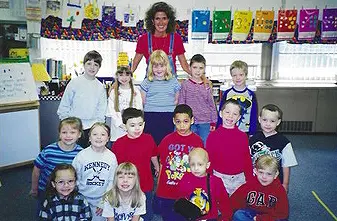
The intersection of personal tragedy and philanthropic endurance will be highlighted this August as Alicia, a special needs educator, and Michele Benyo, a bereaved mother, prepare to traverse 25.5 miles of Minnesota’s rugged Superior Hiking Trail. This endeavor, organized under the auspices of the CureSearch Ultimate Hike program, serves as a poignant tribute to David Benyo, who succumbed to rhabdomyosarcoma in 2000 at the age of six. The event underscores a broader narrative regarding the long-term impact of pediatric cancer on families and communities, as well as the ongoing necessity for specialized research funding in the field of pediatric oncology.
The Clinical Chronology of David Benyo’s Battle with Rhabdomyosarcoma
The medical history of David Benyo began in December 1997 when his parents discovered an abnormality that led to a diagnosis of rhabdomyosarcoma, a highly malignant form of cancer that develops from skeletal muscle cells. At the time of diagnosis, the primary tumor was described as being approximately the size of a grapefruit. Over the ensuing year, David underwent a rigorous multimodal treatment regimen that included intensive chemotherapy, surgical intervention to debulk the tumor, and numerous blood transfusions.
By late 1998, the aggressive treatment appeared successful, as the tumor retreated and David entered a period of remission. During this interval, the family participated in a Make-A-Wish Foundation trip to Disney World, a milestone often utilized by pediatric palliative and oncology teams to provide psychological respite for families facing chronic illness. However, the period of stability was brief. Shortly after their return, clinical evaluations confirmed that the cancer had relapsed, manifesting this time within the bone marrow—a progression that significantly complicates the prognosis for soft tissue sarcomas.
In response to the recurrence, medical teams at Minneapolis Children’s Hospital employed advanced therapeutic strategies. David became one of the early recipients of a pediatric stem cell transplant, a procedure that was then at the forefront of oncological science. Despite the implementation of high-dose chemotherapy and radiation therapy, the malignancy returned for a second time. Following the second recurrence and the exhaustion of viable curative options, the family transitioned to a palliative care model. David Benyo passed away in May 2000, leaving a profound void in his family and the wider community of his peers.
Understanding Rhabdomyosarcoma and the Pediatric Cancer Landscape
Rhabdomyosarcoma (RMS) remains the most common soft tissue sarcoma in children, accounting for approximately 3% to 4% of all pediatric cancers in the United States. According to data from the American Cancer Society, about 400 to 500 new cases are diagnosed annually in children and adolescents under the age of 20. The disease is categorized into two primary histological subtypes: embryonal, which typically affects younger children and has a more favorable prognosis, and alveolar, which is more aggressive and often associated with chromosomal translocations.
While the five-year survival rate for pediatric cancer has improved significantly since the 1970s—rising from roughly 58% to over 85% today—certain high-risk and relapsed cases of RMS continue to present a survival challenge. For patients like David, whose cancer involves the bone marrow or recurs after initial treatment, the long-term survival statistics drop precipitously. This disparity highlights a critical "funding gap" in oncology research. Historically, pediatric cancer research has received a fraction of the federal funding allocated to adult cancers, a discrepancy that organizations like CureSearch for Children’s Cancer seek to rectify.
The Psychological Impact of Early Childhood Loss and Community Resilience
The narrative of David Benyo is inextricably linked to Alicia, a kindergarten classmate whose life was shaped by David’s illness and subsequent passing. In the field of developmental psychology, the death of a peer during early childhood is recognized as a significant life event that can influence a child’s understanding of mortality and grief. For Alicia, the loss of her "first friend" resulted in a long-term aversion to the subject of cancer—a common coping mechanism among children experiencing trauma.
Despite the passage of time, the bond between the Benyo family and Alicia remained intact. This connection was publicly demonstrated during Alicia’s high school graduation, where she invited Michele Benyo to attend the ceremony. In a symbolic gesture of remembrance, Alicia presented Michele with a locket containing David’s photograph, stating that he had effectively "walked across the stage" with her.
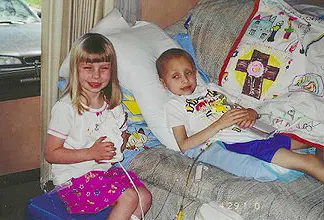
This relationship took on a new dimension following the recent death of Alicia’s mother, who had served as David’s Sunday school teacher. The dual loss of a childhood friend and a parent to oncological diseases served as the catalyst for Alicia’s decision to transition from a passive observer of the disease to an active advocate. By joining Michele on the CureSearch Ultimate Hike, Alicia is integrating her personal history with a broader mission to fund medical breakthroughs.
The CureSearch Ultimate Hike: A Platform for Advocacy and Research
The Ultimate Hike is the only national endurance hiking program dedicated to ending childhood cancer. The event on the Superior Hiking Trail (SHT) is particularly demanding, requiring participants to cover over 25 miles of rugged terrain in a single day. The SHT, which follows a rocky ridgeline overlooking Lake Superior, provides a physical metaphor for the "uphill battle" faced by families in the oncology ward.
CureSearch for Children’s Cancer, the organizing body, operates with a specific strategic focus: accelerating the development of new pediatric cancer treatments. The organization identifies and funds clinical trials and biochemical research that might otherwise languish in the "valley of death"—the gap between laboratory discovery and clinical application. By bypassing traditional bureaucratic hurdles and focusing on high-potential research, CureSearch aims to change the trajectory for children diagnosed with high-risk malignancies.
Since its inception, the Ultimate Hike series has raised millions of dollars, which are directly funneled into international research initiatives. These funds support the work of the Children’s Oncology Group (COG) and other research consortia that develop the protocols used in hospitals like Minneapolis Children’s, where David was treated.
Analysis of Implications: The Role of Grassroots Fundraising in Scientific Progress
The participation of individuals like Michele and Alicia illustrates the vital role of "legacy fundraising" in the scientific community. While federal grants from the National Cancer Institute (NCI) provide the backbone of medical research, they often favor established paths of inquiry. In contrast, non-profit organizations fueled by personal stories are more likely to fund innovative, "high-risk, high-reward" pilot studies that can lead to breakthroughs in targeted therapy and immunotherapy.
Furthermore, these events serve a secondary function in public health: awareness. By lacing up their boots for a 25.5-mile trek, participants draw attention to the specific needs of pediatric patients, which differ vastly from adult patients. Children require different dosages, face different long-term side effects (such as developmental delays or secondary cancers), and require specialized psychological support.
Alicia’s role as a special needs teacher at the very elementary school she and David attended further emphasizes the cyclical nature of community support. Her professional life is dedicated to supporting children with diverse needs, while her advocacy life is dedicated to ensuring that fewer children lose their lives to the "cheetah-like" ferocity of rhabdomyosarcoma.
Conclusion: A Mission Toward New Endings
The story of David Benyo did not conclude in May 2000; rather, it evolved into a multi-decade mission of remembrance and scientific advancement. The upcoming hike on the Superior Hiking Trail represents a convergence of past grief and future hope. For Michele Benyo, the hike is a continuation of a mother’s devotion. For Alicia, it is an act of reclamation—taking the "fear" out of the word cancer and replacing it with "purpose."
As medical technology continues to advance, the goal of organizations like CureSearch remains steadfast: to ensure that the next generation of "cheetahs" facing a cancer diagnosis can look forward to graduation ceremonies, mountain trails, and a life beyond the hospital ward. The 25.5 miles covered this August will be more than a physical feat; they will be a quantifiable contribution to the global effort to eradicate pediatric cancer, ensuring that the stories of children like David eventually find a different, more hopeful ending.
