
 By admin
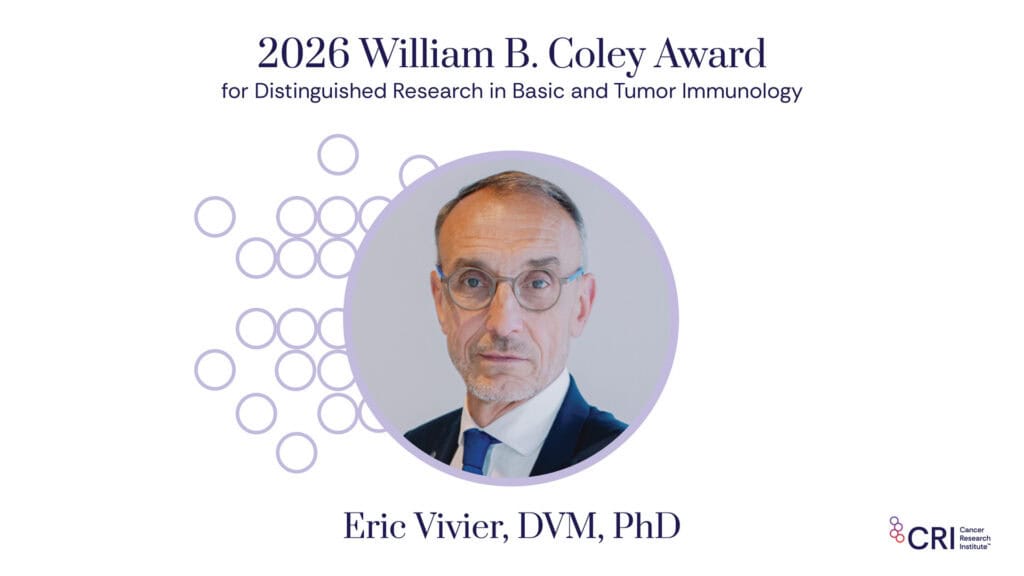
The Cancer Research Institute (CRI), a global leader in advancing immunotherapy, proudly announces the recipients of its esteemed 2026 Scientific Achievement Awards. Dr. Eric Vivier, DVM, PhD, a distinguished immunologist recognized for his seminal work on natural killer (NK) cells and innate immunity, will receive the William B. Coley Award for Distinguished Research in Basic and Tumor Immunology. Concurrently, Dr. Joseph Sun, PhD, whose transformative discoveries have reshaped the understanding of immunological memory, is the recipient of the Frederick W. Alt Award for New Discoveries in Immunology. These prestigious accolades underscore the profound impact of their research on the fundamental understanding of the immune system and its potential to revolutionize cancer treatment.
Recognizing Pioneering Contributions to Immunology and Cancer Research
The William B. Coley Award, named after the pioneering surgeon who first used bacterial toxins to treat cancer and is often regarded as the "Father of Immunotherapy," recognizes scientists who have made seminal contributions to basic and tumor immunology. This award honors work that significantly advances the understanding of how the immune system interacts with cancer, paving the way for new therapeutic strategies. The Frederick W. Alt Award, established more recently, celebrates scientists who have made exceptionally innovative and significant discoveries in immunology, particularly those that open entirely new avenues of research. Both awards are cornerstone elements of CRI’s mission to support and recognize breakthroughs that accelerate the development of effective immunotherapies for all cancers.
The 2026 Scientific Achievement Awards will be formally presented at CRI’s Annual Awards Gala, a highly anticipated event bringing together leading scientists, philanthropists, and advocates, scheduled for Tuesday, October 20, 2026. The gala will take place at the historic Guastavino’s in New York City, a venue renowned for its architectural grandeur, providing a fitting backdrop for celebrating scientific excellence. Further details regarding the evening’s program, including speakers and special guests, are expected to be announced in the coming weeks. This event serves not only to honor the awardees but also to highlight the critical importance of sustained investment in fundamental immunological research.
Dr. Eric Vivier: Unraveling the Mysteries of Innate Immunity
Dr. Eric Vivier stands as an internationally acclaimed figure in immunology, his career marked by groundbreaking contributions to the understanding of natural killer (NK) cells and the broader field of innate immunity. NK cells, a type of lymphocyte, are a crucial component of the innate immune system, representing the body’s first line of defense against pathogens and cancer cells. Unlike T cells and B cells, which require specific antigen recognition, NK cells can identify and destroy abnormal cells, including tumor cells and virus-infected cells, without prior sensitization. This makes them powerful, rapid responders in immune surveillance.
As a Professor of Immunology at Marseille Medical School and head of the Innate Lymphoid Cells laboratory at the Centre d’Immunologie de Marseille-Luminy (CIML), Dr. Vivier has dedicated decades to meticulously dissecting the mechanisms by which NK cells recognize and eliminate cancer. His pioneering discoveries have not only illuminated the intricate signaling pathways governing NK cell activation and function but have also fundamentally advanced the understanding of how the innate immune system contributes to tumor immunity. Before Dr. Vivier’s extensive work, the precise role and therapeutic potential of NK cells in cancer were less understood. His research has been instrumental in establishing innate immunity as a cornerstone of modern cancer immunotherapy, demonstrating its critical role alongside adaptive immune responses.
The translational impact of Dr. Vivier’s research is profound. His insights into NK cell biology have been widely translated into clinical development, notably through his leadership in biotechnology. As a co-founder of Innate Pharma, a leading biotechnology company focused on developing first-in-class immunotherapy drugs targeting the innate immune system, he has directly contributed to bringing novel therapeutic concepts from the laboratory bench to patient care. This direct application of fundamental scientific discovery into practical medical solutions exemplifies the ultimate goal of biomedical research.
Dr. Vivier’s exceptional contributions have earned him widespread recognition and numerous honors. He has been a Highly Cited Researcher since 2015, a testament to the influence and reach of his publications within the scientific community. His accolades include election to the prestigious French National Academy of Medicine and the European Molecular Biology Organization (EMBO), signifying his standing among the world’s elite scientists. Furthermore, he has received some of France’s highest civilian distinctions, reflecting the national pride and recognition of his scientific achievements.
In addition to receiving the William B. Coley Award, Dr. Vivier will deliver the highly anticipated 2026 Coley Lecture at the Society for Immunotherapy of Cancer (SITC) Annual Meeting. This prominent conference, a global gathering for leaders in tumor immunology and cancer immunotherapy, will be held from November 4 to 8, 2026, in Phoenix, Arizona. Dr. Vivier’s lecture, scheduled for Sunday, November 8, is expected to provide a comprehensive overview of his latest findings and insights into the future directions of innate immunity-based cancer therapies, undoubtedly drawing significant attention from the international scientific community. The Coley Lecture is a highlight of the SITC meeting, offering a platform for the field’s most impactful researchers to share their vision.
Dr. Joseph Sun: Redefining Immunological Memory
Dr. Joseph Sun is being honored for his transformative discoveries that have fundamentally reshaped the understanding of immunological memory. His work has challenged long-standing paradigms in immunology, particularly the traditional distinctions between innate and adaptive immunity. Historically, immunological memory—the ability of the immune system to remember a past infection and mount a faster, stronger response upon re-exposure—was exclusively attributed to adaptive immune cells like T and B lymphocytes. Innate immune cells, by contrast, were thought to provide only immediate, non-specific protection without retaining memory.
As a Member of the Immunology Program at Memorial Sloan Kettering Cancer Center and Professor and Director of the Immunology and Microbial Pathogenesis Program at Weill Cornell Medical College, Dr. Sun has meticulously investigated the mechanisms governing T cell and NK cell memory. His groundbreaking research, notably initiated during his tenure as a CRI Irvington Postdoctoral Fellow from 2007 to 2009 in the laboratory of Dr. Lewis Lanier, PhD, at the University of California, San Francisco (UCSF), provided compelling evidence that NK cells can indeed exhibit adaptive immune features. Specifically, Dr. Sun demonstrated that following viral infection, NK cells undergo clonal expansion—a process where specific NK cells proliferate in response to a pathogen—and develop long-lived memory, capable of mounting enhanced responses upon subsequent encounters with the same pathogen.
This discovery was revolutionary, fundamentally altering the scientific community’s perception of innate immunity. It showed that the innate immune system, previously considered a static first line of defense, possessed a dynamic capacity for memory, bridging a critical conceptual gap between innate and adaptive immunity. Dr. Sun’s subsequent work has continued to illuminate the intricate molecular pathways that drive immune memory in both infection and cancer. By identifying key transcription factors, epigenetic modifications, and metabolic programs that regulate the differentiation and maintenance of memory NK cells, his research has provided a detailed blueprint for harnessing these cells for therapeutic benefit.
The implications of Dr. Sun’s findings for cancer immunotherapy are immense. Understanding how NK cells can form memory opens new avenues for developing "memory-like" NK cell therapies that could offer more potent and durable anti-cancer responses than conventional NK cell approaches. His research directly informs the development of next-generation immunotherapies, aiming to create more effective and long-lasting treatments for various cancers by leveraging the adaptive-like capabilities of innate immune cells.
Dr. Lewis Lanier, a distinguished Member of CRI’s Scientific Advisory Council and Dr. Sun’s former postdoctoral mentor, eloquently praised his former trainee: “Dr. Sun has been an absolute leader in his field, and I’m so happy that we’re going to acknowledge him as being one of the superstars that launched their careers with his CRI Irvington Fellowship.” This statement highlights not only Dr. Sun’s exceptional talent and leadership but also the critical role that early-career funding, such as the CRI Irvington Postdoctoral Fellowship, plays in nurturing future scientific leaders and enabling transformative discoveries. The CRI’s commitment to investing in promising young scientists has a tangible impact on the trajectory of biomedical research.
The Synergistic Impact on Cancer Immunotherapy
The collective contributions of Dr. Vivier and Dr. Sun, though distinct in their specific focus, represent a powerful synergy in the advancement of cancer immunotherapy. Dr. Vivier’s foundational work on the primary mechanisms of NK cell function and their role in innate immunity provided the initial framework for understanding these critical immune cells. Dr. Sun’s subsequent discoveries extended this understanding by revealing the unexpected adaptive capabilities of NK cells, thereby expanding the potential applications of innate immunity in long-term disease control.
Together, these scientists have significantly expanded the scientific community’s understanding of immune cell biology. Their research has not only elucidated complex immunological processes but has also directly opened new avenues for harnessing the immune system to prevent and treat cancer. Immunotherapy, which empowers the body’s own immune system to fight cancer, has emerged as a revolutionary pillar in cancer treatment over the last decade, alongside surgery, chemotherapy, and radiation. However, its efficacy is not universal, and many patients still do not respond or develop resistance. The fundamental discoveries made by researchers like Dr. Vivier and Dr. Sun are crucial for overcoming these challenges.
By deciphering how innate immune cells function, how they recognize cancer, and how they can retain memory, these scientists are providing the essential biological insights needed to design more sophisticated, targeted, and durable immunotherapies. This includes developing novel cellular therapies that leverage engineered NK cells, or combination therapies that optimally engage both innate and adaptive arms of the immune system. The ultimate goal is to extend the benefits of immunotherapy to a greater number of cancer patients, leading to improved outcomes and, ultimately, cures.
The Cancer Research Institute’s long-standing commitment to funding and recognizing cutting-edge research in immunology has been pivotal in driving this progress. Since its inception, CRI has invested hundreds of millions of dollars in basic and translational research, fostering a scientific ecosystem that allows groundbreaking discoveries to flourish. The William B. Coley and Frederick W. Alt Awards serve as a testament to this enduring legacy, celebrating the brilliance and dedication of scientists who are pushing the boundaries of what is possible in cancer treatment. As the scientific community looks to the future, the work of Dr. Vivier and Dr. Sun offers immense hope for continued breakthroughs and a future where cancer is no longer a death sentence, but a manageable or curable disease.
