
 By admin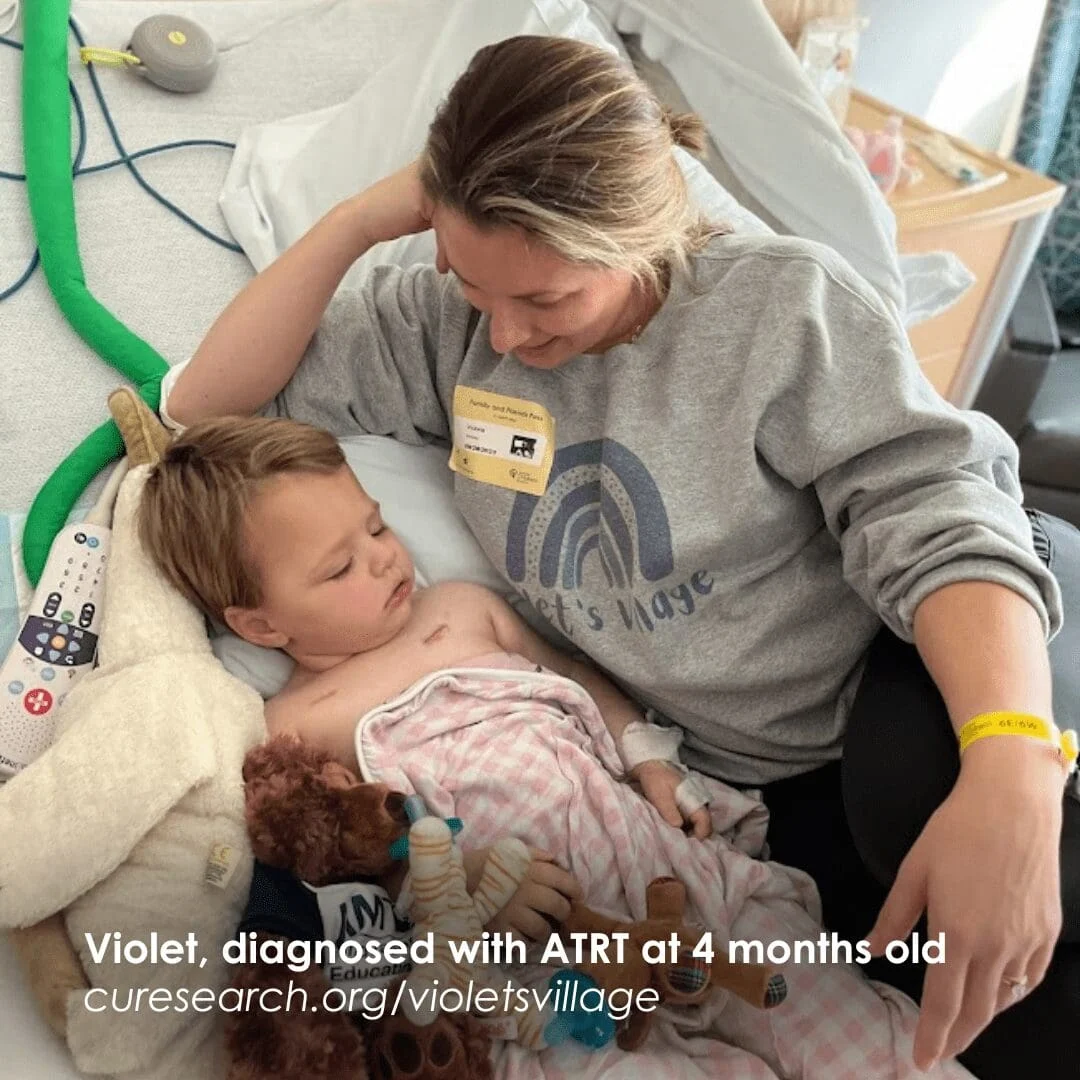
The landscape of pediatric oncology is witnessing a significant shift toward precision medicine as CureSearch for Children’s Cancer officially announced Dr. John Prensner of the University of Michigan as the recipient of the 2025 Young Investigator Award. This prestigious grant is designed to catalyze innovative research into atypical teratoid rhabdoid tumor (ATRT), one of the most aggressive and difficult-to-treat forms of pediatric brain cancer. The project, which focuses on identifying previously overlooked genetic mechanisms, represents a critical step in addressing the high mortality rates associated with central nervous system tumors in infants and toddlers.
The funding for this initiative is bolstered by a strategic partnership involving the Jeff Gordon Children’s Foundation (JGCF) and Violet’s Village: The Violet Kenney Legacy Fund. This collaborative funding model underscores a growing movement within the non-profit sector to pool resources to combat rare diseases that lack the commercial incentives typical of adult-market pharmaceuticals. By supporting early-career scientists like Dr. Prensner, these organizations aim to prevent a "brain drain" in pediatric research, ensuring that the next generation of oncologists remains focused on the unique challenges of childhood malignancies.
The Clinical Challenge of Atypical Teratoid Rhabdoid Tumor
ATRT is a rare, fast-growing tumor of the brain and spinal cord. While it accounts for only about 1% to 2% of all pediatric brain tumors, it represents nearly 20% of brain tumors in children under the age of three. The clinical presentation of ATRT is often devastating; because the tumors frequently arise in the cerebellum or the brainstem, they interfere with fundamental neurological functions including motor coordination, balance, and autonomic regulation.
Current standard-of-care treatments for ATRT are notoriously intensive. Patients typically undergo a combination of maximal surgical resection, high-dose chemotherapy, and, in older children, radiation therapy. However, the toxicity of these treatments is profound. Infants, whose brains are still in critical stages of development, often suffer long-term cognitive and physical impairments from the very therapies intended to save them. Despite these aggressive interventions, the prognosis remains guarded, with five-year survival rates significantly lower than those for more common pediatric cancers like acute lymphoblastic leukemia.
Dr. Paisley Myers, Director of Research and Programs at CureSearch, emphasized the disparity in treatment advancements. "Children with ATRT don’t have the same opportunities to benefit from cutting-edge, targeted treatments that are available for other cancers," Dr. Myers stated. "We urgently need to change that narrative by finding the specific biological vulnerabilities of these tumors."
Decoding the "Dark Matter" of the Genome
The primary obstacle in treating ATRT has been its genetic simplicity, which paradoxically makes it harder to target. Most ATRT cases are characterized by the loss of a single gene, SMARCB1. Unlike many adult cancers that feature a multitude of mutations that can be targeted with various drugs, ATRT lacks these obvious "handholds" for therapeutic intervention.
Dr. Prensner’s research seeks to overcome this by looking into the "dark matter" of the human genome. For decades, a vast majority of human DNA was dismissed as "junk DNA" because it did not appear to code for proteins. However, recent advances in genomic sequencing have revealed that these regions contain small open reading frames (sORFs). These are tiny segments of DNA that produce microproteins—molecules that are much smaller than traditional proteins but may play outsized roles in how cancer cells grow, survive, and resist treatment.
"My hope is that this work will lead to the discovery of new genes that inform the next phase of drug development for ATRT," said Dr. Prensner. His project will utilize advanced proteogenomic techniques to map these microproteins in ATRT cells, identifying which ones are essential for tumor maintenance. By uncovering these hidden drivers, the research could provide the first viable targets for a new class of precision medicines specifically designed for ATRT patients.
A Collaborative Funding Paradigm
The 2025 Young Investigator Award is a product of a sophisticated co-funding ecosystem. CureSearch has increasingly relied on partnerships with family foundations and legacy funds to maximize the impact of donor contributions. In this instance, the Jeff Gordon Children’s Foundation and Violet’s Village have played instrumental roles.
The Jeff Gordon Children’s Foundation, established by the four-time NASCAR Cup Series champion, has long been a titan in the fight against pediatric cancer. Susan Robinson, Executive Director of JGCF, noted the urgency of the project. "Brain tumors are the deadliest form of childhood cancer, so we’re eager to advance scientific knowledge and develop better therapeutics to improve outcomes for kids facing such a devastating diagnosis," Robinson said.
Equally significant is the involvement of Violet’s Village. The fund was established in memory of Violet Kenney, a young girl who battled ATRT. Legacy funds like Violet’s Village provide more than just capital; they provide a human-centric focus that drives researchers to find solutions for the specific diseases that have claimed the lives of children within their communities. This grassroots support ensures that rare cancers, which are often overlooked by federal funding agencies like the National Institutes of Health (NIH) due to their low incidence rates, receive the attention they require.
The Economic and Professional Impact on Research
One of the secondary goals of the Young Investigator Award is to stabilize the pipeline of pediatric oncology researchers. The path from a doctoral degree to a tenured research position is fraught with financial instability. Many promising scientists leave academia for the private sector or shift their focus to adult cancers, where research grants are more plentiful and the market for resulting drugs is larger.
By providing financial security to Dr. Prensner at the University of Michigan, CureSearch is effectively investing in the future of the field. The University of Michigan’s Rogel Cancer Center and C.S. Mott Children’s Hospital provide a robust infrastructure for this research, allowing Dr. Prensner to bridge the gap between laboratory discovery and clinical application.
The award serves as a "bridge" grant, allowing researchers to gather the preliminary data necessary to apply for larger, multi-year federal grants. In the world of high-stakes medical research, this initial seed funding is often the difference between a breakthrough and a discontinued study.
Timeline and Expected Milestones
The research project is slated to begin in early 2025. The initial phase will involve the systematic cataloging of sORFs within various ATRT cell lines. Using CRISPR-based screening technologies, Dr. Prensner’s team will then "knock out" these sORFs one by one to observe the effect on tumor cell viability.
By the second year of the grant, the team expects to have identified a shortlist of "high-priority" microproteins. These candidates will then be tested in animal models to see if inhibiting them can shrink tumors or slow their progression. The ultimate goal of this three-year project is to provide a validated list of targets that can be handed off to pharmaceutical partners for the development of small-molecule inhibitors or monoclonal antibodies.
While the timeline for drug development is long—often taking a decade or more to move from the lab to the pharmacy—the identification of these targets is the most critical hurdle. Without a target, there is no path forward for precision medicine.
Broader Implications for Pediatric Oncology
The implications of Dr. Prensner’s work extend beyond ATRT. The methodology of investigating sORFs and microproteins could be applied to other "genetically quiet" pediatric tumors, such as certain types of sarcomas or other rare brain cancers like medulloblastoma.
Furthermore, this research contributes to the global understanding of the "non-coding" genome. As science moves away from a protein-centric view of biology toward a more integrated understanding of genetic regulation, studies like this are at the forefront of a biological revolution.
The success of this project would also validate the CureSearch co-funding model. If a relatively small investment from a consortium of non-profits can unlock a new therapeutic pathway for a deadly disease, it provides a blueprint for how other rare diseases—both pediatric and adult—can be addressed in an era of rising research costs.
Conclusion: A Beacon of Hope for Families
For the families of children diagnosed with ATRT, the news of Dr. Prensner’s award offers more than just scientific data; it offers hope. In a field where "standard treatment" has long meant enduring the limits of 20th-century medicine, the shift toward 21st-century genomic research represents a turning point.
The commitment of CureSearch, the Jeff Gordon Children’s Foundation, and Violet’s Village ensures that the brightest minds in medicine are focused on the smallest patients. As Dr. Prensner begins his work at the University of Michigan, the goal remains clear: to transform ATRT from a terrifying diagnosis into a treatable, and eventually curable, condition. Through the exploration of the genome’s hidden segments, science is finally beginning to fight back against the shadows where ATRT has long resided.
