
 By admin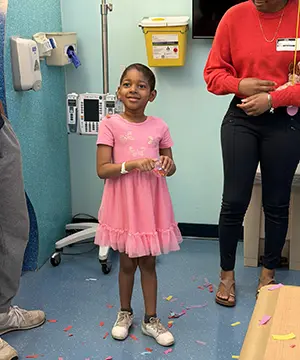
The landscape of pediatric oncology is defined by its intensity, rapid diagnostic shifts, and the profound resilience required of both patients and their families. The case of Amari H., a young girl whose journey began with an emergency room visit for hematuria—blood in the urine—serves as a primary example of the complexities involved in diagnosing and treating Wilms tumor, particularly the rare and aggressive anaplastic subtype. Amari’s transition from a critical Stage 3 diagnosis to active survivorship highlights not only the individual strength of pediatric patients but also the critical importance of advancements in surgical preservation and long-term chemotherapeutic protocols.
The Clinical Onset and Initial Diagnostic Phase
The medical narrative of Amari H. commenced abruptly on a typical school night, a common occurrence in pediatric oncology where symptoms often manifest with little warning. The presentation of hematuria prompted an immediate referral to an emergency department. In pediatric cases, blood in the urine is a high-priority clinical sign that often necessitates urgent imaging to rule out trauma, infection, or malignancy. By approximately 3:00 AM, following initial diagnostic imaging, medical staff identified a significant mass on Amari’s kidney.
This discovery transitioned the family into the specialized world of pediatric nephrology and oncology. A tumor on the kidney in a child is most frequently identified as a Wilms tumor, or nephroblastoma. According to the American Cancer Society, Wilms tumor is the most common type of kidney cancer in children, accounting for approximately 90 percent of such cases. While the overall five-year survival rate for Wilms tumor is high—exceeding 90 percent—the specific histology and stage of the tumor significantly dictate the intensity of the treatment and the long-term prognosis.
Understanding Anaplastic Wilms Tumor and Stage 3 Classification
Upon further biopsy and surgical exploration, Amari’s condition was classified as Stage 3 anaplastic Wilms tumor. This diagnosis carries specific clinical weight. In the staging of Wilms tumor, Stage 3 indicates that the tumor has spread beyond the kidney into nearby tissues or lymph nodes within the abdomen, or that the tumor ruptured before or during surgery, necessitating a more aggressive multi-modal treatment approach.
The term "anaplastic" refers to the histology of the cancer cells. In most Wilms tumors, the cells are "favorable," meaning they look relatively normal and respond well to standard treatments. However, anaplastic cells are characterized by large, distorted nuclei and a high degree of variability, which often indicates a resistance to standard chemotherapy. Anaplasia is found in about 5 to 10 percent of Wilms tumor cases. When a tumor is both Stage 3 and anaplastic, the medical team must employ a rigorous regimen of chemotherapy and often radiation to ensure the eradication of residual microscopic disease.
Surgical Innovation: The Preservation of Renal Function
One of the most significant milestones in Amari’s treatment was the surgical intervention following a preliminary course of chemotherapy. Historically, the standard of care for a unilateral Wilms tumor was a radical nephrectomy, the complete removal of the affected kidney. However, modern pediatric surgery increasingly aims for nephron-sparing surgery (NSS) or partial nephrectomies when oncologically feasible.
Initially, Amari’s surgical team anticipated the necessity of a full nephrectomy. However, following the tumor’s response to initial chemotherapy—which aimed to shrink the mass and consolidate the margins—surgeons were able to perform a complex procedure that removed the malignancy while preserving approximately 60 percent of her healthy kidney tissue. This preservation is vital for long-term health, as it reduces the risk of chronic kidney disease and hypertension later in life, issues that are more prevalent in survivors who live with a single (solitary) kidney.
The Chronology of Intensive Treatment
The post-surgical phase for Amari involved a grueling 32-week regimen of chemotherapy. This duration is reflective of the Stage 3 anaplastic protocol, which requires prolonged exposure to cytotoxic agents to prevent recurrence. For a pediatric patient, 32 weeks represents a significant portion of their developmental year, often resulting in side effects such as fatigue, immunosuppression, and nutritional challenges.
Throughout this period, the integration of "child life" services and psychosocial support becomes as critical as the medical treatment itself. For Amari, maintaining a connection to her pre-diagnosis life through cheerleading and social activities provided a necessary psychological buffer. This holistic approach to pediatric care—treating the child rather than just the disease—is a hallmark of modern oncology centers. The involvement of the Dallas Cowboys Cheerleaders in Amari’s journey underscores the role of community engagement in fostering morale during long-term hospitalizations.
The Significance of the "Bell Ringing" Ceremony
The conclusion of Amari’s 32-week treatment was marked by the traditional "ringing of the bell." This ceremony, which originated at MD Anderson Cancer Center in 1996, has become a universal symbol in oncology wards representing the completion of active treatment and the transition into survivorship. For Amari, the event coincided with the birthday of her late grandmother, adding a layer of personal significance to the clinical milestone.
The ringing of the bell serves several functions: it provides closure for the patient and family, offers hope to other families currently undergoing treatment, and acknowledges the collective efforts of the medical staff, including the nurses and oncologists who managed the patient’s care.
Data and Statistics: The Landscape of Pediatric Cancer Research
Amari’s success story is part of a broader trend of improving outcomes in pediatric oncology, driven by clinical trials and research funding from organizations like CureSearch for Children’s Cancer. According to the National Cancer Institute (NCI), the overall death rate for childhood cancer has declined by more than 50 percent since the 1970s. However, despite these gains, cancer remains the leading cause of death by disease for children in the United States.
Research into Wilms tumor has been particularly productive due to the work of the Children’s Oncology Group (COG). Through decades of clinical trials, researchers have refined the "risk-stratified" approach, ensuring that children with favorable-histology tumors are not over-treated (reducing long-term toxicity) while ensuring that children with higher-risk diagnoses, like Amari’s anaplastic Stage 3, receive sufficiently aggressive therapy to ensure survival.
Broader Implications and the Importance of Cancer Survivors Month
June is recognized globally as Cancer Survivors Month, a time dedicated to acknowledging the unique challenges faced by the millions of individuals living with a history of cancer. As of 2024, there are estimated to be over 500,000 survivors of childhood cancer in the United States alone.
Survivorship, however, is not merely the absence of disease. It involves a lifetime of follow-up care to monitor for "late effects" of treatment. For survivors of Wilms tumor, this includes monitoring renal function, cardiac health (if certain chemotherapies were used), and screening for secondary malignancies. Amari’s current status as "thriving" is a testament to the efficacy of her treatment, but it also necessitates a lifelong commitment to medical surveillance.
The story of Amari H. highlights several critical takeaways for the medical community and the public:
- Early Detection: The prompt response to symptoms like hematuria is vital for staging and prognosis.
- Surgical Advancements: The ability to preserve organ function through partial nephrectomies is a major victory in improving the quality of life for survivors.
- Research Funding: The transition from a Stage 3 anaplastic diagnosis to survivorship is only possible through the rigorous testing of multi-agent chemotherapy protocols.
- Psychosocial Support: The integration of a child’s passions—such as Amari’s love for cheerleading and K-pop—into their recovery period is essential for mental health.
As research continues to evolve, the goal of pediatric oncology remains twofold: to increase the cure rate for high-risk histologies and to minimize the long-term physiological costs of those cures. Amari’s journey from a 3:00 AM emergency diagnosis to ringing the victory bell serves as a powerful case study in the current capabilities and future aspirations of pediatric medicine. Her light, undimmed by the rigors of chemotherapy, continues to shine as she pursues her dream of becoming a cheerleader, reminding the world that behind every clinical statistic is a child with a future worth fighting for.
