
 By admin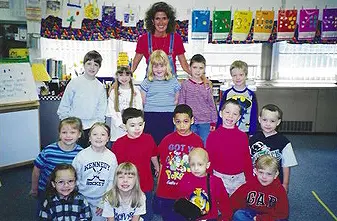
The intersection of personal tragedy and philanthropic endurance will culminate this August on the rugged terrain of Minnesota’s North Shore as two women, bound by a decades-old bond, embark on a 25.5-mile trek to combat pediatric cancer. Alicia, a special education teacher, and Michele Benyo, a mother and advocate, are set to participate in the CureSearch Ultimate Hike along the Superior Hiking Trail. Their journey is not merely a physical challenge but a tribute to David Benyo, a child whose battle with rhabdomyosarcoma ended in 2000, and a testament to the enduring impact of childhood friendships and the critical need for specialized pediatric oncology research.
The Medical Battle: A Chronology of David Benyo’s Fight
The narrative began in December 1997, when the Benyo family discovered a physical anomaly that would soon be diagnosed as rhabdomyosarcoma, a rare and aggressive form of cancer that forms in soft tissue—specifically skeletal muscle tissue or sometimes hollow organs such as the bladder or uterus. For David, then only four years old, the diagnosis transformed a typical childhood into a rigorous cycle of clinical interventions.
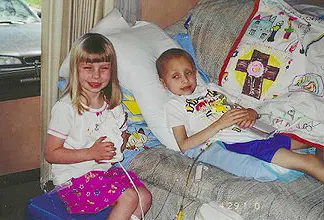
At the time of his diagnosis, David’s tumor was described as being the size of a grapefruit. The standard of care for pediatric rhabdomyosarcoma involves a multi-modal approach, including chemotherapy, radiation, and surgical resection. David underwent a year of intensive chemotherapy and surgery, during which his medical team noted his remarkable resilience. Nurses at the facility recalled his spirited nature; David famously referred to himself as a "cheetah" to signal his strength and speed during difficult procedures.
By 1998, the primary tumor had retreated, and David entered a period of remission. This window of health allowed the family to participate in a Make-A-Wish trip to Disney World, a milestone often cited by pediatric palliative care experts as vital for the psychological well-being of chronically ill children and their families. However, the respite was brief. Shortly after returning, clinicians discovered the cancer had metastasized to his bone marrow.
The recurrence necessitated more aggressive measures. David was among the early recipients of pediatric stem cell transplants at Minneapolis Children’s Hospital, a procedure that was then on the cutting edge of pediatric oncology. Despite achieving a second remission following high-dose chemotherapy and radiation, the cancer returned for a third time. In early 2000, facing a terminal prognosis and the exhaustion of available medical protocols, David, not yet seven years old, expressed a desire to cease further treatment. He passed away in May 2000, leaving a profound void in his family and his community.
The Lingering Impact of Childhood Loss
The death of a child ripples through a community in ways that often manifest years later. Alicia, a kindergarten classmate of David’s, represents the long-term emotional legacy of such losses. The two shared a bond formed in the classrooms of their elementary school and the pews of their local church, where Alicia’s mother served as a Sunday school teacher.
Psychological studies on childhood bereavement suggest that losing a peer at a young age can lead to a complex relationship with health and mortality. For Alicia, the grief initially manifested as an avoidance of the topic of cancer. However, the connection to the Benyo family remained intact. Upon her high school graduation, Alicia invited Michele Benyo to the ceremony, presenting her with a locket containing David’s photograph—a gesture signifying that David’s memory continued to accompany his peers through their developmental milestones.
The motivation for Alicia’s current involvement in the CureSearch Ultimate Hike was further intensified by a recent personal loss. Her mother, who had taught David in Sunday school and remained a central figure in Alicia’s life, recently succumbed to cancer. This secondary loss transformed Alicia’s previous avoidance into a drive for advocacy, leading her to join Michele on the trail.
Pediatric Cancer: The Data and the Funding Gap
The participation of Michele and Alicia in the CureSearch Ultimate Hike highlights a significant disparity in medical research funding. According to the National Cancer Institute (NCI), while cancer is the leading cause of death by disease among children in the United States, pediatric cancer research receives a fraction of the federal funding allocated to adult cancers.
Data from the American Cancer Society indicates that rhabdomyosarcoma accounts for about 3% of all childhood cancers. While the five-year survival rate for children with localized rhabdomyosarcoma is approximately 70% to 90%, that figure drops significantly—to below 30%—if the cancer has metastasized at the time of diagnosis, as it did in David’s case.
CureSearch for Children’s Cancer, the beneficiary of the Ultimate Hike, focuses on addressing this "funding gap." The organization directs resources toward clinical trials and the development of new drug therapies specifically designed for children. Unlike adult oncology, where many treatments can be adapted across different types of carcinomas, pediatric cancers often require unique molecular targets. Furthermore, survivors of childhood cancer often face long-term health complications, known as "late effects," resulting from the toxicity of treatments like high-dose radiation and chemotherapy administered during critical stages of physical development.
The Ultimate Hike: A Physical and Philanthropic Challenge
The CureSearch Ultimate Hike is recognized as the original 28.3-mile (or in this specific regional variation, 25.5-mile) hiking challenge designed to be completed in a single day. The Superior Hiking Trail (SHT) in Minnesota offers a formidable backdrop for this endeavor. Spanning more than 300 miles along the rocky ridgeline overlooking Lake Superior, the trail is characterized by steep elevation changes, exposed roots, and rugged volcanic rock.
Completing 25.5 miles in a single day requires months of physical conditioning. Participants like Michele and Alicia undergo rigorous training regimens to prepare for the endurance required. However, the physical toll is secondary to the fundraising mission. Each hiker commits to raising a minimum amount of funds—often thousands of dollars—which goes directly toward CureSearch’s research initiatives.
For Michele Benyo, the hike is an extension of her decades-long advocacy. Since David’s death, she has focused on supporting "sibling grievers"—a term used to describe children like David’s younger sister, who famously remarked at the time of his passing that "half of me is gone." Michele’s work emphasizes that the impact of pediatric cancer extends beyond the patient to the psychological health of the entire family unit.
Broader Implications and Official Perspectives
The efforts of individual advocates and non-profit organizations like CureSearch are increasingly vital as the landscape of pharmaceutical development shifts. Because pediatric cancers are considered "rare diseases" by federal definitions, pharmaceutical companies often find less financial incentive to develop pediatric-specific drugs compared to blockbuster treatments for adult lung or breast cancers.
Advocates argue that events like the Ultimate Hike are essential not just for the money they raise, but for the public awareness they generate. By telling the stories of children like David, they humanize the statistics and pressure legislative bodies to maintain or increase funding through initiatives like the Research to Accelerate Cure and Equity (RACE) for Children Act.
In statements regarding the event, CureSearch representatives emphasized that every mile hiked represents a step toward a future where "different endings" are possible for children diagnosed with aggressive malignancies. The organization’s strategy involves "catapulting" research from the lab to clinical trials, ensuring that scientific breakthroughs reach patients more rapidly.
Conclusion: A Legacy in Motion
As Alicia and Michele prepare to lace up their boots this August, their journey serves as a bridge between the past and the future. Alicia now works as a special needs teacher in the same elementary school she once attended with David, bringing the story full circle. Her mother’s legacy, David’s "cheetah" spirit, and Michele’s resilience are all woven into the 25.5 miles of the Superior Hiking Trail.
The Ultimate Hike is more than a fundraiser; it is a manifestation of collective memory. For the families involved, it provides a constructive outlet for a "grief too heavy for words," turning a narrative of loss into a proactive search for a cure. As research continues to evolve, driven by the funds raised on trails across the country, the hope is that the next generation of "cheetahs" will have access to the treatments David Benyo was born too early to receive.
For those interested in supporting the cause or participating in future events, information is available through CureSearch’s national portal, where the organization continues its mission to change the odds for those facing a pediatric cancer diagnosis.
