
 By admin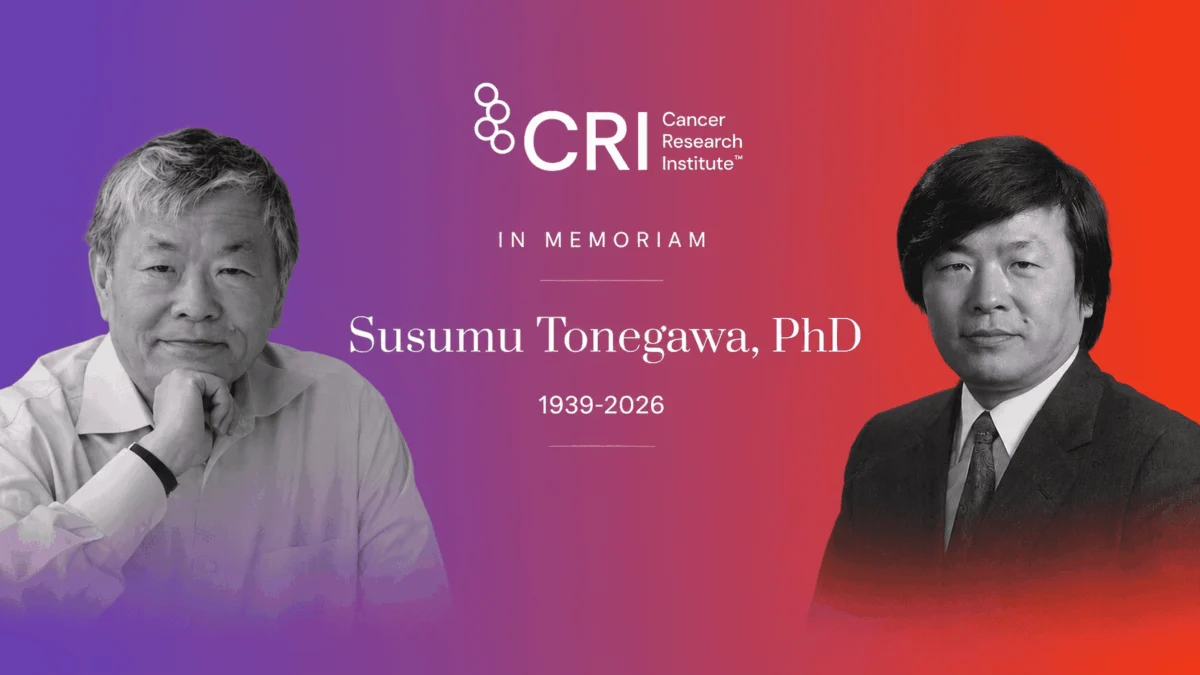
The scientific community mourns the loss of Susumu Tonegawa, PhD, a towering figure in molecular biology whose groundbreaking discoveries fundamentally reshaped our understanding of the immune system and the brain. Dr. Tonegawa, a Nobel laureate and a long-serving member of the Cancer Research Institute’s (CRI) Scientific Advisory Council, passed away on July 11, 2026, at the age of 86. His passing marks the end of an era for a researcher whose relentless curiosity and intellectual rigor led to paradigm-shifting insights that continue to underpin modern biomedical science.
A Legacy of Unraveling Biological Mysteries
Dr. Tonegawa’s most profound contribution, for which he was awarded the 1987 Nobel Prize in Physiology or Medicine, was his revelation of the genetic mechanism behind antibody diversity. In the 1970s, working against prevailing scientific dogma, he demonstrated how the body’s immune cells possess an astonishing ability to rearrange their DNA, generating an almost limitless array of antibodies from a finite number of genes. This revolutionary discovery solved one of biology’s most perplexing puzzles and laid the bedrock for our comprehension of adaptive immunity, paving the way for countless advances in disease diagnosis and treatment, particularly in the burgeoning field of cancer immunotherapy.
Early Life and Academic Journey
Born on September 5, 1939, in Nagoya, Japan, Susumu Tonegawa’s intellectual journey began with a degree in chemistry from Kyoto University in 1963. His early academic pursuits were marked by a keen interest in the fundamental processes of life, which eventually led him to the United States for his doctoral studies. He earned his Ph.D. in biology from the University of California, San Diego, in 1968. Following his doctoral work, Dr. Tonegawa pursued postdoctoral research at the Salk Institute for Biological Studies in La Jolla, California, before moving to the Basel Institute for Immunology in Switzerland in 1971. It was during his tenure in Basel that he embarked on the research that would immortalize his name in the annals of science.
The Enigma of Antibody Diversity: A Pre-Tonegawa Landscape
Before Tonegawa’s breakthrough, immunologists grappled with a profound paradox: how could the human body produce millions, if not billions, of distinct antibodies, each capable of recognizing a specific foreign invader, when the entire human genome contains only tens of thousands of genes? The prevailing "germline theory" suggested that every antibody-encoding gene must be present in the inherited genome, which seemed genetically implausible given the vast number of antibodies observed. Conversely, the "somatic mutation theory" proposed that a limited set of genes underwent extensive mutation during an individual’s lifetime to generate diversity. Neither theory fully explained the sheer scale and specificity of the immune response. This fundamental biological mystery represented a significant roadblock to understanding how the immune system mounted its defenses. Scientists knew that B lymphocytes were responsible for producing antibodies, but the mechanism for generating such immense variability from limited genetic material remained elusive, a critical piece missing from the puzzle of adaptive immunity.
Breaking the Genetic Code: Tonegawa’s Groundbreaking Discovery
Dr. Tonegawa’s innovative experimental approach challenged the status quo. Instead of focusing solely on the protein structure of antibodies, he delved into the genetic material itself. Using restriction enzymes to cut DNA and then comparing the DNA from embryonic (germline) cells with that from antibody-producing B cells, he meticulously demonstrated that the genes encoding antibodies were not static. He showed that segments of DNA encoding variable regions of antibodies were rearranged and joined together during the maturation of B lymphocytes. This process, now known as V(D)J recombination, involves the splicing of Variable (V), Diversity (D), and Joining (J) gene segments to create a functional gene that codes for a specific antibody.
His pioneering work, published primarily in the mid-1970s, provided irrefutable evidence that antibody genes are assembled from multiple, discontinuous gene segments. This discovery was revolutionary because it demonstrated a dynamic, rather than static, genetic mechanism for generating molecular diversity. It explained how a relatively small number of inherited gene segments could be recombined in myriad ways, combined with somatic hypermutation, to produce an astronomical repertoire of antibodies capable of recognizing virtually any pathogen. This paradigm shift instantly clarified how the immune system achieves its remarkable adaptability and specificity, a feat previously thought impossible.
The Nobel Recognition and Its Global Impact
The profound implications of Dr. Tonegawa’s discovery were immediately recognized by the scientific community. His work provided the conceptual framework for understanding the intricate workings of the adaptive immune system, elucidating how it distinguishes self from non-self and mounts targeted attacks against invaders. In 1987, at the age of 48, Susumu Tonegawa was awarded the Nobel Prize in Physiology or Medicine "for his discovery of the genetic principle for generation of antibody diversity." The Nobel Assembly highlighted how his findings "opened new roads for research into the development of diseases caused by disturbances of the immune system."
The impact of this discovery reverberated across all branches of biomedical science. It not only solved a fundamental biological problem but also catalyzed new avenues of research into autoimmune diseases, allergies, and transplantation immunology. Crucially, it laid the intellectual groundwork for understanding how the immune system could be harnessed to fight diseases like cancer. Today, the principles of V(D)J recombination continue to inform the design of advanced immunotherapies, including CAR T-cell therapies and checkpoint inhibitors, which leverage the immune system’s inherent ability to recognize and eliminate cancerous cells. Without Tonegawa’s foundational work, the rapid advancements in these life-saving treatments would have been inconceivable.
From Immunology to Neuroscience: A Breadth of Genius
Remarkably, after establishing himself as a titan in immunology, Dr. Tonegawa embarked on a second, equally distinguished career in neuroscience. In 1981, he joined the faculty of the Massachusetts Institute of Technology (MIT), where he established the Picower Institute for Learning and Memory. Here, he applied the same rigorous molecular and genetic approaches that defined his immunological research to unravel the mysteries of the brain.
His neuroscience work focused on the molecular and cellular mechanisms underlying learning and memory. He pioneered research into "memory engrams"—the hypothetical physical changes in the brain associated with a memory. Using sophisticated genetic engineering techniques and optogenetics, his lab was instrumental in identifying and manipulating specific neural circuits involved in memory formation, retrieval, and consolidation. His team provided compelling evidence for the existence of engram cells and demonstrated how they could be activated or silenced to influence memory recall. This work offered unprecedented insights into conditions like Alzheimer’s disease and post-traumatic stress disorder, further showcasing his unparalleled intellectual versatility and his commitment to pushing the frontiers of biological understanding.
Guiding the Fight Against Cancer: Role at CRI
Throughout his illustrious career, Dr. Tonegawa remained deeply committed to translating fundamental scientific discoveries into tangible benefits for human health. As a long-standing member of the Cancer Research Institute’s Scientific Advisory Council, he played a crucial role in guiding the organization’s strategic vision for over three decades. His insights into the immune system’s adaptability were invaluable in shaping CRI’s funding priorities, ensuring that resources were directed towards the most innovative and promising research with the potential to transform cancer treatment.
His presence on the council provided an unparalleled intellectual asset. Dr. Tonegawa’s profound understanding of immune mechanisms, coupled with his expansive view of scientific inquiry, helped CRI identify and champion novel approaches in cancer immunology and immunotherapy. His rigor, intellectual independence, and willingness to challenge conventional thinking exemplified the spirit of discovery that has been central to CRI’s mission for more than 70 years, fostering an environment where groundbreaking ideas could flourish and lead to breakthroughs in patient care.
Tributes and Enduring Influence
Tributes poured in from across the globe, acknowledging his immense contributions. Alicia Zhou, PhD, CEO of the Cancer Research Institute, encapsulated the sentiment of many: "The history of cancer immunotherapy rests on a handful of discoveries that fundamentally changed how we think about the immune system. Dr. Tonegawa’s discovery of the genetic mechanism that creates antibody diversity is one of them. His work revealed the remarkable adaptability of the immune system and forever changed how scientists study immunity, disease, and cancer. We were honored to benefit from his wisdom as a member of our Scientific Advisory Council, and his legacy will continue to inspire generations of scientists working to improve the lives of patients."
The Massachusetts Institute of Technology, where he spent much of his career, also lauded his enduring impact. "Dr. Tonegawa’s brilliance spanned disciplines, from genetics to neuroscience," a statement from MIT would likely emphasize. "His legacy at MIT, particularly within the Picower Institute, is etched in the foundational discoveries he made about memory and learning. He was a mentor to countless students and postdocs, shaping not only their scientific careers but also their approach to tackling the most challenging questions in biology." His mentorship extended far beyond his immediate lab, influencing a generation of researchers who now lead their own groundbreaking work.
The Philosophy of Creativity: Tonegawa’s Principles
Late in his life, when asked about his definition of creativity, Dr. Tonegawa offered a perspective that was both humble and deeply insightful. While the specific principles he enumerated are not widely published, his career and the concluding remarks in the original announcement reflect a scientist who championed open-mindedness, rigorous inquiry, and a collaborative spirit. He embodied the belief that true scientific progress often stems from questioning established dogma, daring to explore uncharted territories, and fostering an environment where ideas can be freely exchanged and rigorously tested. This philosophical approach, characterized by intellectual honesty and a relentless pursuit of fundamental truths, was as much a part of his legacy as his groundbreaking discoveries.
A Pillar of Modern Science: Looking to the Future
Susumu Tonegawa’s passing leaves an irreplaceable void in the scientific community, yet his monumental contributions will continue to resonate for generations. His work on antibody diversity not only earned him the Nobel Prize but also fundamentally restructured the fields of immunology and molecular biology, enabling the development of targeted therapies that have saved and improved countless lives. His later foray into neuroscience further underscored his exceptional intellectual breadth, pushing the boundaries of our understanding of the brain’s most complex functions.
His discoveries have fueled countless research endeavors, leading to new treatments for cancer, autoimmune diseases, and neurological disorders. He leaves behind a legacy not just of scientific breakthroughs, but also of a profound dedication to mentorship and an unwavering commitment to the pursuit of knowledge. The Cancer Research Institute, along with the global scientific community, extends its heartfelt condolences to Dr. Tonegawa’s family, friends, colleagues, and former trainees. His vision and discoveries will undoubtedly continue to inspire scientists globally, driving the quest to unravel nature’s mysteries and improve human health for decades to come.
