
 By George Ongkojoyo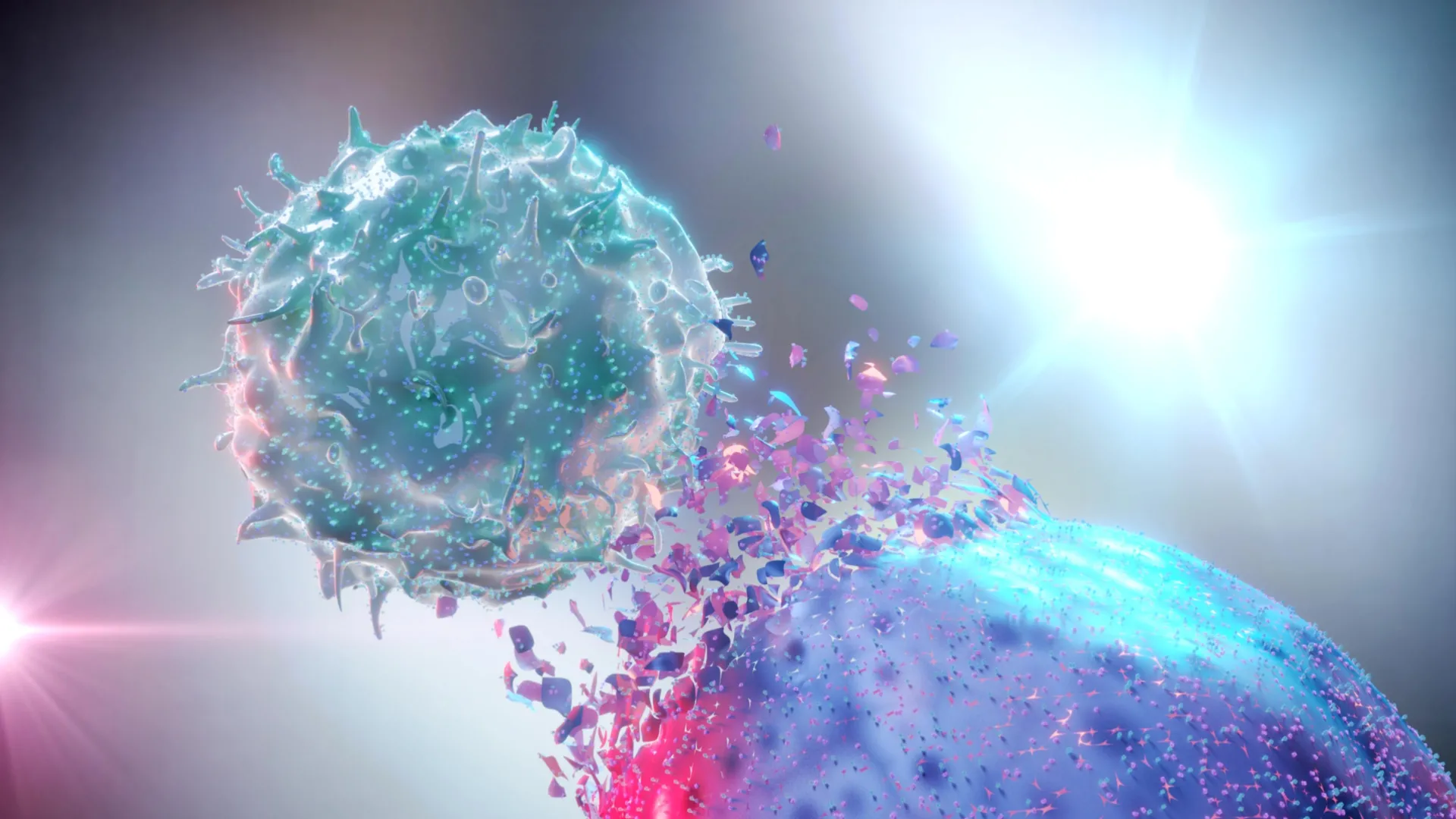
In a landmark study published on July 22 in the journal Nature Cancer, a multi-institutional team of researchers from the Johns Hopkins Kimmel Cancer Center, the Bloomberg~Kimmel Institute for Cancer Immunotherapy, and the Netherlands Cancer Institute has revealed a breakthrough in the treatment of non-small cell lung cancer (NSCLC). The research demonstrates that radiation therapy can effectively "prime" the immune system, rendering previously resistant tumors susceptible to immunotherapy. By investigating the molecular and cellular shifts that occur during treatment, the study provides a roadmap for overcoming primary resistance in patients who typically see little benefit from current standard-of-care immune checkpoint inhibitors.
The study, supported by the National Institutes of Health, addresses one of the most significant challenges in modern oncology: the fact that while immunotherapy has revolutionized cancer care, a large percentage of patients—particularly those with immunologically "cold" tumors—do not respond to the treatment. By combining radiation therapy with the PD-1 inhibitor pembrolizumab, researchers were able to induce a systemic anti-tumor response that extended beyond the site of radiation, offering new hope for patients with aggressive, resistant forms of lung cancer.
The Challenge of Immunotherapy Resistance in Lung Cancer
Non-small cell lung cancer remains the leading cause of cancer-related mortality worldwide. The advent of immunotherapy, specifically drugs that block the PD-1/PD-L1 pathway, has significantly improved survival rates for many. These drugs work by "releasing the brakes" on the immune system, allowing T cells to recognize and attack malignant cells. However, for a substantial subset of patients, the immune system remains dormant despite these interventions.
These non-responsive tumors are often classified as "cold." Biologically, they are characterized by a low tumor mutational burden (TMB), a lack of PD-L1 protein expression, or specific genetic mutations, such as those in the Wnt signaling pathway, which help the tumor evade immune detection. In these cases, the body’s T cells either fail to infiltrate the tumor or do not recognize the cancer as a threat. Identifying a method to "warm up" these tumors has been a primary goal of the oncology community for the last decade.
The Abscopal Effect: A Molecular Mystery Solved
The central mechanism explored in this research is the "abscopal effect." This phenomenon occurs when localized radiation therapy directed at a primary tumor site triggers an immune response that shrinks tumors located elsewhere in the body—even those far removed from the radiation field. Historically, the abscopal effect has been documented but remained unpredictable and poorly understood at the molecular level.
Radiation therapy functions by damaging the DNA of cancer cells, leading to cell death. As these cells die, they rupture and release their internal contents, including mutation-associated neoantigens, into the local microenvironment. These neoantigens act as "red flags" for the immune system. When the immune system encounters these flags, it can learn the molecular footprint of the cancer. Once "educated," immune cells—specifically T cells—circulate through the bloodstream to find and destroy similar cancer cells at distant metastatic sites.
By pairing radiation with immunotherapy, the researchers sought to amplify this effect. While radiation provides the "education" the immune system needs, the immunotherapy provides the "activation" required to sustain a systemic attack.
Study Design and Chronology of Research
To investigate this synergy, the research team conducted an extensive multiomic analysis of samples obtained from a Phase II clinical trial. The trial was led by Willemijn Theelen and Paul Baas at the Netherlands Cancer Institute and focused on patients with NSCLC.
The study followed a rigorous timeline. Researchers analyzed 293 blood and tumor samples from 72 patients. These samples were collected at baseline (before treatment) and again at a follow-up window of three to six weeks after treatment had commenced. The patient cohort was divided into two groups: a control group receiving immunotherapy alone and an experimental group receiving radiation therapy followed by immunotherapy.
The team employed a "multiomic" approach, which involves the integration of various biological data sets. This included:
- Genomics: To track mutations and the mutational burden of the tumors.
- Transcriptomics: To analyze gene expression patterns and how they shifted in response to therapy.
- Cell Assays: To observe the behavior and expansion of T cells in the blood and tumor microenvironment.
This deep dive allowed the investigators to observe the transition of tumors from a "cold" state to an "inflamed" or "hot" state in real-time, providing the first comprehensive molecular map of how radiation alters the systemic immune landscape.
Turning "Cold" Tumors "Hot"
The most significant findings centered on the immunologically cold tumors. In patients who received only immunotherapy, these tumors remained largely unchanged, continuing to evade the immune system. However, in the group receiving the combination of radiation and pembrolizumab, the researchers observed a "prominent reshaping" of the tumor microenvironment.
Even in tumor sites that were never touched by a radiation beam, the researchers found evidence of increased immune activity. This included the expansion of both new and pre-existing T cells. The data showed that radiation therapy effectively lowered the threshold for the immune system to recognize the cancer.
"Our findings highlight how radiation can bolster the systemic anti-tumor immune response in lung cancers unlikely to respond to immunotherapy alone," said Justin Huang, the study’s lead author and recipient of the 2025 Paul Ehrlich Research Award. Huang’s analysis was instrumental in proving that the T cells expanding in these patients were specifically targeting neoantigens—mutations unique to the patient’s cancer—rather than just causing a general inflammatory response.
Clinical Outcomes and Survival Data
The molecular changes observed in the laboratory translated directly to clinical benefits for the patients. By tracking long-term survival and tumor regression, the team found that patients with "cold" tumors who received the combination therapy had significantly better outcomes than those in the control group.
Dr. Elsa Anagnostou, senior study author and a leader in thoracic oncology at Johns Hopkins, emphasized the clinical weight of these findings. "For a fraction of lung cancers where we aren’t expecting therapy responses, radiation may be particularly effective to help circumvent primary resistance to immunotherapy," Anagnostou stated. She further noted that this strategy could potentially be applied to patients with "acquired resistance"—those who initially respond to immunotherapy but eventually see their cancer return.
Functional tests conducted alongside Kellie Smith, Ph.D., confirmed that the T cells in long-term survivors were indeed high-functioning and specifically calibrated to recognize the tumor’s unique genetic signatures. This confirms that the combination therapy does not just kill cells; it builds a lasting "immune memory" against the cancer.
Broader Implications for Oncology
The implications of this research extend far beyond non-small cell lung cancer. The ability to convert a non-responsive tumor into a responsive one is a "holy grail" in oncology. If radiation can serve as a universal primer for immunotherapy, this protocol could be tested in other cancers known for their resistance to immune checkpoint inhibitors, such as prostate cancer, pancreatic cancer, and certain types of breast cancer.
Furthermore, the study underscores the importance of international and interdisciplinary collaboration. By combining the clinical trial infrastructure of the Netherlands Cancer Institute with the advanced molecular analytics of Johns Hopkins, the team was able to bridge the gap between basic laboratory science and clinical application.
The team’s ongoing work involves using circulating tumor DNA (ctDNA) to monitor these immune responses through simple blood tests. Presented at the American Association for Cancer Research (AACR) annual meeting, this "liquid biopsy" approach could allow doctors to track a patient’s response to radiation and immunotherapy in real-time, allowing for adjustments to treatment plans without the need for invasive tissue biopsies.
Conclusion and Future Outlook
The study published in Nature Cancer marks a pivotal shift in how oncologists view radiation therapy. No longer seen merely as a tool for local control, radiation is emerging as a powerful systemic catalyst for immunotherapy. By successfully linking the abscopal effect to specific molecular changes and improved survival rates, the research provides a clear biological rationale for the use of combination therapies in the most difficult-to-treat cases.
As the medical community moves toward precision medicine, the ability to identify which patients will benefit from this "warming up" of tumors will be crucial. The multiomic biomarkers identified in this study—ranging from mutation patterns to T-cell expansion rates—will likely serve as the foundation for future clinical trials and standard-of-care protocols. For patients facing the daunting diagnosis of immunotherapy-resistant lung cancer, these findings offer a new path forward, driven by the synergy of traditional radiation and modern immunology.
