
 By admin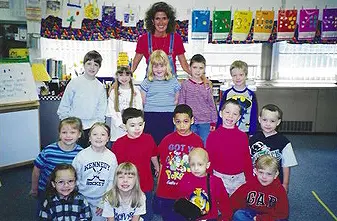
The landscape of pediatric oncology is often defined by statistics, clinical trials, and survival rates, but for those living through the reality of a diagnosis, the experience is a profound narrative of endurance, loss, and enduring connection. In August, a significant chapter of one such narrative will unfold along the rugged terrain of Minnesota’s Superior Hiking Trail. Alicia, a special needs educator, and Michele Benyo, a bereaved mother, will embark on a 25.5-mile journey known as the CureSearch Ultimate Hike. Their goal is not merely to traverse a physical distance but to honor the memory of David Benyo, a young boy whose battle with rhabdomyosarcoma ended over two decades ago, and to raise critical funds for the research that could prevent similar outcomes for future generations.
The Medical Odyssey of David Benyo: 1997–2000
The story began in December 1997, when David Benyo’s parents noticed physical symptoms that led to a devastating discovery. At just four years old, David was diagnosed with rhabdomyosarcoma, a rare and highly aggressive form of cancer that develops in the body’s soft tissues, particularly skeletal muscle tissue. In David’s case, the primary tumor was described as being the size of a grapefruit—a staggering burden for a preschooler’s body.
The ensuing treatment regimen was exhaustive. Over the course of the following year, David underwent a grueling cycle of chemotherapy, surgical intervention, and frequent blood transfusions. Despite the severity of the treatment, David became known among the medical staff at Minneapolis Children’s Hospital for his defiant spirit. Nurses frequently recalled his habit of looking them in the eye and declaring, "I’m a cheetah!" This resilience became a hallmark of his identity during his time in the oncology ward.
By late 1998, the aggressive intervention appeared to have been successful. The tumor retreated, and David entered a period of remission. During this window of stability, the Benyo family was granted a trip to Disney World through the Make-A-Wish Foundation, providing a brief respite from the clinical environment. However, the reprieve was short-lived. Shortly after returning from the trip, clinicians discovered that the cancer had returned, having metastasized to his bone marrow.
The second phase of David’s treatment involved even more intensive protocols. He was among the first pediatric patients to undergo a stem cell transplant at Minneapolis Children’s Hospital, a procedure that was then at the cutting edge of pediatric oncology. While the transplant successfully induced a second remission, the cancer returned for a third time. At the age of six, after nearly three years of continuous medical intervention, David expressed a desire to cease further treatment. He passed away in May 2000, leaving a profound void in his family and the community of Lakeville, Minnesota.
A Friendship Defined by Loss and Remembrance
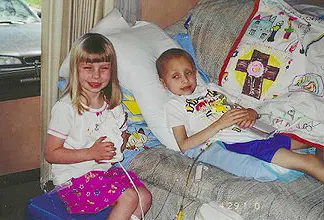
Among those most affected by David’s passing was his kindergarten classmate, Alicia. Their friendship was forged in the simple, earnest manner of childhood, reinforced by their shared attendance at the same local church where Alicia’s mother served as a Sunday school teacher. The death of a peer at such a young age is a transformative event, and for Alicia, the grief manifested as a long-standing aversion to the topic of cancer—a disease she associated solely with the theft of loved ones.
Despite the pain associated with the memory, Alicia maintained a consistent bond with David’s mother, Michele, over the next twenty-four years. This connection culminated in a poignant moment during Alicia’s high school graduation. Alicia invited Michele to the ceremony, and afterward, presented her with a locket containing David’s photograph and the inscription, "We remember." Alicia’s statement at the time—"David walked across the stage with me"—underscored the enduring presence of her childhood friend in her adult life.
Today, Alicia serves as a special needs teacher at the same elementary school she and David attended. Her commitment to the Benyo family took on a new dimension recently following the death of her own mother—David’s former Sunday school teacher—to cancer. This dual loss has served as the catalyst for Alicia’s decision to join Michele on the Superior Hiking Trail, turning decades of private grief into a public act of advocacy.
The Science and Statistics of Rhabdomyosarcoma
The motivation behind the Ultimate Hike is rooted in the sobering reality of pediatric cancer statistics. Rhabdomyosarcoma (RMS) is the most common soft tissue sarcoma in children, accounting for approximately 3% of all pediatric cancers. According to data from the American Cancer Society, about 350 new cases are diagnosed each year in the United States, primarily in children and adolescents under the age of 20.
While the five-year survival rate for localized RMS has improved significantly due to advancements in multi-modal therapy, the prognosis remains grim for patients with metastatic or recurrent disease. For children like David, whose cancer returns after initial treatment, the survival rates drop precipitously, often falling below 20%. The medical community recognizes a "research gap" in pediatric oncology; because childhood cancers are relatively rare compared to adult cancers, they often receive a disproportionately small share of federal research funding. It is estimated that only about 4% of the National Cancer Institute’s federal budget is dedicated specifically to childhood cancer research.
This funding disparity is what organizations like CureSearch for Children’s Cancer seek to address. By funding targeted research and clinical trials, CureSearch aims to accelerate the development of less toxic and more effective treatments tailored specifically to the unique biology of pediatric tumors.
The Ultimate Hike: A Physical and Philanthropic Challenge
The CureSearch Ultimate Hike is a signature fundraising event designed to mirror the "uphill battle" faced by children with cancer. The August event on the Superior Hiking Trail (SHT) is particularly demanding. The SHT is a 310-mile footpath that follows the rocky ridgeline overlooking Lake Superior. The 25.5-mile section tackled by hikers like Alicia and Michele involves significant elevation changes, rugged terrain consisting of exposed roots and rocks, and the unpredictable weather of northern Minnesota.
Participants in the Ultimate Hike are not merely hikers; they are required to meet rigorous fundraising benchmarks. The funds raised are directed toward CureSearch’s mission of ending childhood cancer by driving targeted innovative research with measurable results. For Michele Benyo, the hike represents a way to channel her "mother-love" into a tangible benefit for other families. For Alicia, it is an opportunity to honor both David and her mother, bridging the past and the present through physical endurance.
Analysis of the Impact of Memorial Philanthropy
The participation of individuals like Alicia and Michele in the Ultimate Hike highlights a growing trend in "memorial philanthropy," where the bereaved use physical challenges to process trauma and generate social impact. Psychological studies suggest that such activities can provide a sense of agency to those who have felt powerless in the face of terminal illness. By lacing up their boots, participants reclaim a narrative that was previously defined by hospital walls and medical charts.
From a clinical perspective, the funds raised by these events have real-world implications. In the years since David’s death in 2000, pediatric oncology has moved toward "precision medicine." Researchers are now better able to sequence the genomes of tumors like rhabdomyosarcoma to identify specific mutations that can be targeted with new drugs. The stem cell transplant David received in the late 90s was a precursor to the sophisticated immunotherapy and cellular therapies being refined today. However, these advancements require sustained financial investment, much of which is provided by private organizations fueled by community-driven events.
Conclusion and Broader Implications
As Alicia and Michele prepare for their 25.5-mile trek this August, their journey serves as a reminder that the impact of a single life, however short, can ripple through decades. The story of the "cheetah" who fought cancer in 1997 continues to inspire a teacher and a mother to walk through the wilderness in 2024.
The broader goal of CureSearch and the Ultimate Hike is to change the trajectory of pediatric cancer so that future stories do not end in May of a child’s seventh year. By funding the "breakthroughs of tomorrow," these efforts aim to ensure that the next generation of "cheetahs" has access to treatments that are as resilient as they are. The hike on the Superior Hiking Trail is a testament to the fact that while some stories of loss do not end, they can be rewritten into stories of hope and scientific progress.
