
 By admin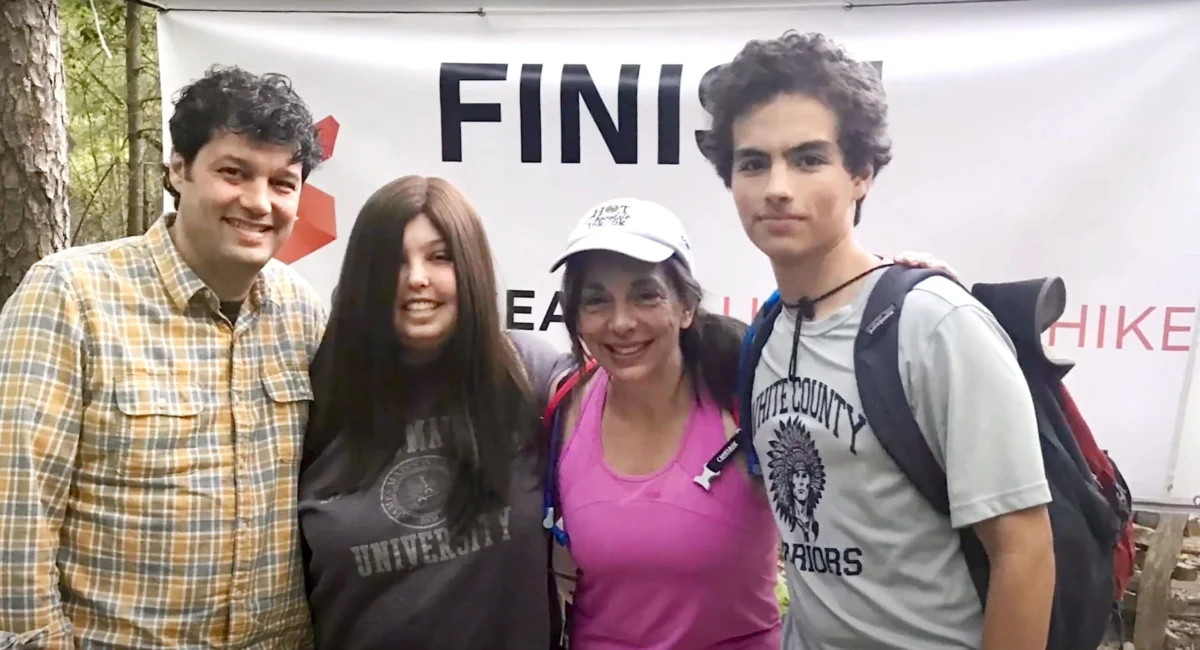
The Ultimate Hike, a flagship endurance program organized by CureSearch for Children’s Cancer, continues to serve as a critical intersection between extreme physical challenge and philanthropic necessity, mobilizing hundreds of participants annually to traverse rugged wilderness in the name of medical advancement. This initiative, characterized by its rigorous 28.3-mile single-day treks, is designed to mirror the arduous journey faced by pediatric cancer patients, utilizing the "heart of a lion" as both a metaphorical and literal symbol of the resilience required to combat the leading cause of death by disease in children. As the organization expands its reach across various national trails, the program has evolved from a niche fundraising event into a sophisticated mechanism for funding clinical trials and drug development specifically tailored to the unique biological needs of young patients.
The Physical and Emotional Architecture of the Ultimate Hike
The Ultimate Hike is distinguished from traditional charity walks by its sheer physical demand and the intentional selection of challenging environments. Participants are not merely walking; they are navigating significant elevation changes, technical terrain, and unpredictable weather conditions over the course of a 10-to-14-hour window. This grueling format is intentional, serving to represent the relentless nature of cancer treatment. The event’s logo—a heart containing a topographical map—encapsulates this dual focus: the emotional motivation of love and the tactical reality of the journey.
For many participants, the hike is a form of "adventure philanthropy," a growing sector in the non-profit world where donors engage in high-stakes physical feats to generate higher levels of engagement and funding. The "heart pumping" adrenaline mentioned by organizers is not just a physiological byproduct of exercise but a visceral connection to the mission. Supporters, ranging from seasoned ultramarathoners to grieving parents and cancer survivors, are united by a singular objective: to accelerate the pace of research through the mobilization of private capital.
Historical Context and the Evolution of CureSearch
To understand the significance of the Ultimate Hike, it is necessary to examine the history of its parent organization, CureSearch for Children’s Cancer. CureSearch emerged from the merger of two long-standing pediatric cancer organizations and has historically functioned as a primary conduit for funding the Children’s Oncology Group (COG), a National Cancer Institute-supported clinical trials group. Over the last decade, CureSearch has shifted its strategic focus toward filling the "funding gap" in the drug development pipeline.
The organization identified a critical bottleneck in pediatric oncology: while basic research was often well-funded by the government, the transition from laboratory discovery to clinical application—often called the "Valley of Death"—was severely underfunded. Because the market for pediatric cancer drugs is smaller and less profitable than that for adult cancers, pharmaceutical companies are often hesitant to invest. CureSearch’s fundraising efforts, led by the Ultimate Hike, are specifically directed toward these Phase I and Phase II trials, ensuring that promising new therapies do not languish on the shelf.
Statistical Realities of Pediatric Oncology in the United States
The urgency of the Ultimate Hike is underscored by sobering data regarding the current state of pediatric cancer research and treatment. According to the National Cancer Institute (NCI) and the American Cancer Society, approximately 15,000 children and adolescents in the United States are diagnosed with cancer each year. While survival rates have improved for some forms of the disease, such as certain leukemias, other types, such as diffuse intrinsic pontine glioma (DIPG) and various sarcomas, remain nearly 100% fatal.
Furthermore, the treatments currently available are often decades old and highly toxic to developing bodies. Data indicates that over 60% of childhood cancer survivors will suffer from at least one chronic health condition as a result of their treatment, including secondary cancers, heart disease, and cognitive impairments. The Ultimate Hike aims to fund "targeted therapies"—treatments that attack cancer cells while sparing healthy tissue—to reduce these long-term morbidities. Current federal funding for pediatric cancer research represents less than 4% of the NCI’s total budget, placing a heavy burden on private organizations like CureSearch to bridge the multi-million dollar deficit.
The Logistics of Endurance Fundraising
The Ultimate Hike is not a spontaneous event; it is the culmination of a highly structured 12-to-15-week training and fundraising cycle. Participants are provided with professional coaching, training schedules, and nutritional guidance to prepare their bodies for the 28.3-mile distance. This structured approach ensures that the event maintains a high safety standard while maximizing the fundraising potential of each individual.
Hikes are typically held in iconic wilderness areas, such as the Appalachian Trail in North Carolina, the Foothills Trail in South Carolina, and the Tecumseh Trail in Indiana. These locations are chosen for their symbolic beauty and their physical difficulty. On hike day, the logistics involve a massive coordination of "trail angels" (volunteers), medical staff, and support stations located every few miles to provide hydration, caloric intake, and first aid. This operational complexity mirrors the multidisciplinary approach required in pediatric oncology, where doctors, researchers, and families must work in concert.
Case Study in Resilience: The Cohen Family Journey
The human element of the Ultimate Hike is perhaps most vividly illustrated by the stories of those who walk in memory of loved ones. Terri Cohen, a long-time supporter of CureSearch, began her journey with the organization while her daughter, Leah, was in the final stages of her battle with cancer. Cohen’s experience highlights the dual nature of the event: it is both a fundraising tool and a therapeutic milestone for families.
"The first time I did this hike was when Leah was toward the end of her battle," Cohen recalled. "My son and I signed up to take the hike and at that time she was doing pretty well, so she met us at the finish line." This moment of connection at the terminus of a 28-mile trek serves as a powerful testament to the motivation behind the movement. For the Cohen family and many others, the hike provides a tangible way to process grief and channel it into a constructive force for future generations. These personal narratives are essential for maintaining the momentum of the program, as they transform abstract statistics into relatable human experiences.
The Funding Gap and the Science of Pediatric Drug Development
The enrichment of the Ultimate Hike’s mission lies in its direct impact on the scientific community. CureSearch utilizes the funds raised to provide "Catapult Awards" and "Impact Awards" to researchers who are on the verge of clinical breakthroughs. A brief analysis of the drug development landscape reveals why this is vital. In the last 20 years, only a fraction of new cancer drugs approved by the FDA were specifically developed for children, compared to hundreds for adults.
The funds generated by hikers support research into immunotherapy, which harnesses the body’s own immune system to fight cancer, and genomic sequencing, which allows for personalized treatment plans. By focusing on these high-impact areas, the Ultimate Hike ensures that every step taken on the trail has a direct correlation to a potential life-saving intervention in a hospital setting. The objective is not just to extend life, but to improve the quality of life for survivors by eliminating the "toxic" legacy of traditional chemotherapy and radiation.
Community Impact and the Psychological Role of Adventure Philanthropy
Beyond the financial metrics, the Ultimate Hike fosters a unique community of "trail families." The shared experience of training for months and then spending an entire day in the woods creates deep psychological bonds among participants. For survivors, the hike is a reclamation of their physical agency—a way to prove that their bodies, once weakened by illness, are now capable of extraordinary feats. For those in active treatment or their parents, it provides a sense of solidarity and the knowledge that they are not fighting in isolation.
Sociological studies on adventure philanthropy suggest that these high-effort events result in higher donor retention rates compared to passive giving. The physical investment required by the Ultimate Hike creates a "sunk cost" of effort that translates into long-term advocacy. Hikers often become lifelong ambassadors for CureSearch, speaking at events, engaging with local media, and influencing public policy regarding research funding.
Future Directions and Institutional Goals
As CureSearch looks toward the future, the Ultimate Hike remains the cornerstone of its public engagement strategy. The organization aims to increase the number of annual hikes and expand into new geographic regions to tap into different donor bases. The long-term goal is to create a sustainable pipeline of private funding that can withstand fluctuations in federal research grants.
The broader implications of this movement are significant. As more individuals take to the trails, the pressure on the pharmaceutical industry and the government to prioritize pediatric health increases. The Ultimate Hike is a statement of priority: it asserts that the lives of children are worth the maximum effort of the community. By scaling rugged terrain, participants are not just crossing a finish line; they are helping to move the needle on one of the most challenging medical frontiers of the 21st century.
The promise of a future free of toxic treatments and the hope of a brighter tomorrow for every child diagnosed with cancer remain the driving forces behind each step. For those interested in joining the mission, the trail remains open, offering a path where physical endurance meets scientific progress, and where every heartbeat on the mountain brings the world one step closer to a cure.
