
 By Lina carolina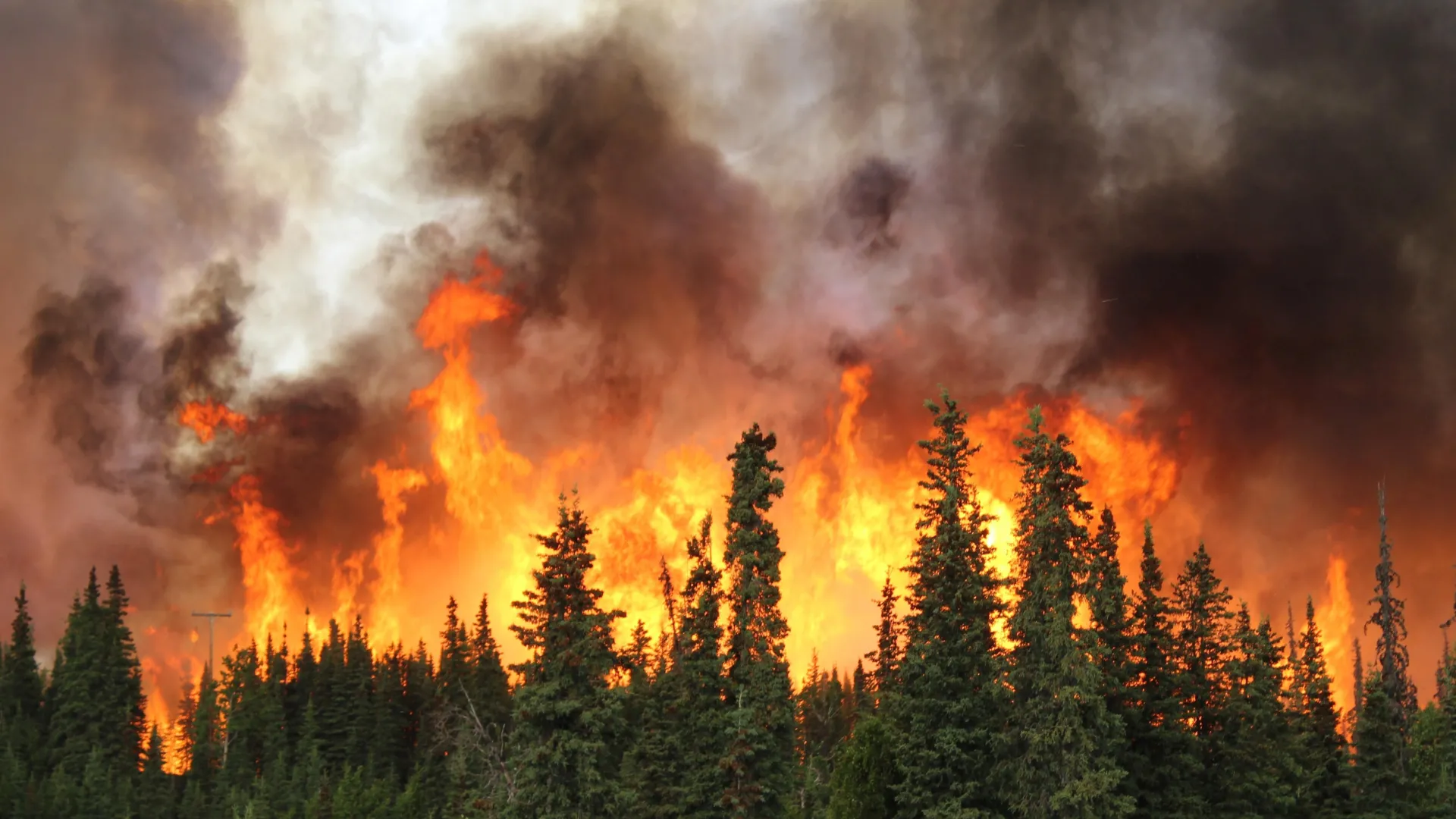
Wildfires burning across Canada and the Western United States are spewing smoke over millions of Americans, a stark reminder that ashy haze is becoming a regular, increasingly dangerous reality, with health impacts far greater than scientists previously estimated. A groundbreaking study from Stanford University, published on September 18th in the prestigious journal Nature, projects a grim future if current global warming trends continue: approximately 30,000 additional deaths annually nationwide by 2050 due to climate-driven increases in wildfire activity and subsequent smoke pollution across North America. This alarming forecast highlights a significant underestimation of climate change’s direct human cost.
The pervasive reach of wildfire smoke, once primarily a Western concern, has now become a national phenomenon. "There’s a broad understanding that wildfire activity and wildfire smoke exposure are changing quickly," stated Marshall Burke, senior study author and a professor of environmental social sciences in the Stanford Doerr School of Sustainability. "This is a lived experience, unfortunately, for folks on the West Coast over the last decade and folks on the East Coast in the last few years." He elaborated on the study’s significance: "Our paper puts some numbers on what that change in exposure means for health outcomes, both now and in the future as the climate warms."
A Growing Threat: Escalating Wildfire Activity and Smoke Dispersion
Wildfires have historically been a natural part of the Western U.S. landscape. However, a confluence of factors, including rising global temperatures and prolonged periods of drought, are creating conditions ripe for larger, more frequent, and more intense blazes. These extreme fire events are not only more destructive but also generate smoke plumes that travel farther and linger longer than in previous eras. The study’s projections suggest that under a "business-as-usual" emissions scenario, where global temperatures rise by approximately 2 degrees Celsius above pre-industrial levels, the economic cost of wildfire smoke-related deaths alone could soar to a staggering $608 billion annually by 2050. This figure eclipses current estimates for all other climate-driven damages in the U.S. combined, including temperature-related mortality, agricultural losses, and storm damage, underscoring the critical and often overlooked impact of wildfire smoke.
Minghao Qiu, lead study author and an assistant professor at Stony Brook University, who conducted the research as a postdoctoral scholar in Burke’s lab, emphasized the nationwide scope of the problem. "What we see, and this is consistent with what others find, is a nationwide increase in wildfire smoke," Qiu explained. "There are larger increases on the West Coast, but there’s also long-range transport of wildfire smoke across the country, including massive recent smoke events in the Eastern and Midwestern U.S. from Canadian fires." This phenomenon of "long-range transport" means that even communities far removed from active fire zones are increasingly exposed to the detrimental effects of smoke.
The Uniquely Dangerous Nature of Wildfire Smoke Pollution
The health consequences of inhaling wildfire smoke are multifaceted and potentially severe. Wildfire smoke is a complex cocktail of chemicals, and its prolonged exposure—sometimes lasting for days or weeks—can contribute to mortality even up to three years after the initial event, according to the study’s findings. While scientists have extensively studied the health effects of fine particulate matter (PM2.5) from other sources, the specific dangers posed by PM2.5 originating from wildfire smoke are less understood. Emerging research indicates that wildfire smoke can contain a variety of potent toxins detrimental to human health.
The Stanford-led research delved into these specific risks. By integrating U.S. death records from 2006 to 2019 with detailed data on ground-level smoke emissions, wind patterns, and airborne particulate matter movement, the researchers employed advanced machine learning techniques. This innovative approach allowed them to model how smoke emissions in one region influenced air quality in others. They then correlated these shifts in smoke concentration with historical mortality data. Coupled with global climate models projecting future fire activity and smoke levels under various warming scenarios, their analysis provided a comprehensive picture of current and future health impacts.
The study’s sobering results indicate that excess deaths attributable to smoke PM2.5 exposure could surge by over 70%, rising from an average of approximately 40,000 annual deaths between 2011 and 2020 to an estimated 70,000 per year by 2050, assuming a business-as-usual emissions trajectory. The states projected to experience the most significant increases in annual smoke exposure deaths include California (an additional 5,060 deaths), New York (1,810), Washington (1,730), Texas (1,700), and Pennsylvania (1,600). This broad geographical impact underscores that no community in the U.S. is immune to the health risks associated with wildfire smoke.
Quantifying Economic and Societal Costs
Beyond the direct human toll, the economic implications of increased wildfire smoke are substantial. By quantifying the financial burden associated with smoke-related mortality, the study reveals a significant, yet often overlooked, economic cost impacting families and businesses across the nation. Even under a scenario where the world aggressively cuts emissions to stabilize global temperatures below 2°C by the end of the century, the U.S. is still projected to face over 60,000 annual deaths from climate-driven smoke exposure by 2050.
"If you look at the leading climate impact assessment tools that are used to inform policy, none of them incorporate how changes in climate could influence wildfire smoke and related human mortality," Qiu observed. "Our study shows climate models are missing a huge part of the climate impacts in the U.S. – it’s like leaving the main character out of a movie." This statement highlights a critical gap in current climate policy and risk assessment, suggesting that the full scope of climate change’s consequences has not been adequately integrated into planning and mitigation strategies.
A Broader Understanding of Vulnerability and Mitigation Strategies
The study also expands the understanding of who is most vulnerable to the health impacts of wildfire smoke. "Our understanding of who is vulnerable to this exposure is much broader than we thought," Burke emphasized. "It’s pregnant people, it’s kids in schools, it’s anyone with asthma, it’s people with cancer. We look at one specific health outcome in this study – mortality – and unfortunately find a shared burden of exposure for individuals across the U.S." This broadens the scope of public health concerns beyond traditional respiratory and cardiovascular disease sufferers.
Recognizing the escalating threat, public health officials and communities are exploring various mitigation strategies. Investments in advanced indoor air filtration systems can provide critical protection for vulnerable individuals and communities, offering a tangible measure to reduce exposure during smoke events. Furthermore, proactive land management practices, such as prescribed burns and targeted fuel reduction initiatives, are essential tools for lessening the severity of wildfires and, consequently, the intensity and duration of smoke waves. These measures, while requiring significant investment and coordination, are crucial for building resilience against this growing environmental hazard.
The research was supported by significant funding from the Keck Foundation, Stanford’s Center for Innovation in Global Health, Stony Brook University, the Harvard University Center for the Environment, and the Stanford Research Computing Center. The collaborative effort involved researchers from various institutions, including the University of California, San Diego, the University of Washington, Princeton University, the National Oceanic and Atmospheric Administration, and the National Bureau of Economic Research, underscoring the interdisciplinary and national importance of this critical issue. The findings from this study are poised to inform future policy decisions and public health initiatives aimed at addressing the increasingly severe impacts of climate-driven wildfire smoke.
Background and Chronology:
The intensification of wildfires in North America is not a new phenomenon, but recent years have seen a marked escalation in their scale and impact. For decades, Western U.S. states like California, Oregon, and Washington have grappled with seasonal wildfires, often exacerbated by drought conditions and mountainous terrain. However, the trend of warmer, drier weather, amplified by climate change, has transformed these events from localized incidents into regional and even continental crises.
Timeline of Key Developments:
- Early 2000s onwards: Increasing recognition of the link between climate change and wildfire risk, with observed trends of longer fire seasons and larger fire sizes in the Western U.S.
- 2010s: A decade marked by significant and destructive wildfire seasons across the Western U.S., leading to increased public awareness of smoke impacts. Episodes of smoke affecting major metropolitan areas became more common.
- 2020: A particularly severe wildfire season in the Western U.S., with widespread smoke blanketing large portions of California, Oregon, and Washington for extended periods, leading to unprecedented air quality alerts and health advisories.
- 2021-2022: Continued significant wildfire activity, with notable events in Canada and the Western U.S., demonstrating the persistent nature of the threat. Smoke plumes from these fires were observed to travel vast distances.
- 2023: A year characterized by extreme wildfire events, particularly in Canada, which generated massive smoke plumes that significantly impacted air quality across much of the Eastern and Midwestern United States, bringing the issue to the forefront for millions who had previously experienced only occasional smoke impacts. This event served as a critical backdrop for the Stanford study.
- September 18, 2023: Publication of the Stanford University study in Nature, providing quantitative projections on the escalating health and economic impacts of wildfire smoke pollution due to climate change.
This chronological progression illustrates the growing severity of the wildfire smoke problem, transitioning from a regional concern to a national and continental public health and environmental challenge. The Stanford study’s publication marks a pivotal moment in quantifying these impacts and urging more comprehensive policy responses.
