
 By admin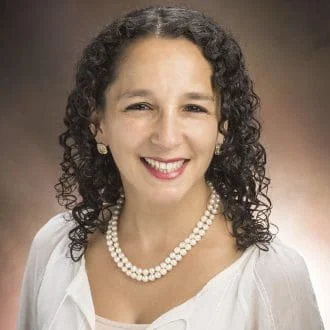
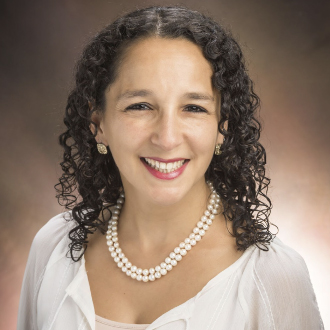
CureSearch for Children’s Cancer has officially announced the allocation of a $1 million grant to Dr. Yael Mossé of the Children’s Hospital of Philadelphia (CHOP) to spearhead the development of a transformative treatment for high-risk neuroblastoma. This funding, delivered through the organization’s prestigious Acceleration Initiative Award, is designed to fast-track the transition of laboratory discoveries into clinical applications, addressing one of the most lethal forms of pediatric cancer. High-risk neuroblastoma remains a significant challenge for oncologists globally, characterized by its aggressive nature and a historical lack of targeted therapeutic options. Dr. Mossé’s research focuses on precision medicine, a field that seeks to identify and neutralize specific genetic drivers of cancer while minimizing the systemic toxicity often associated with traditional chemotherapy and radiation.
The Critical Challenge of High-Risk Neuroblastoma
Neuroblastoma is a cancer that develops from immature nerve cells found in several areas of the body, most commonly arising in and around the adrenal glands, which have similar origins to nerve cells. It is the most frequent extracranial solid tumor diagnosed in childhood, representing approximately 8% to 10% of all pediatric cancer cases. Despite being relatively rare in the broader context of oncology, neuroblastoma is disproportionately lethal, accounting for roughly 15% of all pediatric cancer-related deaths.
The disease is categorized into risk groups—low, intermediate, and high—based on factors such as the age of the patient, the stage of the disease, and the biological characteristics of the tumor. While survival rates for low- and intermediate-risk patients have seen significant improvement over the last three decades, high-risk neuroblastoma continues to have a guarded prognosis. Current standard-of-care treatments for high-risk patients are notoriously intense, often involving high-dose chemotherapy, multiple surgeries, stem cell transplants, radiation, and immunotherapy. While these interventions can be life-saving, they frequently result in severe, lifelong side effects, including hearing loss, heart damage, and secondary cancers. The work of Dr. Mossé aims to shift this paradigm by focusing on a more sophisticated, targeted approach.
Dr. Yael Mossé and the Precision Medicine Revolution
Dr. Yael Mossé, a Professor of Pediatrics at the Perelman School of Medicine at the University of Pennsylvania and a physician-scientist at CHOP, is a recognized leader in the study of the genetic underpinnings of neuroblastoma. Her career has been largely defined by her work on the Anaplastic Lymphoma Kinase (ALK) gene. In 2008, Dr. Mossé and her team were instrumental in identifying mutations in the ALK gene as the primary cause of the inherited form of neuroblastoma, as well as a significant driver in many non-inherited cases.
The $1 million grant from CureSearch will support a project that builds upon these foundational discoveries. The research targets specific mutations that allow cancer cells to grow and divide uncontrollably. By developing inhibitors that specifically latch onto these mutated proteins, Dr. Mossé’s team hopes to shut down the "engine" of the tumor without harming the healthy cells surrounding it. This precision-targeted approach represents the "holy grail" of pediatric oncology: high efficacy with low toxicity.
The project is not merely an academic exercise; it is a clinical mandate. Dr. Mossé’s statement regarding the award highlights the urgency of the work, noting that the funding provides an "unprecedented opportunity to streamline the overall development of a novel therapy." By accelerating the drug development process, the research team aims to move past the traditional "valley of death"—the gap between laboratory success and the commencement of human clinical trials.
The Acceleration Initiative: Bridging the Funding Gap
The Acceleration Initiative Award is CureSearch’s flagship grant program. It is specifically designed to overcome the hurdles that often stall pediatric drug development. Unlike adult oncology, where the market for new drugs is vast and highly profitable for pharmaceutical companies, pediatric oncology is frequently overlooked due to the smaller patient population. This creates a reliance on federal funding and philanthropic organizations to drive innovation.
The selection process for the Acceleration Initiative is rigorous. Projects are evaluated not only for their scientific merit but also for their "translatability"—the likelihood that the research will lead to a tangible treatment for patients within a three-to-five-year window. Dr. Mossé’s project was selected because it met these stringent criteria, offering a clear path from the bench to the bedside.
The importance of private funding like that provided by CureSearch cannot be overstated. Currently, federal funding for childhood cancer research through the National Cancer Institute (NCI) accounts for only about 4% of the total NCI budget. As federal budgets face increasing scrutiny and uncertainty, the role of organizations like CureSearch and their partners, such as the Norcross Foundation, becomes the primary driver of progress in the field.
Chronology of Progress in Neuroblastoma Research
To understand the significance of this $1 million award, it is essential to view it within the timeline of neuroblastoma research milestones:
- 1980s-1990s: Researchers identify the MYCN oncogene as a marker for aggressive neuroblastoma, establishing the first biological basis for risk stratification.
- 2008: Dr. Mossé’s team discovers that mutations in the ALK gene are a major driver of both familial and sporadic neuroblastoma.
- 2010s: The first generation of ALK inhibitors, originally developed for adult lung cancer, are tested in pediatric patients. While results are promising, many tumors develop resistance to these early drugs.
- 2020: Advanced genomic sequencing allows for more precise identification of specific ALK mutations, leading to the development of "next-generation" inhibitors designed to overcome resistance.
- Present Day: The CureSearch grant is awarded to Dr. Mossé to refine these next-generation treatments, focusing on high-risk cases that have failed to respond to conventional therapies.
Broader Implications for Pediatric Oncology
The implications of Dr. Mossé’s research extend beyond neuroblastoma. The methodologies used to target ALK mutations serve as a blueprint for treating other pediatric cancers driven by similar genetic anomalies. Furthermore, the success of the Acceleration Initiative model proves that targeted, goal-oriented funding can significantly reduce the time it takes to bring new drugs to market.
From a clinical perspective, the development of targeted therapies is expected to improve the "survivorship" experience. As the medical community gets better at curing childhood cancer, the focus is increasingly shifting toward the quality of that survival. By replacing toxic, broad-spectrum chemotherapies with precision drugs, physicians hope to eliminate the devastating long-term health issues that plague many childhood cancer survivors into adulthood.
The Norcross Foundation, which partially supports this project, emphasizes the community-driven nature of this achievement. Their involvement underscores a growing trend of regional foundations and private donors stepping in to fund high-stakes medical research that has a direct impact on local institutions like the Children’s Hospital of Philadelphia.
Official Responses and Institutional Support
The Children’s Hospital of Philadelphia has long been at the forefront of pediatric cancer care, and this grant further solidifies its position as a hub for innovation. While Dr. Mossé serves as the principal investigator, the project involves a multidisciplinary team of biologists, chemists, and clinical trialists.
In her response to the award, Dr. Mossé expressed deep gratitude for the support, stating, "This translation of our science could not be possible without the support of CureSearch." This sentiment is echoed by the broader pediatric oncology community, which views the grant as a vital lifeline in a challenging funding environment.
CureSearch’s leadership has indicated that the award to Dr. Mossé is part of a larger strategy to ensure that "every child has access to safe, effective treatment." The organization’s focus remains steadfast on the 15,000+ children diagnosed with cancer each year in the United States, advocating for a future where a cancer diagnosis is no longer a death sentence or a precursor to a lifetime of health struggles.
Conclusion and Future Outlook
The $1 million grant to Dr. Yael Mossé marks a pivotal moment in the fight against high-risk neuroblastoma. By leveraging the power of precision medicine and the speed of the Acceleration Initiative, the research team at CHOP is poised to make significant strides in treating one of the most difficult pediatric diseases. As the project moves forward, the medical community will be watching closely, hopeful that this novel therapy will soon become a standard of care, offering a new lease on life for children who currently have few options. The partnership between CureSearch, the Norcross Foundation, and CHOP exemplifies the collaborative effort required to conquer childhood cancer in the 21st century.
