
 By admin
The narrative of childhood cancer is often framed by clinical statistics and harrowing treatment cycles, yet the lived experiences of survivors and their families frequently reveal deeper systemic challenges and the profound power of parental advocacy. Among these stories of survival are Jaylen, 10, and Ayla, 8, two siblings who have navigated the complexities of hereditary bilateral retinoblastoma from infancy. Their journey, marked by medical hurdles and a mother’s relentless fight against accessibility barriers in the healthcare system, underscores the critical importance of early detection and the necessity of inclusive medical practices.
Retinoblastoma is a rare form of eye cancer that primarily affects young children, developing in the cells of the retina. While the disease is highly treatable when caught early, the hereditary form presents unique challenges, often affecting both eyes—a condition known as bilateral retinoblastoma. For Jaylen and Ayla, the diagnosis was not merely a medical event but a catalyst for a decade-long battle for health, equity, and visibility.
The Genesis of a Diagnosis: Barriers to Early Care
The family’s encounter with retinoblastoma began when Jaylen was just two months old. His mother, Denice, observed a subtle but concerning physical symptom: his left eye appeared to veer outward, a condition known as strabismus. Additionally, early family photographs captured a distinct white reflection in Jaylen’s eye, a phenomenon often referred to as "the glow" or leukocoria. At the time, the family dismissed the reflection as a common photographic artifact caused by the camera’s flash.
The path to a formal diagnosis was complicated by systemic failures. When Denice sought a four-month check-up for Jaylen, the medical facility refused to provide services because an American Sign Language (ASL) interpreter was not available. Denice, who is Deaf, faced a direct violation of the Americans with Disabilities Act (ADA), which mandates that healthcare providers provide effective communication to patients and their families. This refusal created a dangerous delay in Jaylen’s care, forcing Denice to navigate the healthcare landscape independently to secure the necessary diagnostic evaluations.
Through her own persistence, Denice eventually secured an appointment with a specialist who confirmed that Jaylen was suffering from bilateral retinoblastoma. The delay in diagnosis highlighted a critical gap in medical accessibility, where the lack of linguistic accommodations can lead to delayed life-saving interventions.
The Hereditary Factor and Preemptive Screening
Because Jaylen’s condition was identified as hereditary, the risk for future siblings was significantly elevated. Hereditary retinoblastoma is typically caused by a mutation in the RB1 gene, which can be passed from parent to child or occur as a new mutation in the early stages of fetal development. When Denice became pregnant with Ayla, the medical team was prepared for the possibility of a recurrence.
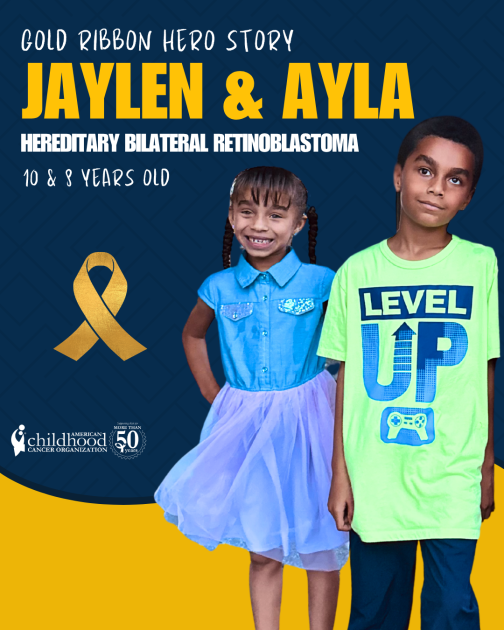
Ayla was monitored closely from birth. Unlike her brother, whose diagnosis was delayed by systemic barriers and unrecognized symptoms, Ayla was diagnosed at just four weeks old. This early detection was a direct result of the lessons learned from Jaylen’s case and the proactive management of the family’s genetic history. While the news of a second child with cancer was devastating, the immediacy of the diagnosis allowed for a more rapid initiation of treatment, potentially sparing her from the more advanced complications that can arise when the disease progresses unchecked.
Clinical Interventions and the Path to Survivorship
The treatment of bilateral retinoblastoma is a multi-year process that aims to save the patient’s life, preserve the eye, and maintain as much vision as possible. For Jaylen and Ayla, the clinical path was arduous and involved a combination of local and systemic therapies.
Over the years, both children underwent extensive treatment regimens, including:
- Chemotherapy: Used to shrink tumors (chemoreduction) so that local treatments could be more effective.
- Cryotherapy: The use of extreme cold to freeze and destroy cancer cells in the retina.
- Laser Therapy: Targeted light energy used to heat and destroy small tumors or the blood vessels that supply them.
- Strabismus Surgery: Performed on Jaylen to correct the misalignment of his eyes caused by the presence of the tumors.
- Enucleation: In cases where the tumor is too large to be treated by other means or where there is a high risk of the cancer spreading to the brain via the optic nerve, the eye must be surgically removed. Ayla underwent an enucleation, leading to the use of a prosthetic eye.
Today, both Jaylen and Ayla have adapted to life with prosthetic eyes. The transition to prosthetics is a significant milestone for pediatric survivors, requiring both physical adjustment and psychological resilience. Ayla, in particular, has embraced this aspect of her identity, curating a collection of custom-colored irises that allow her to express her personal style and exercise agency over her appearance.
Medical Accessibility and the Rights of Deaf Parents
The challenges Denice faced as a Deaf mother navigating the pediatric oncology world are representative of a broader issue in the United States healthcare system. Under the ADA and Section 504 of the Rehabilitation Act, hospitals and clinics are required to provide "auxiliary aids and services" to ensure effective communication. This includes providing qualified ASL interpreters for medical appointments, especially those involving complex diagnoses and treatment plans.
The refusal of care Jaylen initially faced was not an isolated incident but a reflection of the barriers that continue to exist for the Deaf community. Denice’s experience of being "turned away" at a critical juncture in her son’s health journey added a layer of trauma to an already overwhelming situation. Her transition from a frustrated parent to what she describes as the "ultimate advocate and manager" for her children’s health was born out of a necessity to bypass a system that was not designed to accommodate her needs.
Statistical Context: Retinoblastoma in the United States
Retinoblastoma accounts for approximately 3% of all cancers in children under the age of 15. In the United States, about 250 to 300 children are diagnosed with the disease annually.
- Bilateral vs. Unilateral: Approximately 40% of cases are bilateral (affecting both eyes), and these are almost always hereditary. The remaining 60% are unilateral (affecting one eye) and are usually sporadic, meaning they occur by chance.
- Survival Rates: In high-income countries like the U.S., the survival rate for retinoblastoma is over 95%. However, the focus of modern oncology has shifted toward "vision-sparing" treatments to improve the long-term quality of life for survivors.
- The Importance of "The Glow": Educational campaigns, such as those supported by the American Childhood Cancer Organization (ACCO), emphasize the importance of identifying leukocoria. In many cases, a simple flash photograph can reveal the white reflection that indicates a tumor, serving as a low-cost, preliminary screening tool for parents.
The Psychosocial Impact and Choosing Joy
Beyond the clinical outcomes, the story of Jaylen and Ayla highlights the psychosocial resilience required of families in the aftermath of cancer. Denice has been vocal about her parenting philosophy, which she describes as "living in the present moment." Despite facing online criticism regarding her parenting choices, she maintains that her children have earned the right to be "beautifully spoiled" after enduring years of painful treatments and surgeries.
The family’s commitment to "choosing joy" is evidenced by their active lifestyles. Ayla began learning ASL during her recovery from enucleation surgery, further bridging the communication gap within her family and asserting her independence. Both children are described as thriving, participating in activities and social environments that demonstrate their triumph over their initial diagnoses.
Broader Implications for Pediatric Care and Advocacy
The journey of Jaylen and Ayla serves as a case study for several critical areas of pediatric healthcare:
- Genetic Counseling: Their story underscores the vital role of genetic testing and counseling for families with a history of retinoblastoma. Early intervention for Ayla was only possible because the family was aware of the hereditary risk.
- Health Equity: There is a pressing need for medical institutions to standardize protocols for treating patients and parents with disabilities. Advocacy for ASL interpreters in medical settings is not just a matter of convenience but a matter of patient safety and civil rights.
- Public Awareness: Increasing public knowledge about the "retinoblastoma glow" can lead to earlier diagnoses and better outcomes. The ACCO and other organizations continue to push for greater awareness of this simple diagnostic indicator.
Conclusion: A Legacy of Joy and Triumphant Survival
Jaylen and Ayla are more than survivors of a rare pediatric cancer; they are symbols of the possibility of a joyful life following a devastating diagnosis. Their mother’s advocacy ensured that they received the care they deserved, despite a medical system that initially failed to communicate with her.
As they continue to grow, their story provides hope to other families navigating the complexities of hereditary cancers. By sharing their experiences, the family contributes to a broader understanding of the need for medical vigilance, the power of parental intuition, and the necessity of a healthcare system that is accessible to all, regardless of the language they speak or how they communicate. The "legendary triumphs" of Jaylen and Ayla—beating cancer and remaining "endlessly joyful"—serve as a testament to the resilience of the human spirit in the face of medical adversity.
